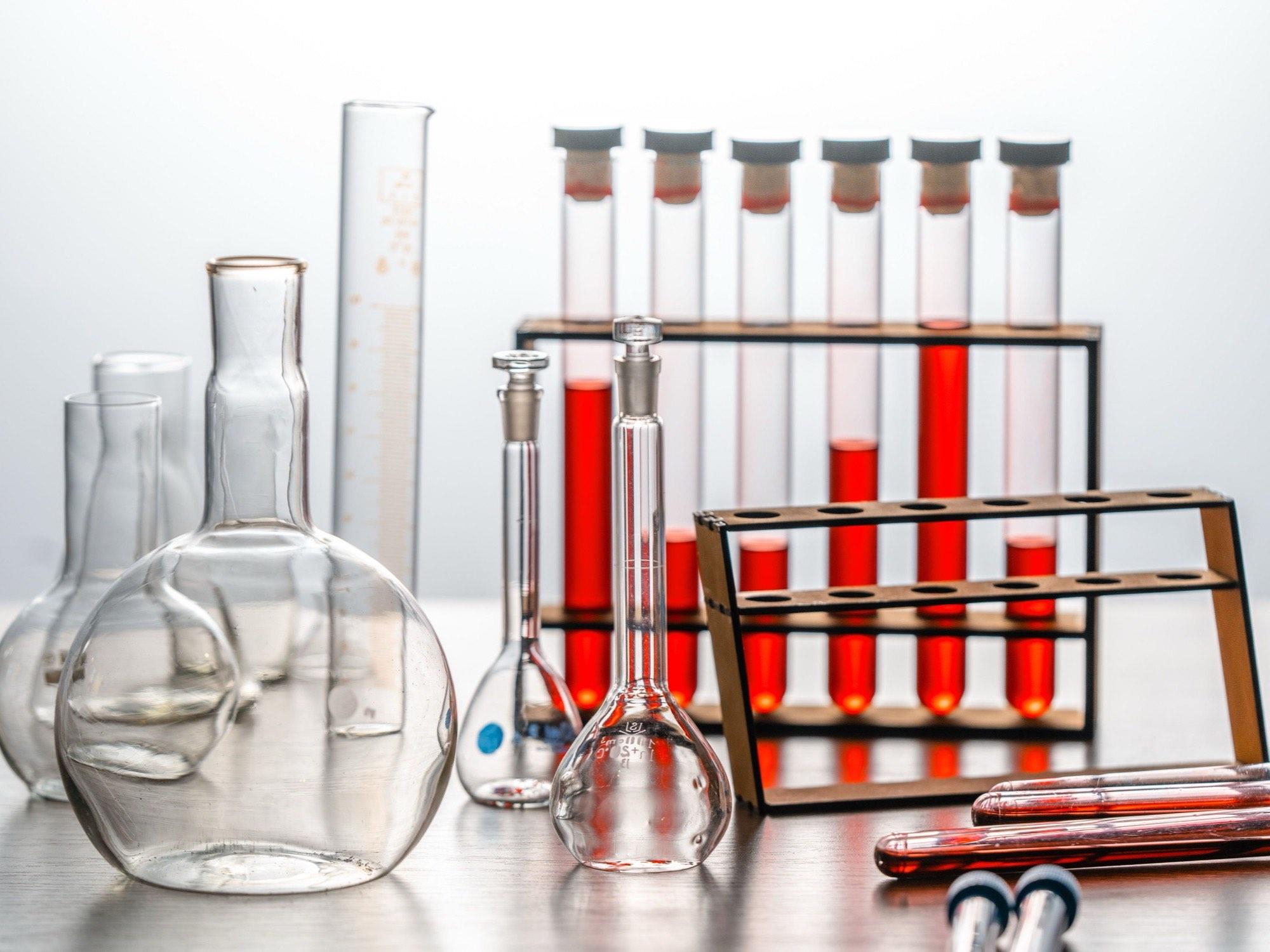
How do you test clothing for PFAS? Send the finished garment to a lab accredited for the method and run two kinds of test. A total fluorine screen burns a piece of fabric and measures all the fluorine in it, which shows whether PFAS chemistry could be present. A targeted test, run by liquid chromatography with tandem mass spectrometry (LC-MS/MS), names specific PFAS and measures each one. Neither is complete alone: the screen can't say which chemical it found, and the targeted test can't see what isn't on its list.
Per- and polyfluoroalkyl substances (PFAS) are the "forever chemicals" behind most water- and stain-resistant finishes. California defines them as fluorinated organic chemicals with at least one fully fluorinated carbon atom. That covers thousands of compounds, which is why no single test catches them all.
| Test | What it measures | What it catches | What it misses | Where it's used |
|---|---|---|---|---|
| Targeted PFAS (EN 17681-1:2025, LC-MS/MS) | A fixed list of named PFAS, in ppb | Exactly which PFAS, and how much | Any PFAS not on the list; most fluorinated polymers | EU PFHxA limit, France, OEKO-TEX, GOTS |
| Total fluorine (EN 14582, ISO 20999; combustion ion chromatography) | All fluorine in the sample, in ppm | PFAS on or off any list, polymers included | Can't name the compound; counts non-PFAS fluorine | Washington, OEKO-TEX, GOTS, Denmark |
| Total organic fluorine | Total fluorine minus inorganic fluoride | Organic fluorine, closer to PFAS | Still can't name the compound | California AB 1817, Vermont |
| Extractable organic fluorine | Organic fluorine that comes out in a solvent | Known and unknown PFAS that extract | Fluorine bound into polymers that doesn't extract | Research labs |
| PIGE | Fluorine on the fabric's surface | A fast screen with no sample prep | Fluorine below the surface; can't name the compound | Research screening |
| Toxome Verified™ | Total fluorine screen, then targeted PFAS | Under 20 ppm total fluorine, or no named PFAS above 25 ppb | Results cover the unit tested | Bought at retail |
Methods from CEN's EN 17681-1:2025, ISO 20999:2026 and the GOTS v8.0 manual; limits from California's statute, Washington's rule, EU Regulation 2024/2462 and OEKO-TEX's 2026 rules, as of November 2026. One ppm (part per million) equals 1 mg/kg; one ppb (part per billion) is a thousand times smaller. This is a guide, not legal advice.
How to know if clothing has PFAS in it?
Only a lab test tells you if clothing has PFAS in it. The label and a drop of water can tell you where to look first.
Read the finish words
PFAS shows up where a garment promises to resist something. In a 2022 Toxic-Free Future study, 72% of products marketed as stain- or water-resistant contained PFAS, and none of the products without that claim did. The words to notice: water-repellent, stain-resistant, wrinkle-free and easy-care.
The water droplet check
The Ecology Center suggests a simple first look: put a drop of water on the fabric. On a PFAS-treated surface it beads up and rolls off. On untreated fabric it soaks in.
It's a hint, not a result. Non-PFAS repellent finishes bead water too, and so does wool, which repels water on its own.
A natural fiber doesn't settle it
In a 2022 study of children's clothing, researchers screened 72 products and found fluorine in 65% of them. The highest readings came from school uniforms, including ones labeled 100% cotton. The finish decides it, not the fiber.
Is fluorine the same as PFAS?
No. Every PFAS contains fluorine, but not all fluorine is PFAS. That's the whole difference between a fluorine screen and a targeted test.
What total fluorine counts
A total fluorine test burns the sample and measures every fluorine atom, organic and inorganic, by combustion ion chromatography. ISO 20999:2026 is an international method written for textiles; labs also run EN 14582.
The GOTS v8.0 manual is plain about the limit of this approach. Labs can't reliably separate organic from inorganic fluorine in a burned sample, and products made without intentional PFAS can still read in the low hundreds of ppm. A high total fluorine number is a reason to run a targeted test, not proof of PFAS.
Total organic fluorine
Total organic fluorine subtracts the inorganic fluoride, so the number sits closer to PFAS. It's the measure California writes into AB 1817: 100 ppm since January 1, 2025, and 50 ppm from January 1, 2027. Total fluorine includes organic fluorine, so a total fluorine result under a line also puts organic fluorine under it.
Extractable organic fluorine
Extractable organic fluorine (EOF) measures the organic fluorine that comes out of a sample in a solvent. It excludes inorganic fluoride and picks up known and unknown PFAS alike. Its blind spot is fluorine locked into polymers that doesn't extract, which is where many water-repellent finishes live.
PIGE, the fast screen
Particle-induced gamma-ray emission (PIGE) measures fluorine on the fabric's surface with no sample prep. Researchers use it to sort dozens of products quickly. It reads the surface only and doesn't separate organic from inorganic fluorine.
Targeted PFAS testing vs. total fluorine
Targeted testing answers "which PFAS, and how much?" Total fluorine answers "is there fluorine chemistry here at all?" Most rules for clothing are written around one or the other, and a brand selling in more than one market usually needs both.
What a targeted test names
A targeted test extracts the fabric and runs the extract through LC-MS/MS against reference standards for a fixed list of compounds. For textiles, the current European method is EN 17681-1:2025. Its 2025 revision added alkaline hydrolysis during extraction, which breaks some side-chain fluorinated polymers apart so their PFAS pieces can be counted. EN 17681-2 covers volatile neutral PFAS by gas chromatography. Leather and coated leather have their own method, ISO 23702-1:2023.
You'll also see EPA Method 1633 on lab price lists. It tests 40 PFAS in water, soil, biosolids and fish tissue. Textiles aren't one of its validated materials, so for clothing, ask for EN 17681-1.
What a targeted test misses
A targeted test can only find what's on its list, and thousands of PFAS aren't. In a 2017 study of papers and textiles, ionic PFAS measured by LC-MS/MS accounted for at most 0.41% of the fluorine on the samples, and volatile PFAS at most 2.2%. Most of the fluorine sat in compounds the targeted methods didn't name.
That gap matters for finishes. Water-repellent coatings are often fluorinated polymers bonded to the fiber, and a standard extraction can leave them behind.
What total fluorine misses
Total fluorine sees all of it and names none of it. A result can't tell a brand which compound is there, which supplier added it, or whether the reading is PFAS at all. That's why GOTS treats 50 ppm total fluorine as a screen and sends anything above it to EN 17681-1.
Which one the rules ask for
- California and Vermont: total organic fluorine. California's line drops to 50 ppm on January 1, 2027.
- Washington: presumes PFAS were added when total fluorine is over 50 ppm, and the brand has to show otherwise.
- European Union: 25 ppb of one PFAS, PFHxA, in consumer clothing since October 10, 2026. Only a targeted test can show that.
- OEKO-TEX STANDARD 100 and GOTS: both, a 50 ppm total fluorine screen plus 25 ppb for each targeted PFAS.
For every state, date and limit, see our guide to PFAS regulations for clothing brands.
What is the top assay for PFAS?
The TOP assay, short for total oxidizable precursor assay, is a way to estimate PFAS precursors a targeted test can't see. The lab measures PFAS in a sample, oxidizes it so precursors turn into stable perfluoroalkyl acids, then measures again. The rise is an estimate of what was hiding. It's a research and investigation tool; no clothing law asks for it.
How to avoid PFAS in clothing
Start with a product that's already been tested, then read the label for the finish.
Shop Toxome Verified™
Every product with the Toxome Verified™ seal was bought at retail and screened for total fluorine under 20 ppm, with targeted PFAS testing at or above that line. The seal links to the record, so the number is there to check.
Choose untreated fabric
The finish carries the PFAS, so an untreated garment removes the most common source. Plain linen, cotton and wool without a stain or water claim are the simplest start. For consumer guides, see PFAS in leggings and rain jackets made without PFAS.
How should brands sample clothing for PFAS testing?
Test the finished garment, bought the way a consumer buys it, and add component tests where the risk sits. A lab result covers the unit tested: one style, one colorway, one lot.
Finished garment or components
Component testing (the shell fabric, the membrane, the trim) is how a brand finds where fluorine comes from, and it's useful upstream. A finished garment shows what reached the shelf after the dye house, the finisher and the trim supplier have all had a turn. When a buyer or a regulator asks about a product, the finished garment is the answer that matches the question.
Where to look first
- Shell fabrics with a water-repellent finish: the most common source in outerwear and activewear.
- Membranes and laminates: waterproof layers can be fluoropolymers, which a total fluorine screen catches and a targeted test may not.
- Stain-resistant and easy-care finishes: school uniforms, workwear and wrinkle-free shirts.
- Trims and coated parts: zippers, coated labels, bonded seams and leather patches (leather uses ISO 23702-1).
How many styles, how often
Start with every style that makes a resistance claim, then work outward to best-sellers. Retest when a supplier, mill or finish changes, because a result describes the product as it was made, not the line as it's made today. Keep the full lab report, the method and the lab's accreditation for each test.
Reading the report
Check three things before you rely on a number. The lab should be accredited to ISO/IEC 17025 for that exact method, not just the lab in general. The report should name the method (EN 14582, EN 17681-1). And it should say what was tested: the sample, where it came from, and the date.
What brands should know before a buyer asks
The claim is where brands get caught. In a 2024 class action settlement, Knix agreed to remove "PFAS-free" and "fluorine-free" from its website and to run more PFAS testing for two years. No test can prove zero. A test can prove a number under a line, and that's the claim that holds up: "tested under 20 ppm total fluorine," with the method and the date.
The questions that come first
- Which test backs the claim, total fluorine or targeted? A targeted pass alone doesn't rule out fluorinated polymers.
- Was the finished garment tested, or only the fabric? A finish or a trim can arrive after the fabric is certified, which our guide to what OEKO-TEX certified means walks through.
- What happens if the screen comes back high? Plan the targeted follow-up before the first result, so a background reading doesn't turn into a false alarm.
PFAS tested: Toxome Verified™
Toxome Verified™ screens every product for total fluorine (EN 14582) at 20 ppm, below California's 2027 line of 50, and runs targeted PFAS (EN 17681-1) at or above it, with no named PFAS allowed above 25 ppb. The same panel covers formaldehyde and fiber content. We buy the product at retail, the same piece consumers take home. Brands can apply here.
Frequently asked
To test clothing for PFAS, send the finished garment to an accredited lab for a total fluorine screen, then a targeted LC-MS/MS test if it reads high. There's no reliable home test. Toxome Verified™ products were bought at retail and screened for total fluorine.
The only way to know if clothing has PFAS in it is a lab test. Labels give clues: water-repellent, stain-resistant and wrinkle-free finishes are where PFAS usually shows up. Water beading on fabric hints at a repellent finish but doesn't prove PFAS.
No. Every PFAS contains fluorine, but not all fluorine is PFAS. Minerals and other materials carry inorganic fluorine, so a total fluorine test can read above zero on fabric with no added PFAS. A targeted test names the PFAS itself.
The TOP assay, short for total oxidizable precursor assay, oxidizes a sample so unmeasured PFAS precursors turn into acids a targeted test can count. The rise before and after oxidation estimates how many precursors were hiding.
Not reliably. In a 2022 study of water-repellent outdoor fabrics, washing lowered some PFAS and washed out part of the volatile ones, but aging created new PFAS acids from the finish. The washed-out PFAS went into wastewater.
Comments
No comments yet.
That didn't go through. Try again.