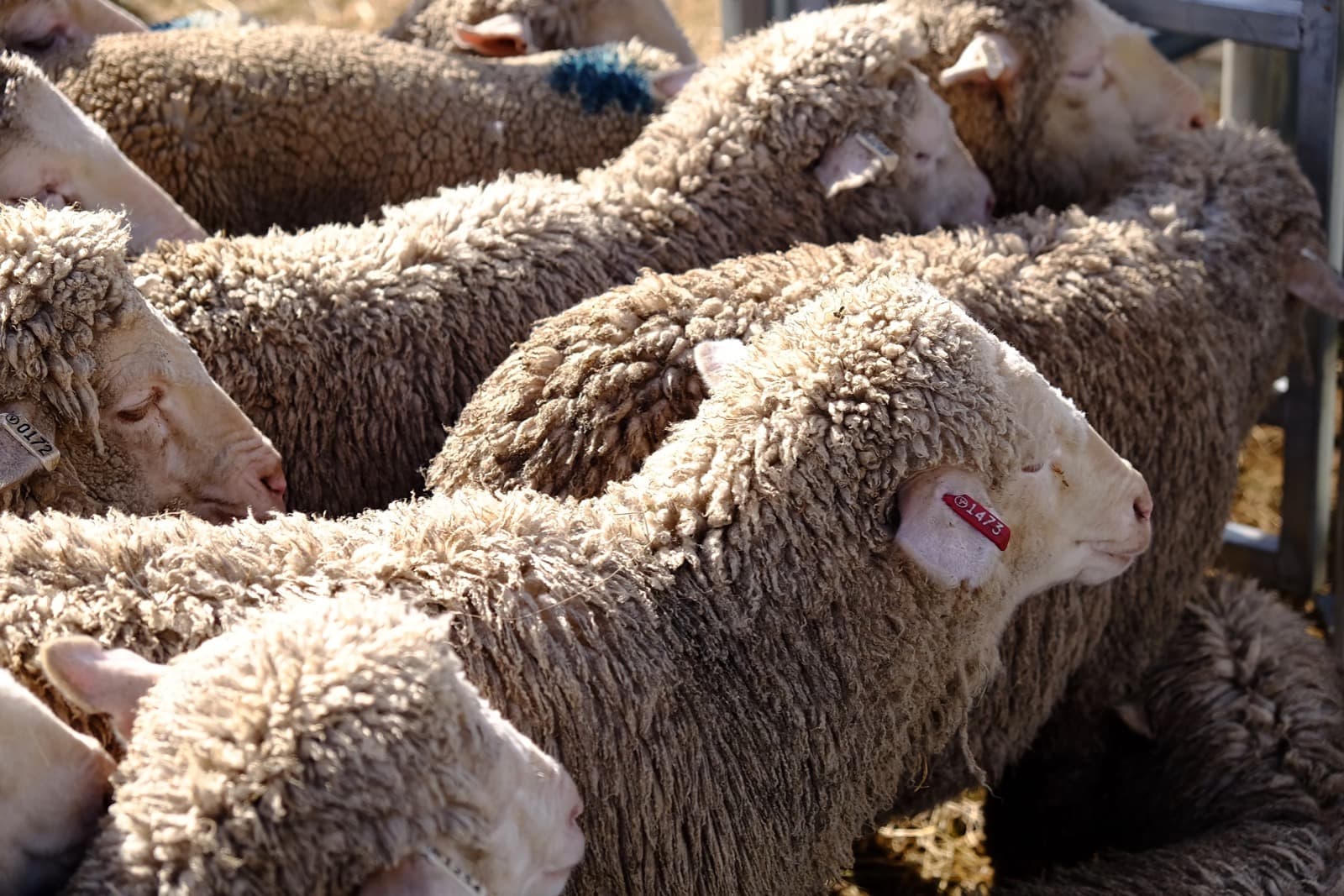
Wool scores 76 out of 100 for wearer health on Toxome's fiber scale, where 100 is cleanest. That puts it in the safest band to wear. Wool is a natural animal fiber that insulates and resists odor; favor untreated. The score rates the fiber, not the finished garment. Mills add dyes and finishes later, so check the label for those.
What is wool?
Wool usually means fiber from ordinary sheep breeds, not the finer merino. It runs coarser, generally 23 microns and up, which is why it goes into outerwear, sweaters, and rugs rather than base layers.
People have sheared sheep for wool for roughly 10,000 years, among the first fibers farmed rather than gathered, and it remains one of the few that renews itself on the animal every year.
How wool is made
Shorn once a year in spring, a process that does not harm a healthy animal.
Heavy with lanolin grease, suint, dirt, and vegetable matter.
Washed in hot water and mild alkali. What is left is keratin.
Superwash coats the fiber in resin, mothproofing binds permethrin into it.
Untreated wool insulates, resists flame, and breaks down in soil.
The risks are the treatments layered on after shearing, not the sheep.
Sheep are shorn once a year, usually in spring, in a process that does not harm a healthy animal. Raw fleece is heavy with lanolin grease, suint (dried sweat salts), dirt, and vegetable matter, so it is scoured, washed in hot water and mild alkali, before it can be spun. What is left is keratin, the same protein family as your hair and nails.
Two treatments add the chemistry wool starts without. Superwash runs the chlorine-Hercosett process: chlorine etches the fiber's surface scales and a thin polyamide resin coats them so the wool cannot felt in a machine, a step that generates AOX (adsorbable organic halogens) in its wastewater. And mothproofing binds permethrin, a pesticide, into the fiber to deter clothes moths.
The fiber itself starts clean and stays useful: it insulates, resists flame, and breaks down in soil. The risks are the treatments layered on after shearing, not the sheep.
Not all wool is the same
Plain wool is graded by micron count like merino, but runs coarser overall. Fine wool sits around 21 to 25 microns. Medium wool runs 25 to 31 microns, the common range for sweaters and knitwear. Coarse wool, 32 microns and up, goes into rugs, blankets, and heavy outerwear rather than next-to-skin garments.
Is wool safe to wear?
The idea that everyone reacts to wool is not supported. A 2017 Acta Dermato-Venereologica review found wool is not a true allergen. What people feel is prickle, thick fiber ends poking the skin's nerve endings, which is why plain wool at 25 microns and up itches more often than fine merino: thicker fiber, not different chemistry.
The chemistry to watch arrives after shearing. Superwash leaves chlorine-based residue and a plastic resin film, and the chlorination step also creates AOX byproducts. Some wool is mothproofed with permethrin, a pesticide bound tightly enough to still pass OEKO-TEX testing, though it remains a pesticide worn against skin. Leftover lanolin in modern scoured wool is low and rarely the irritant people blame it for.
The share of its own dry weight the fiber itself absorbs as water vapor, then releases into the air.
A fiber that can hold and release moisture is a fiber that feels dry against the skin. Polyester holds almost none, which is why a synthetic top feels clammy in the heat and wool does not. Figures are the standard reference values for each fiber at 20°C and 65% humidity, not a measurement of any one garment.
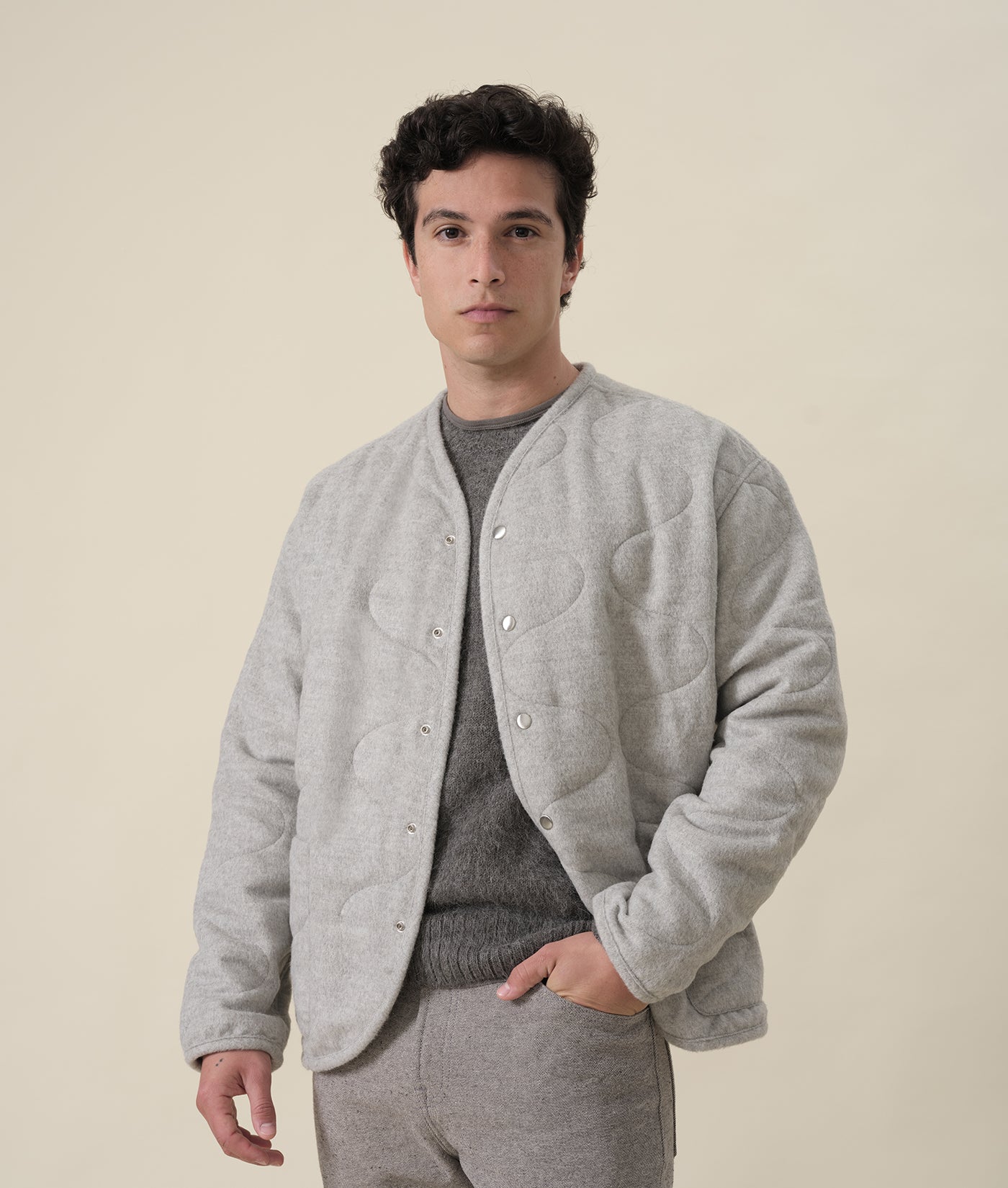
- Insulates reliably Traps warm air efficiently, which keeps untreated wool the go-to for cold-weather outerwear and blankets.
- Naturally flame-resistant Wool's keratin protein resists catching fire and self-extinguishes, unlike most synthetics, with no added flame-retardant chemical.
- Biodegradable Untreated wool is protein and breaks down in soil, unlike plastic-based fibers; superwash coatings and permethrin slow that down.
- Not a true allergen Dermatology research has debunked wool as an allergen; discomfort from coarser wool is mechanical prickle, not an immune reaction.
Plain wool's fiber is clean keratin protein at the source, close to merino, but its thicker average micron adds prickle at the same weave, landing it near 76. Superwash chlorination (and its AOX byproducts) and permethrin mothproofing are the two treatments that pull it down; an untreated, RWS-certified piece climbs back toward the mid-80s. See the full method.
Doing this check on every product page yourself is the tedious part. The Toxome Chrome extension reads the composition for you while you shop, so you see whether something is wool (and what else is in it) before you buy, not after it arrives.
How wool affects the planet
Wool's best environmental story is the end of its life. In soil, a wool garment breaks down roughly 95 percent within about 15 weeks, returning nitrogen and sulfur to the ground instead of sitting in a landfill.
Its carbon figure is high and genuinely contested. Around three-quarters of it is methane from the sheep, and how methane should be counted is under active scientific debate, so read the range as a range.
There is no clean per-kg figure. Over 95% of wool's water is rain on grazing land, not scarce freshwater.
High and contested. About 75% is sheep methane, and how methane is counted is actively debated.
A protein fiber. Returns nitrogen and sulfur to the soil.
Natural keratin, not plastic.
Environmental figures are separate from the health score above, which reflects wearer health only. Numbers are per kilogram of finished fiber and rounded; see sources.
Animal welfare in wool
Mulesing removes strips of skin from a lamb's hindquarters to prevent flystrike, a practice concentrated in Australia and often carried out without pain relief. New Zealand banned it in 2018. The Responsible Wool Standard prohibits it, but RWS-certified wool is only about 4 percent of the global clip, so most wool gives you no such guarantee.
How to care for wool
Shop Wool



Wool, answered
The fiber is not. The added risks are superwash (a chlorine treatment that leaves chlorine byproducts called AOX) and permethrin mothproofing, a pesticide bound into some wool. Untreated, OEKO-TEX or RWS certified wool avoids most of it.
No. A 2017 dermatology review found wool is not a true allergen. The itch people describe as an allergic reaction is prickle, stiff fibers poking the skin, which happens more with coarser wool.
The chlorine-Hercosett process: a chlorine bath strips wool's surface scales so it will not felt in a machine, then a thin polyamide resin coats the fiber smooth. It is not acutely dangerous, but it leaves chemical residue and a plastic film on a fiber that starts out clean.
For comfort against skin, usually not. Merino is bred to be finer, generally 18 microns or under, while plain wool runs 21 microns and up, which means more prickle at the same weave. Both carry the same superwash and mothproofing questions.
- Debunking the Myth of Wool Allergy · Acta Dermato-Venereologica
- Superwash - Woolpower · Woolpower
- OEKO-TEX STANDARD 100 · OEKO-TEX
- Moth protection with the active substance permethrin · Paulig
- Wool is biodegradable · International Wool Textile Organisation
- Responsible Wool Standard · Textile Exchange
The health score reflects wearer health only and mirrors the Toxome app. This guide is educational and is not medical advice.