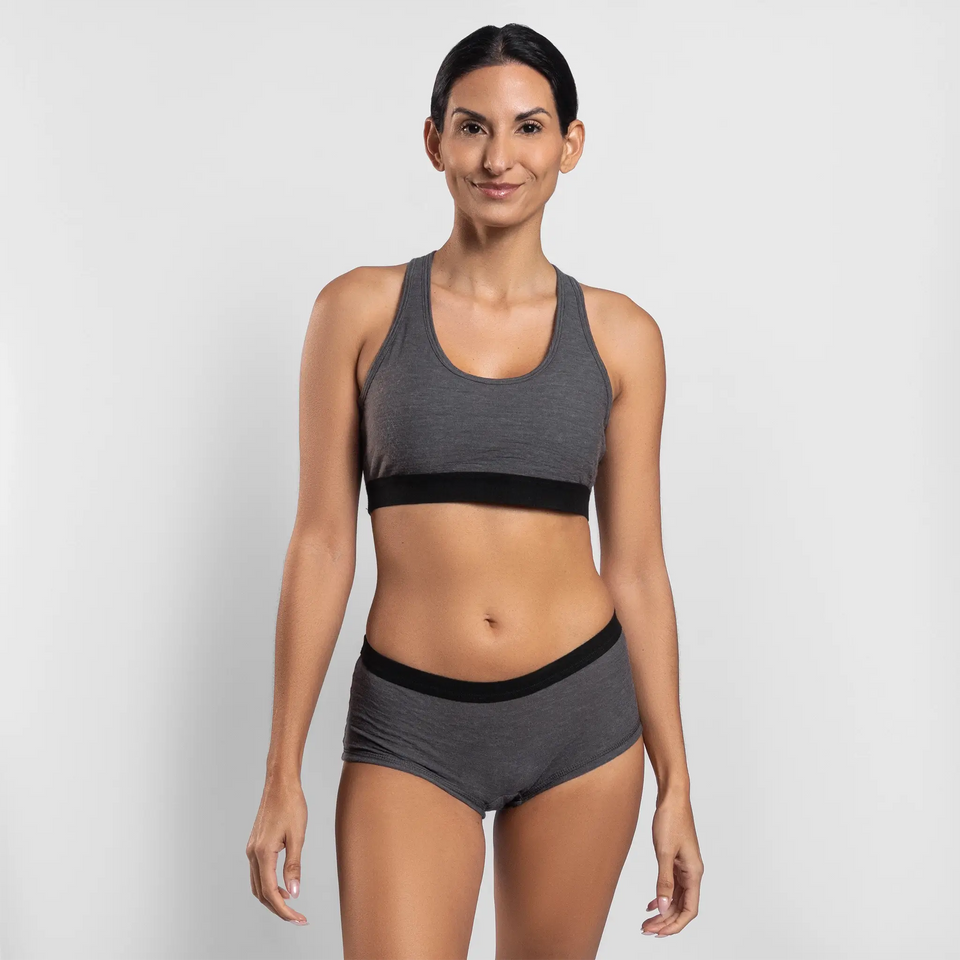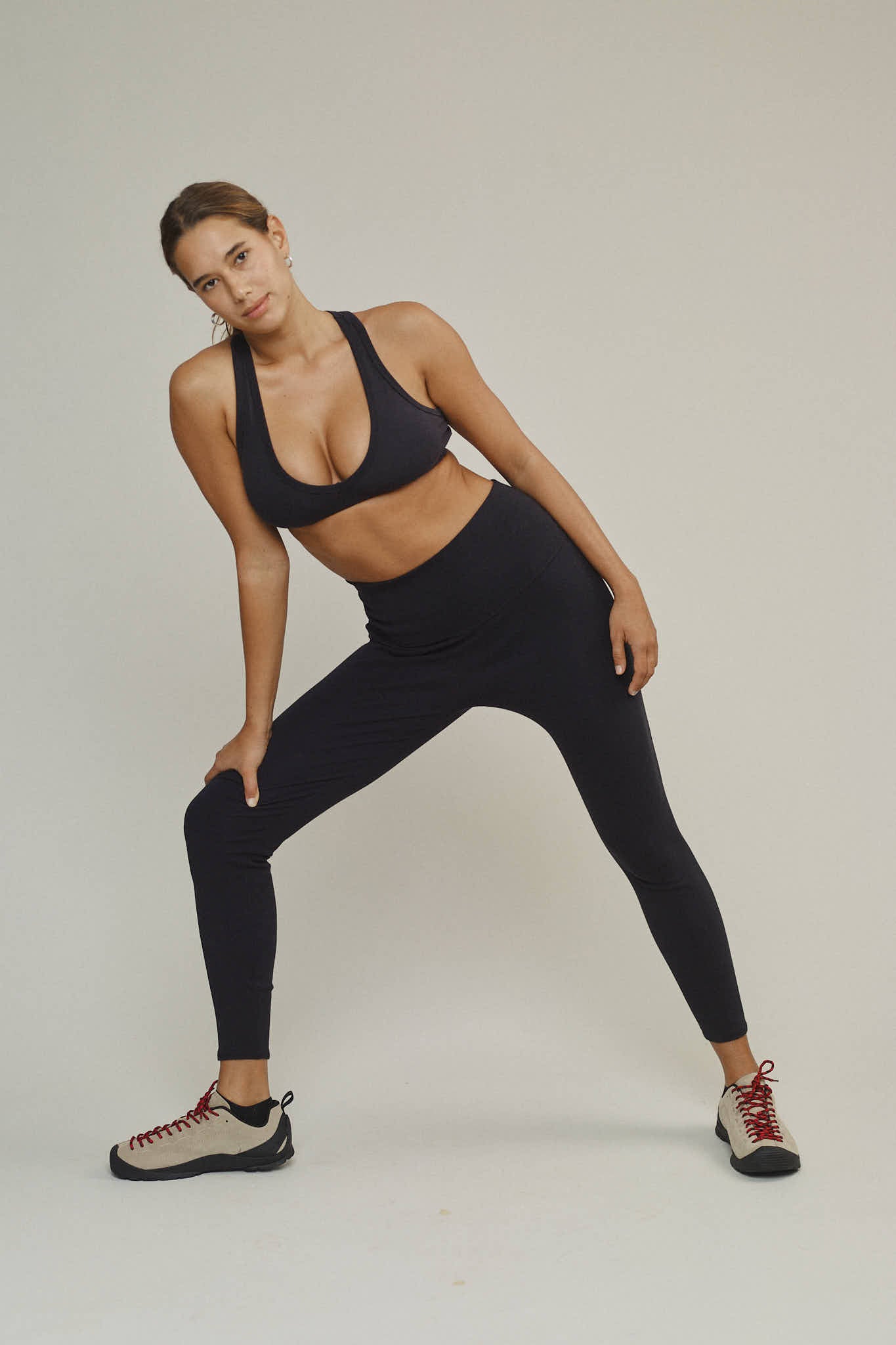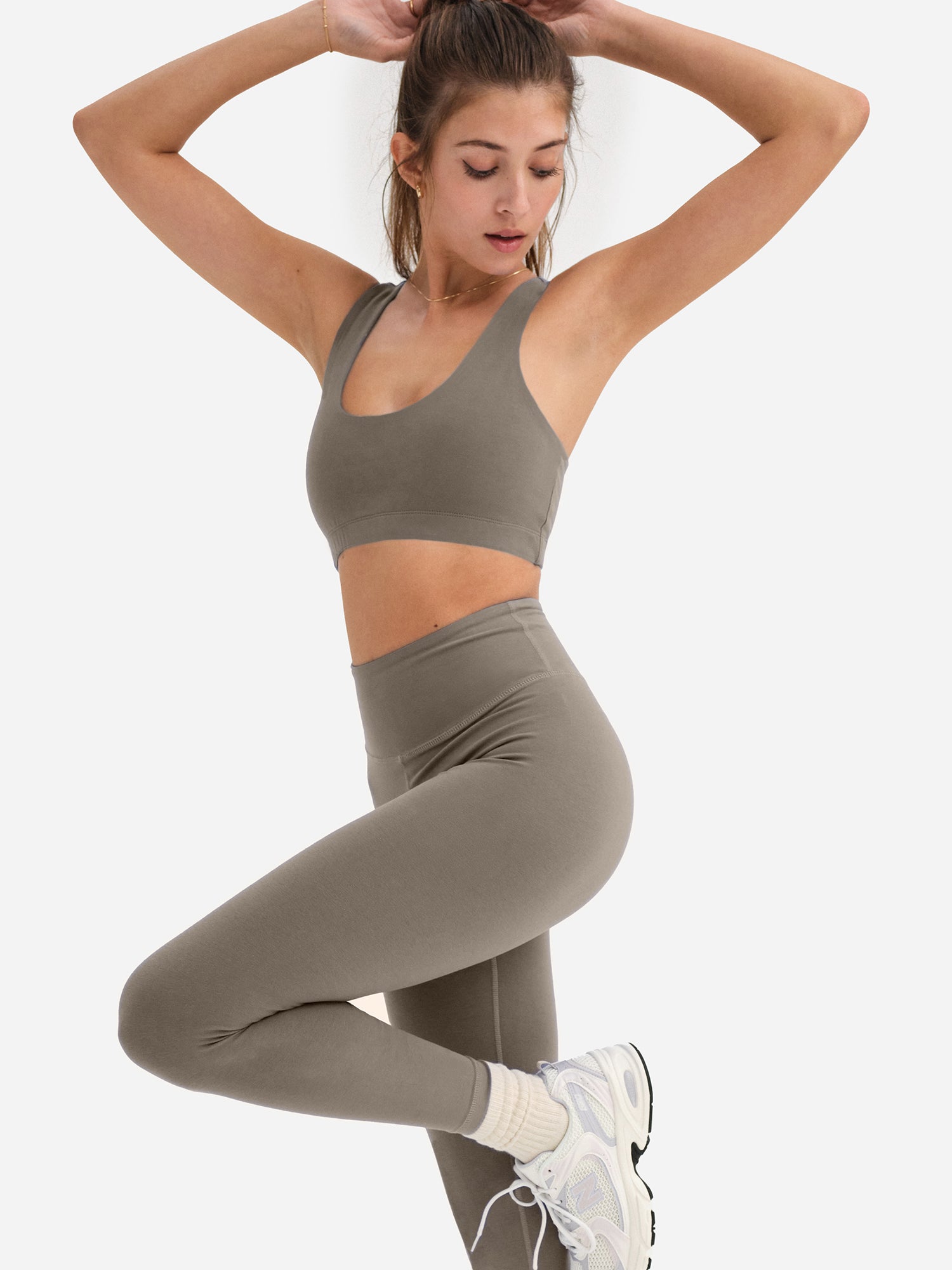
The leggings you reach for every morning are the most intimate clothes you own. They sit against the skin from your warm-up to your cool-down, through every drop of sweat, sometimes for ten hours straight. So it matters what they are made of, and it matters what was sprayed on top. A lot of performance activewear carries a class of chemicals called PFAS, and once you see how they get there, the question is your activewear toxic deserves a real answer.
The forever chemicals, defined
PFAS stands for per- and polyfluoroalkyl substances, a family of thousands of man-made chemicals built around a bond between carbon and fluorine. That bond is one of the strongest in chemistry, which is the whole appeal and the whole problem. It makes a fabric shrug off water, oil, and stains. It also means the chemical almost never breaks down, not in a landfill, not in a river, not in you. That is why people call them forever chemicals. The ones that get into your body tend to stay for years.
Why performance fabric carries PFAS
Most leggings, sports bras, and running tights are made from synthetic fibers: polyester, nylon, and a few percent of spandex for the stretch. Those plastics are not PFAS on their own. The PFAS arrive as a finish, a thin chemical coat brushed onto the cloth to deliver the features the label is selling: water-repellent, sweat-wicking, stain-resistant, quick-dry. The same surface that keeps a raindrop beading on a jacket is, in many cases, a fluorinated coating, the textile industry's durable water repellent, or DWR. Anti-odor finishes are a separate story, usually built on antimicrobials like silver rather than PFAS, but they run on the same logic: a chemical sprayed onto plastic to sell a feature.
Independent testing keeps turning it up. When the consumer-health group Mamavation sent leggings, sports bras, and yoga pants to an EPA-certified lab with Toxic-Free Future, a striking share came back showing markers of PFAS. Researchers in Graham Peaslee's lab at Notre Dame found the same fingerprint across school uniforms and outdoor performance gear. The fabrics that promise to do the most, repel the most, dry the fastest, are the ones most likely to be treated.
The sweat-and-skin pathway
For years the assumption was that whatever sat on a fabric stayed on the fabric. That assumption is weakening. A 2024 study from the University of Birmingham, published in Environment International, showed that several common PFAS can pass straight through human skin, with the smaller molecules absorbed most easily. Heat and moisture tip the odds further. Research on other clothing chemicals has found that warmth and dampness pull compounds out of fabric and onto the body faster than dry wear does, and a workout is the most heat-and-sweat condition your clothes ever meet.
Why mind what gets in? PFAS are endocrine disruptors, which is the plain way of saying they interfere with your hormones, the chemical messages that run your metabolism, your thyroid, your cycle, your fertility. The U.S. EPA and the CDC link PFAS exposure to thyroid disease, hormone disruption, reduced fertility, weakened immune response, and certain cancers. No single pair of leggings is the cause. The concern is the sum, the steady drip of a chemical that never leaves, layered across everything you wear and drink and touch.
How to find natural fiber, PFAS-free activewear
The market is moving in your favor. California's law banning PFAS in clothing took effect in 2025, New York followed, and a growing list of brands now market PFAS-free leggings outright. Searching for natural fiber workout clothes is no longer a dead end. Here is what to look for, in order.
The words PFAS-free on the label. A brand that has taken them out tends to say so in writing.
A natural or plant-based fiber where it can do the job: organic cotton for low-sweat movement like Pilates or yoga, merino wool for its own honest odor resistance, or Tencel lyocell for a cooler, smoother feel. These wick less than treated polyester, which is the tradeoff, and for most workouts it is a fair one.
A third-party certification with teeth. OEKO-TEX Standard 100 restricts PFAS and tests the finished garment. Bluesign screens the chemistry from the start, before it ever reaches the fabric.
And a flat skepticism toward the buzzwords. Water-repellent, stain-proof, and all-day-dry are the exact promises a fluorinated finish is engineered to keep. If a legging is selling you magic, read further.
What it means for your closet
You do not need to empty your gym bag this afternoon. Start where the contact is longest and the sweat is heaviest: the leggings you train in three times a week, the sports bra you live in. Replace those first, with pieces whose makers will tell you what is and is not in them. The clothes you sweat through are a health choice, the same way the food on your plate is, and for too long nobody handed you the information to make it. When you can see what a garment is made of before it touches you, the choice gets simple. Start with one pair. Your sweatiest hour deserves to be your cleanest.