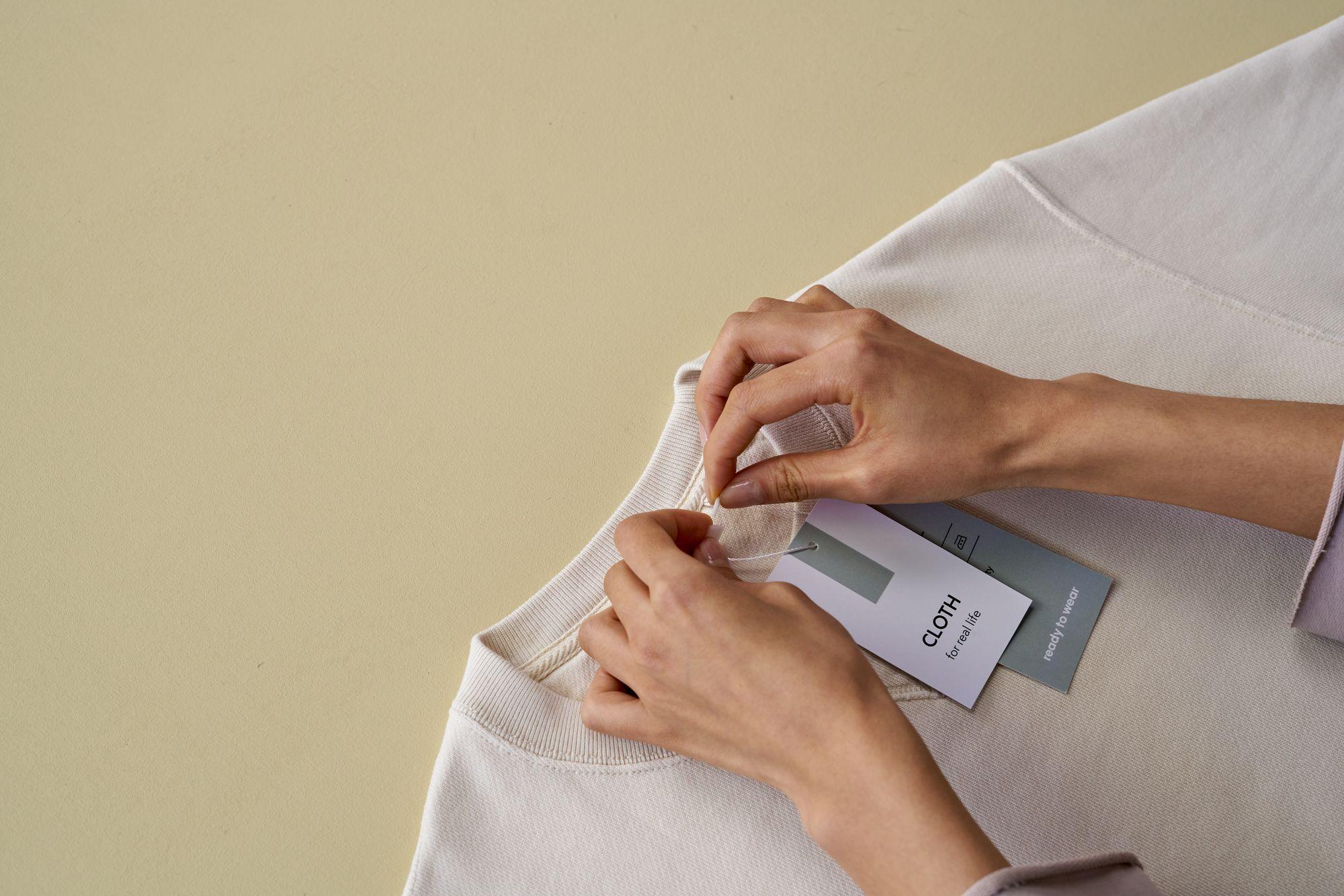
What does OEKO-TEX certified mean? It means a sample of the product passed a lab test against limits for more than 1,000 harmful substances, under a system called OEKO-TEX STANDARD 100. It's the best safety floor clothing has, and in the United States it's often the only one, since no federal law limits formaldehyde or most other chemicals in adult clothing. And a floor is where you start. The label tells you a product passed. It doesn't tell you how it measured, whether the piece in your hands was the one tested, or what it's made of.
OEKO-TEX STANDARD 100 is a certification that lab tests textiles for harmful chemical residues and sets stricter limits the closer a product sits to skin. The limits below are from the current edition, binding since June 2026. Milligrams per kilogram (mg/kg) is the same as parts per million (ppm).
| Rule | Formaldehyde, clothing that touches skin | Formaldehyde, baby items | PFAS | Bisphenol A (BPA) | Fiber |
|---|---|---|---|---|---|
| United States (federal) | No limit | No limit | No federal limit | No limit | Not assessed |
| California | No limit | No limit | 100 ppm total organic fluorine, 50 ppm from January 1, 2027 | Warning rule only (Prop 65) | Not assessed |
| OEKO-TEX STANDARD 100 | 75 mg/kg | Under 16 mg/kg | No intentional use; 50 mg/kg total fluorine | 10 mg/kg | Not assessed |
| Toxome Verified™ | 16 mg/kg | 16 mg/kg | Under 20 ppm | Tested in clothing panels | Tested |
OEKO-TEX values from the OEKO-TEX RSL, Version 03.2026. US federal status from CPSC and GAO. California from Morgan Lewis, as of November 2026. This is a guide, not legal advice.
What does OEKO-TEX certified mean?
OEKO-TEX certified means an independent lab tested samples of the product against OEKO-TEX's list of restricted substances, and every result came in under the limit. The certificate lasts 12 months and has to be renewed.
What gets tested
OEKO-TEX was founded in 1992 by two textile research institutes, Hohenstein in Germany and the Austrian Textile Research Institute. Under STANDARD 100, "every thread, button and accessory" is checked: the fabric, the sewing thread, the zipper, the print. The list covers formaldehyde, per- and polyfluoroalkyl substances (PFAS), bisphenols, phthalates, heavy metals like lead and cadmium, and dyes known to cause allergies.
Four classes, four bars
OEKO-TEX sorts products into four classes, and the bar rises with skin contact. Class I is for babies under 3. Class II covers anything worn against skin, which is most clothing. Class III is for things that don't touch skin, like a coat. Class IV is decoration, like curtains. Formaldehyde shows the spread: under 16 mg/kg for babies, 75 for skin contact, 150 for no skin contact, 300 for decoration, per the 2026 limits.
Under the limit counts as a pass
OEKO-TEX certified means every result came in under the limit. A shirt that tests at 74 mg/kg formaldehyde and a shirt that tests at 2 carry the same label.
Is OEKO-TEX legit?
Yes. OEKO-TEX STANDARD 100 is the most widely used label that tests the finished textile itself, and nothing else in clothing does that job at its scale. Alden Wicker, the journalist behind the book To Dye For, reached the same verdict in EcoCult: it's the best certification we have, for now.
It tests the finished product
Most labels check what goes into a mill. bluesign manages chemicals before they enter production, and its own FAQ says testing "is not where the system starts." OEKO-TEX STANDARD 100 starts with the lab.
It's big, and it keeps moving
OEKO-TEX issued 36,592 STANDARD 100 certificates in 2025/26, according to its annual report. The limits are reviewed every year, and they've tightened fast. BPA dropped from 100 mg/kg to 10 in April 2025. Four more bisphenols got limits in 2026.
In the US, it's often the only floor
The Government Accountability Office (GAO) reported that formaldehyde in clothing isn't regulated in the United States, and the Consumer Product Safety Commission (CPSC) sets no chemical limits for adult clothing. Without a certification, adult clothing in the US meets no federal chemical limit.
Does OEKO-TEX mean non-toxic?
No. OEKO-TEX means a product tested under its limits for the substances on its list. OEKO-TEX itself says it doesn't certify products as "PFAS-free," because no lab can test for every compound, according to Hohenstein, one of its testing institutes.
The numbers stay private
OEKO-TEX test reports are confidential under its Terms of Use. The brand sees its results. Consumers see a logo. Label Check shows the certificate's status and scope, never the measured values.
The brand picks the sample
The company applying for the certificate selects and ships "representative" samples to the lab it chooses, at the first test and at every renewal, per the STANDARD 100 rules. The company then signs a declaration that its production matches those samples. OEKO-TEX re-tests about 25% of certificates each year, with samples pulled from store shelves, factory audits and renewals.
One certificate, many products
One OEKO-TEX certificate can cover T-shirts, dresses and pants in different fibers and colors, tested through representative samples. Colors and batches that weren't sent to the lab rely on the company's own quality checks. The piece you take home was most likely never tested itself.
Does OEKO-TEX test for PFAS?
Yes. OEKO-TEX bans intentional PFAS use, and since January 2026 it caps total fluorine at 50 mg/kg, with limits of 25 micrograms per kilogram (µg/kg) for each targeted PFAS. PFAS, often called forever chemicals, are a family of thousands of synthetic chemicals used to make fabric repel water, stains and sweat.
The new exception
On March 3, 2026, OEKO-TEX added an exception. A product can now pass above the 50 mg/kg fluorine limit if the company proves the fluorine comes from a non-PFAS source, per OEKO-TEX's 2026 regulations. The exception has to be listed in the certificate's scope. It mirrors a defense France's PFAS law allows, and it means "OEKO-TEX certified" no longer guarantees fluorine under 50.
How it compares with state law
OEKO-TEX's PFAS numbers match France's 2026 law one for one. In the US, California bans intentionally added PFAS in clothing at 100 ppm total organic fluorine, dropping to 50 ppm on January 1, 2027, per Morgan Lewis. Total fluorine counts every fluorine atom. Total organic fluorine counts only fluorine bonded to carbon, which is where PFAS live. Since total fluorine counts more, you can't compare the two numbers one to one. For more on the state laws, see PFAS apparel regulations.
What does OEKO-TEX not test for?
OEKO-TEX STANDARD 100 doesn't test what a textile is made of, how it was made, or what happens to it after it leaves the factory. It checks chemical residues on a finished textile, and it says so: the mark "is not a quality label."
Fiber
A 100% polyester legging and an organic cotton tee can carry the same OEKO-TEX label. The standard's own examples include elastane and recycled polyester from bottles. Polyester is plastic, and plastic fabric sheds microfibers as it's worn and washed. We covered that gap in Does OEKO-TEX Mean No Microplastics?
Life after the factory
Certification covers the product as it left production. Once a garment is washed, finished or treated again, OEKO-TEX says the certified status no longer applies. A finish added after the fabric was certified isn't covered by the fabric's certificate.
How it was made
STANDARD 100 doesn't certify organic farming, factory conditions or environmental impact. Those are separate OEKO-TEX labels, like MADE IN GREEN, or other systems entirely.
Is OEKO-TEX better than organic?
Neither is better. OEKO-TEX vs GOTS compares two labels that answer different questions. OEKO-TEX STANDARD 100 tests the finished textile for harmful residues. The Global Organic Textile Standard (GOTS) certifies that the fiber is organic and that the mill used approved chemicals, with residue testing based on risk, per GOTS.
OEKO-TEX vs GOTS, side by side
| OEKO-TEX STANDARD 100 | GOTS | |
|---|---|---|
| Question it answers | Did the finished textile test under limits? | Is the fiber organic, and were inputs approved? |
| Lab tests the product | Every certificate | Based on risk assessment |
| Fiber | Any fiber, including polyester | At least 70% organic fiber; 95% for "organic" |
| Renewal | Every 12 months | Every 12 months |
The strongest label in a closet is both: organic fiber with an OEKO-TEX certificate.
How do I check if an OEKO-TEX label is real?
Type the certificate number from the tag into OEKO-TEX's free Label Check at oeko-tex.com. It shows whether the certificate is valid, expired or under review, who holds it, and which products it covers.
A logo isn't proof
OEKO-TEX's own institute warns that a label on a product "is not sufficient proof of successful testing." A logo with no number can't be checked. "Made with OEKO-TEX fabric" isn't allowed on a product label at all under the Labelling Guide, because certified fabric doesn't make a certified garment.
Read the scope
A valid certificate can belong to a fabric mill, not the brand. Check that the holder and the product description match what you're buying. When we checked brand claims against the public register for the Toxome directory, some certificates had expired and some covered a different product.
How to shop beyond the floor
Start with proof on the exact piece, then use OEKO-TEX as the floor it is.
Shop Toxome Verified™
Every product with the Toxome Verified™ seal was bought at retail, the same way you'd buy it, and lab tested for fiber content, PFAS under 20 ppm and formaldehyde under 16 mg/kg. The seal links to the record.
Keep OEKO-TEX as your baseline
For anything a baby wears or sleeps on, look for OEKO-TEX STANDARD 100 Class I and check the number. For everything else, an OEKO-TEX certificate is a strong first filter, especially in a country with no federal limits.
Read the fiber
Check the fiber content on the tag, whatever the label says. Linen, organic cotton and lyocell don't shed plastic. Activewear and anything marketed as water-repellent or stain-resistant is where PFAS questions start.
What brands should know before a buyer asks
Certified brands still get asked to prove it. When American Airlines replaced the uniforms its flight attendants said made them sick, it rolled out new ones for more than 50,000 employees with every garment certified to OEKO-TEX STANDARD 100. The airline used the certificate as its starting point for winning back trust.
The questions that come first
- Does your certificate cover the finished garment, or only the fabric? Consumers now check the scope.
- Does it cover this color and this season? A certificate rests on representative samples.
- Can a consumer see a number? A pass/fail logo answers "did it pass," not "how did it measure."
Keep the OEKO-TEX certificate. Add a result from a product bought off a shelf.
OEKO-TEX, plus proof: Toxome Verified™
Toxome Verified™ tests one product bought at retail for fiber, PFAS and formaldehyde, and puts the brand's proof in front of the consumers looking for it.
Frequently asked
OEKO-TEX certified means a sample of the product passed a lab test against limits for over 1,000 harmful substances, under OEKO-TEX STANDARD 100. It means tested under limits, not free of chemicals, and the certificate must be renewed every 12 months.
Yes. OEKO-TEX is a real, independent testing system founded in 1992, and STANDARD 100 is the most widely used label that lab tests the finished textile. It's a pass/fail floor, so it tells you a product passed, not how it measured.
No. OEKO-TEX means a product tested under its limits for listed substances. OEKO-TEX itself doesn't certify products as non-toxic or PFAS-free. A certified item can still contain a listed chemical below the limit, and fiber isn't assessed.
Yes. OEKO-TEX bans intentional PFAS use and, since January 2026, caps total fluorine at 50 mg/kg. Since March 2026, a product can pass above that cap if the fluorine is shown to come from a non-PFAS source. Toxome Verified™ tests PFAS under 20 ppm.
They answer different questions. GOTS organic certifies the fiber and how it was processed. OEKO-TEX STANDARD 100 tests the finished textile for harmful residues. Organic cotton with an OEKO-TEX certificate covers both.
Type the certificate number from the label into OEKO-TEX's free Label Check at oeko-tex.com. It shows whether the certificate is valid, expired or under review, who holds it, and what it covers. A logo without a number can't be checked.
Comments
No comments yet.
That didn't go through. Try again.