
In the silk vs satin pillowcase question, only one of the two words names a material. Silk is a fiber, spun by silkworms. Satin is a weave, a way of crossing threads so one side of the fabric comes out smooth and glossy. You can weave satin from silk, but most satin pillowcases are woven from polyester, which is a plastic.
So the real comparison is silk against whatever the satin happens to be made of. The package tells you how the fabric was woven. The fiber label tells you what you're actually sleeping on.
| Silk pillowcase | Polyester satin pillowcase | Cotton sateen pillowcase | |
|---|---|---|---|
| Fiber | Silk, usually mulberry | Polyester (plastic) | Cotton |
| Weave | Satin (called charmeuse in silk) | Satin | Satin, called sateen in cotton |
| Moisture it holds | 11% | 0.4% | 8.5% |
| Feel | Smooth, warms to your skin | Slick, cool, then clammy | Smooth, soft, matte sheen |
| Washing | Cold, gentle cycle | Machine wash | Machine wash |
| Sheds plastic microfibers | No | Yes | No |
Moisture figures are the textile industry's standard regain values from ASTM D1909.
What is satin made of?
Satin can be made of almost any fiber. Encyclopaedia Britannica lists it as one of the three basic textile weaves, alongside plain weave and twill. Each thread floats over several others before it dips under one, and those long floats lie flat and catch the light. That's the shine, whatever the fiber underneath.
Satin began as a silk fabric. Today most of it is polyester, sometimes blended with nylon, and nearly every budget satin pillowcase is made that way. Silk woven this way is often sold as charmeuse. Cotton woven this way is called sateen, and lyocell sateen works the same way, which makes either one a good middle ground if you want the smooth feel without the price of silk.
How to tell what you're buying
US law requires bedding to list every fiber by percentage, according to the Federal Trade Commission, and satin can't stand in for one. A real silk pillowcase says 100% silk, often 100% mulberry silk, and usually gives a weight in momme, like 19, 22 or 25. Polyester satin doesn't use the unit. Online, if a page calls a pillowcase "satin" or "silky" and never names a fiber, assume polyester.
Which is better for hair, skin and sleep?
Sleep
Silk sleeps cooler. Your face spends seven or eight hours a night on that pillowcase, warm and breathing. Silk holds about 11% of its own weight in moisture, so it takes some of that up and lets it go. Polyester holds 0.4%, so the moisture stays put, which is why a satin pillowcase can feel damp by morning.
Hair
Both give your hair the same smooth surface, because the weave does that part. The difference is everything around it: silk breathes, while polyester satin costs less and survives a hot wash but sleeps warmer and builds static.
Skin
No pillowcase has been shown to treat a skin condition. The study most often cited for silk pillowcases and acne, a 2008 pilot at Wake Forest University, actually tested a "silk-like" fabric of polyester and nylon. And when UK researchers dressed children with eczema in silk for six months, it added no benefit over standard care, according to PLOS Medicine. Choose a pillowcase for how it feels, and leave your skin to your skincare.
What to look for in a silk pillowcase
Look for 100% mulberry silk on both sides, since some cheaper pillowcases put polyester on the back. 22 momme is the common middle ground: sturdier than 19, less expensive than 25 or 30. OEKO-TEX STANDARD 100 or GOTS tells you more than a word like "pure" on the box.
Skip added finishes. Sleep With Clementine sells a silver ion version marketed for blemish-prone skin, and we picked its plain organic silk instead, because an antimicrobial finish is one more thing on your face every night. Silk does ask for gentle care: cold water, a delicate cycle, mild detergent and no direct sun.
What to buy instead
Two silk pillowcases we'd buy, and two sateen ones for when silk isn't in the budget. We checked each against the brand's own composition listing on November 14, 2026.
| Piece | Fiber | Price |
|---|---|---|
| Sleep With Clementine Organic Silk Pillowcase | 100% organic mulberry silk, 22 momme, GOTS | $130 |
| MommeSilk 22 Momme Silk Pillowcases, set of 2 | 100% mulberry silk, 22 momme, OEKO-TEX | $75 for two |
| The Citizenry Sateen Pillowcases | 100% Egyptian cotton sateen | From $59 |
| Ettitude Signature Bamboo Sateen Pillowcase Set | 100% bamboo lyocell sateen, OEKO-TEX | From $75 |
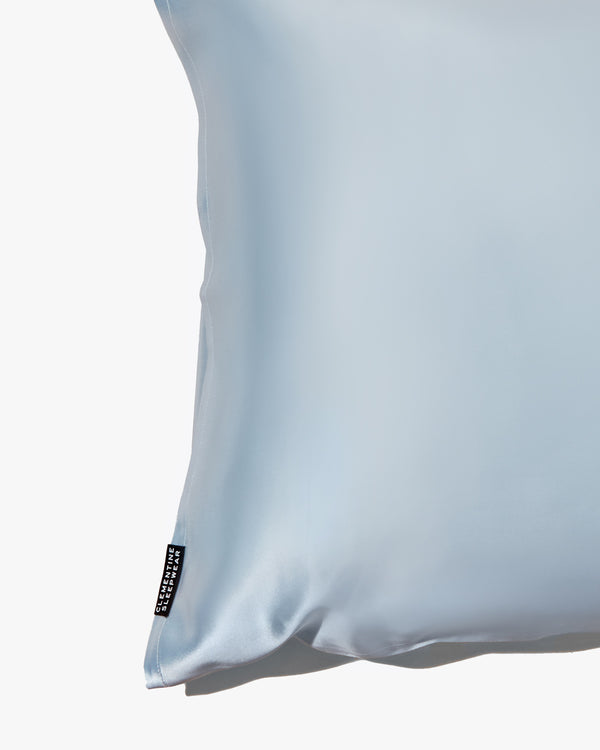
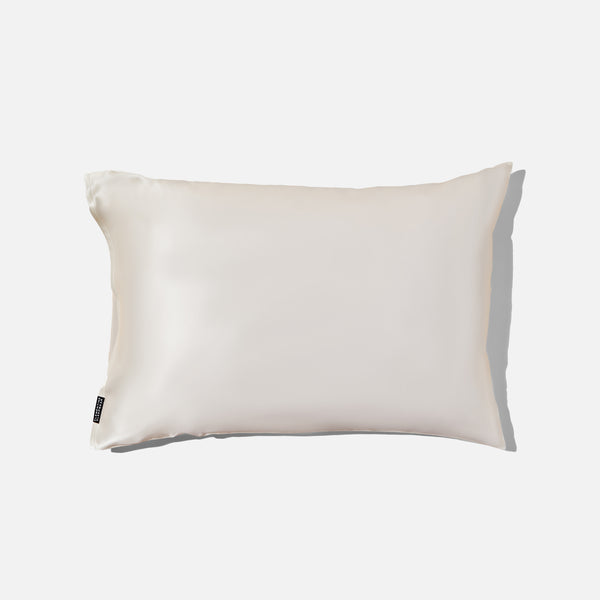


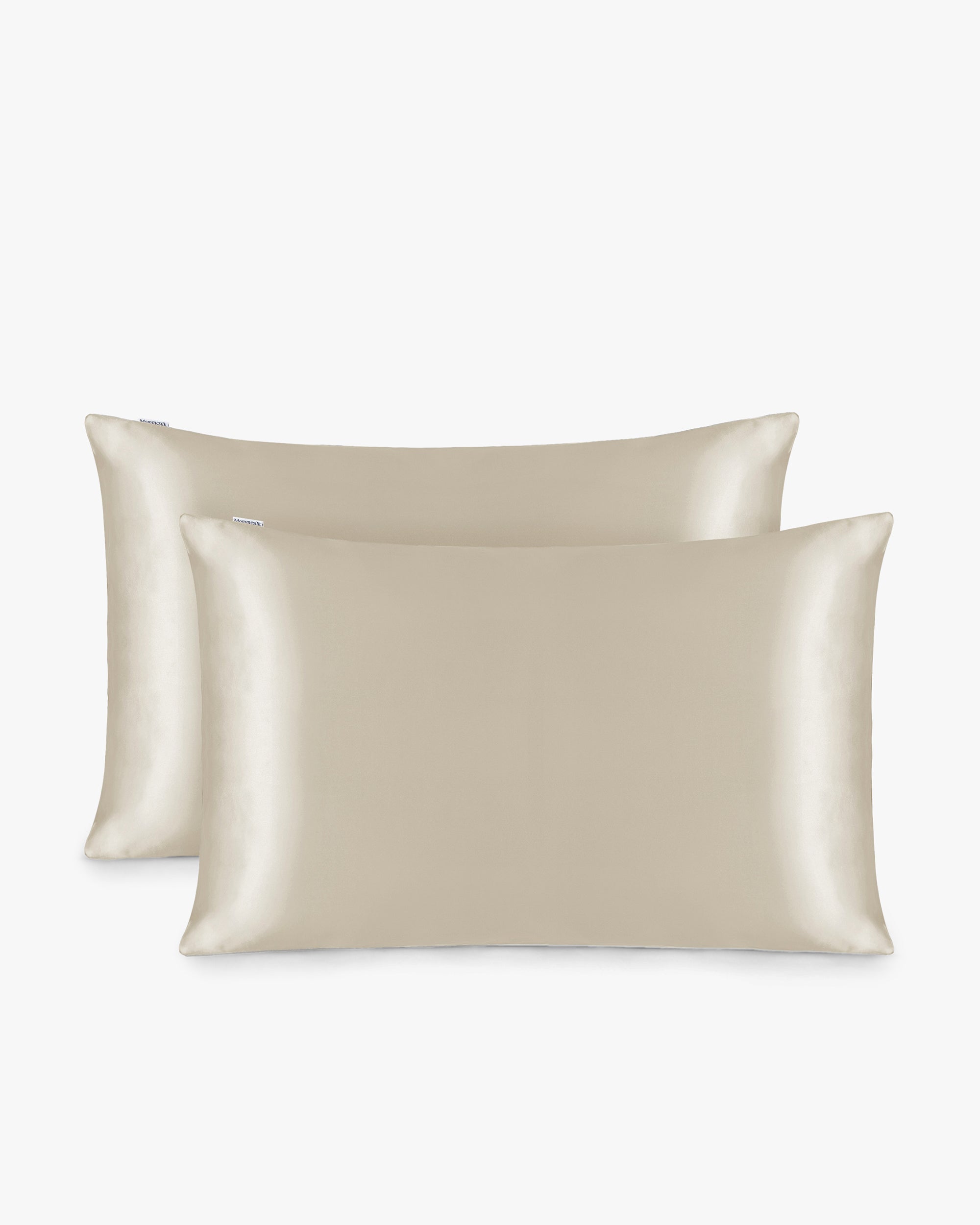
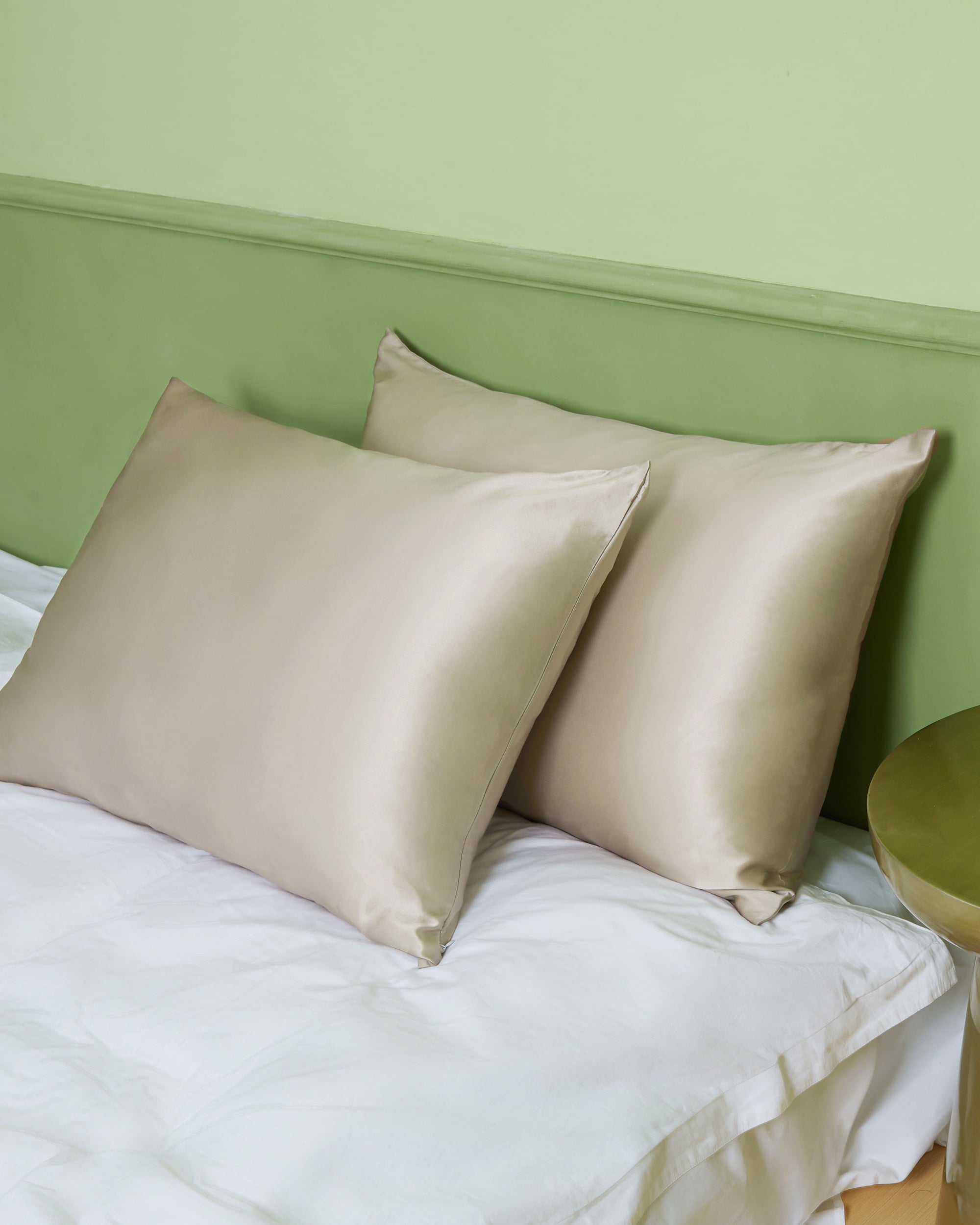


For the rest of the bed, The Bedding Edit has sheets with the fiber listed on every one, and our non-toxic bedroom guide works from the mattress up.
Satin was only ever a way of weaving. Before a pillowcase goes on your bed, turn it over and read the tag.
Frequently asked
Silk is a fiber from silkworms. Satin is a weave that makes any fiber shiny on one side. A silk vs satin pillowcase comparison is really silk vs whatever the satin is made of, and that's usually polyester. Silk satin exists too. The fiber line on the label tells you which.
Often, but not always. Most affordable satin pillowcases are 100% polyester. Satin can also be nylon, acetate, silk or a blend. US law requires a fiber content label with percentages, so the tag sewn into the seam tells you exactly what it is.
Not by definition. Satin is a weave, and silk satin is real silk. But most satin pillowcases are polyester woven to look like silk, so in practice the word often stands in for it. If a product page says satin and never names a fiber, assume polyester.
No pillowcase has been shown to treat a skin condition, and we won't promise one. The difference you'll notice is comfort. Silk holds about 11% of its weight in moisture and polyester satin holds 0.4%, so silk feels less hot and clammy against your face overnight.
You'll see the advice often, mostly from brands that sell pillowcases. The acne trial cited most often for silk pillowcases tested a polyester and nylon fabric, not silk. A smooth pillowcase is a comfort choice. It isn't a treatment.
Both give your hair the same smooth, slick weave to rest on, so either feels slicker than a crisp cotton. The difference is the fiber. Silk breathes and holds moisture. Polyester satin costs less and machine-washes easily, but sleeps warmer.
A polyester satin pillowcase holds almost no moisture, so it can feel hot and damp by morning. It builds static and sheds plastic microfibers in the wash. A silk pillowcase costs more and needs a cold, gentle wash.


Comments
No comments yet.
That didn't go through. Try again.