Nylon scores 36 out of 100 for wearer health on Toxome's fiber scale, where 100 is cleanest. That puts it in the band worth avoiding. Nylon is an oil-based plastic fiber that traps heat and sheds microplastics in the wash. The score rates the fiber, not the finished garment. Mills add dyes and finishes later, so check the label for those.
What is nylon?
Nylon is a plastic fiber made from oil-based building blocks. When it is made, not every piece links up perfectly, so a little leftover building-block chemical can stay in the fiber and slowly seep out. Most of nylon's health concerns come from the chemicals used to make and finish it, not from the plastic itself.
DuPont chemist Wallace Carothers invented nylon in 1935. The company launched it in 1938 as the first fully synthetic fiber ever made, and sold it to the public as women's stockings in 1940, where shoppers lined up around the block.
How nylon is made
Oil-based building blocks, linked by condensation polymerization.
The long chains that give the fiber its family name.
The polymer is melted and extruded straight into filament.
The reaction never finishes. Leftover monomer can migrate out over time.
Color that does not fully bond to the fiber and can rub off onto skin.
The real risks are the shedding and the surface dye, not the polymer itself.
Nylon is a polyamide, built by linking oil-based building blocks into long chains through a reaction called condensation polymerization, then melting and extruding that polymer into filament.
The reaction never runs to completion. In nylon 6 the leftover monomer is caprolactam, which can migrate out of the fabric over the life of the garment, though caprolactam is the only chemical the World Health Organization's cancer agency ever rated as probably not carcinogenic to humans, so it is a small part of nylon's story. Nylon is also almost always colored with disperse dyes, which do not fully bond to the fiber and can rub off onto skin.
Nylon's real risks live in the fiber's behavior and its dye. The plastic sheds constantly in the wash, and the surface dye creates a second, separate problem.
Not all nylon is the same
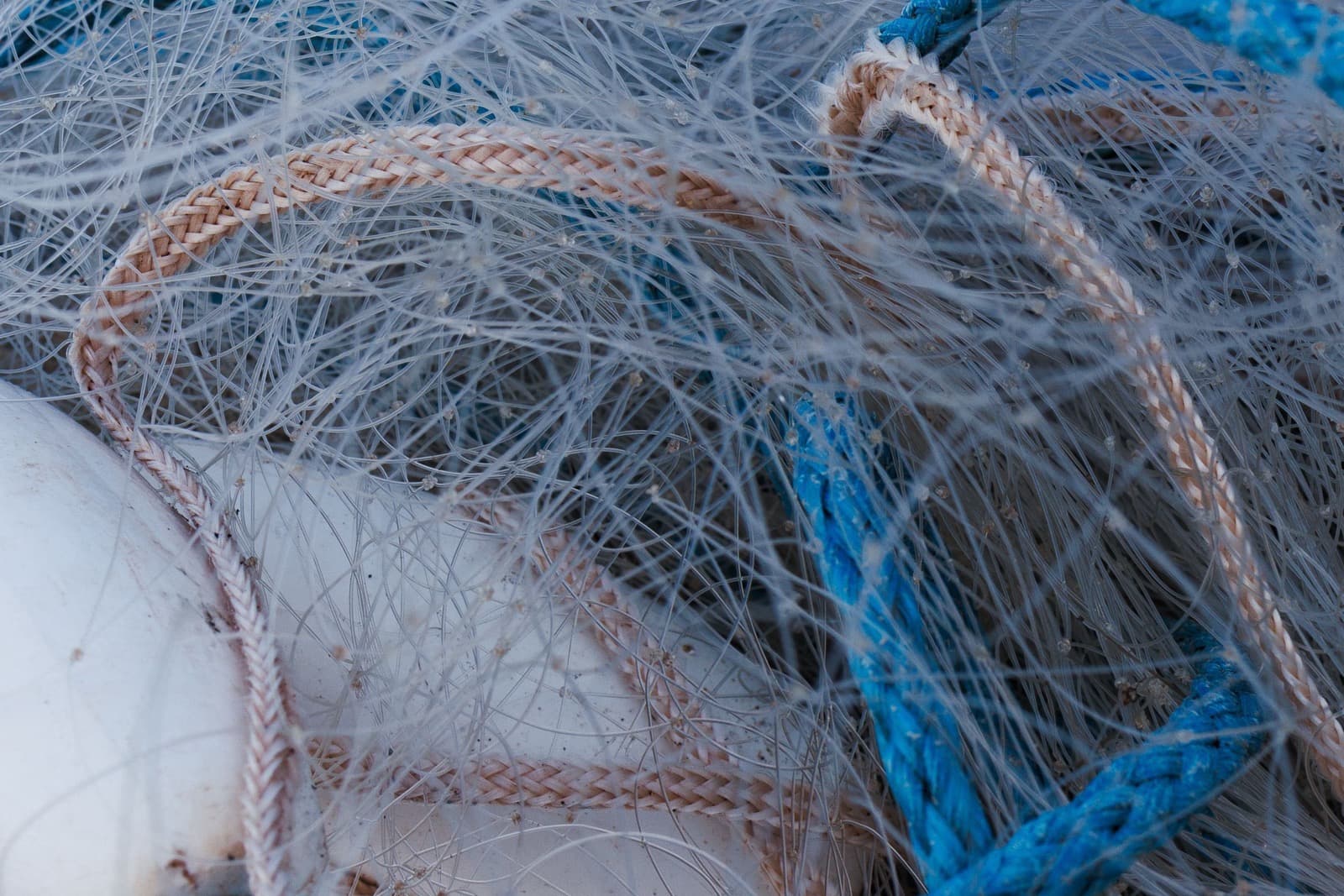
Virgin nylon is spun straight from new petroleum feedstock. Recycled (regenerated) nylon, often sold under names like ECONYL, is made by chemically breaking waste (old fishing nets, carpet) back down to caprolactam and re-spinning it, so it keeps the full performance of virgin nylon. It is the same polyamide either way: recycled nylon sheds the same microplastic and carries the same dye allergens, only starting from reclaimed material instead of crude oil.
Is nylon safe to wear?
Nylon is almost always dyed with disperse dyes, the leading cause of clothing-related skin allergies. Two of them, Disperse Blue and Disperse Orange, trigger a reaction in roughly 5 to 7 percent of people with long-term eczema, worst wherever the fabric rubs against sweaty skin.
Nylon also sheds microplastics heavily: a single wash can release hundreds of thousands of tiny plastic fibers that settle on your skin and drift into the air as you move. Tight-woven nylon sheds less than fluffy knits and fleeces, but the shed fibers carry dye and other additives along with them.
The share of its own dry weight the fiber itself absorbs as water vapor, then releases into the air.
A fiber that can hold and release moisture is a fiber that feels dry against the skin. Nylon holds a fraction of what wool and cotton do, which is why it goes clammy in the heat when they do not. Figures are the standard reference values for each fiber at 20°C and 65% humidity, not a measurement of any one garment.
Nylon lands around 36, inside the worth-avoiding band. Recycled input does not move that number, since disperse dyes and microplastic shedding are the real drivers, and both are unchanged whether the fiber started as virgin oil or an old fishing net. See the full method.
Doing this check on every product page yourself is the tedious part. The Toxome Chrome extension reads the composition for you while you shop, so you see whether something is nylon (and what else is in it) before you buy, not after it arrives.
How to care for nylon
Shop merino wool & organic cotton Instead


Nylon, answered
The plastic itself is fairly stable. The concerns are the disperse dyes it is almost always colored with, the leading cause of clothing-related skin allergies, and its heavy shedding in the wash. OEKO-TEX Standard 100 certification limits both the dye allergens and leftover building-block chemicals like caprolactam.
It can. The disperse dyes used on nylon are the number one trigger of textile contact allergies, and two of them show up as a specific trigger in people with long-term eczema. Reactions are worst where the fabric rubs and you sweat.
Environmentally, it diverts waste like old fishing nets from landfill and cuts crude oil use. For your skin, no: recycled nylon is chemically identical to virgin nylon, so it sheds the same microplastic and carries the same dye-allergy risk.
Not well. As a plastic fiber it does not let moisture or air through the way cotton or linen do, which is why it traps heat and sweat and feels clammy against skin during activity.
- Contact allergy from disperse dyes in textiles - a review · Contact Dermatitis (Wiley)
- Relationship between Textile Microplastics Shedding and Fabric Structure · NCBI / PMC
- Textile contact dermatitis · DermNet NZ
The health score reflects wearer health only and mirrors the Toxome app. This guide is educational and is not medical advice.