Silk scores 92 out of 100 for wearer health on Toxome's fiber scale, where 100 is cleanest. That puts it in the safest band to wear. Silk is a natural protein fiber that breathes and regulates temperature on its own. The score rates the fiber, not the finished garment. Mills add dyes and finishes later, so check the label for those.
What is silk?
Silk is the one fiber that arrives already spun. A single Bombyx mori caterpillar builds its cocoon from one continuous filament, often more than half a mile long, wound around itself in about three days. Every other fiber on this list gets twisted together from short staples. Silk comes off the cocoon as one strand.
Sericulture, the raising of silkworms for their cocoons, began in China more than 5,000 years ago and stayed a guarded secret for centuries before it leaked west along the Silk Road. The core recipe has barely moved since: mulberry leaves in, filament out.
How silk is made
Bombyx mori, domesticated so long it can no longer fly or feed itself.
One filament of fibroin protein, glued together with a second called sericin.
The ethics fork: most cocoons are boiled with the pupa still inside.
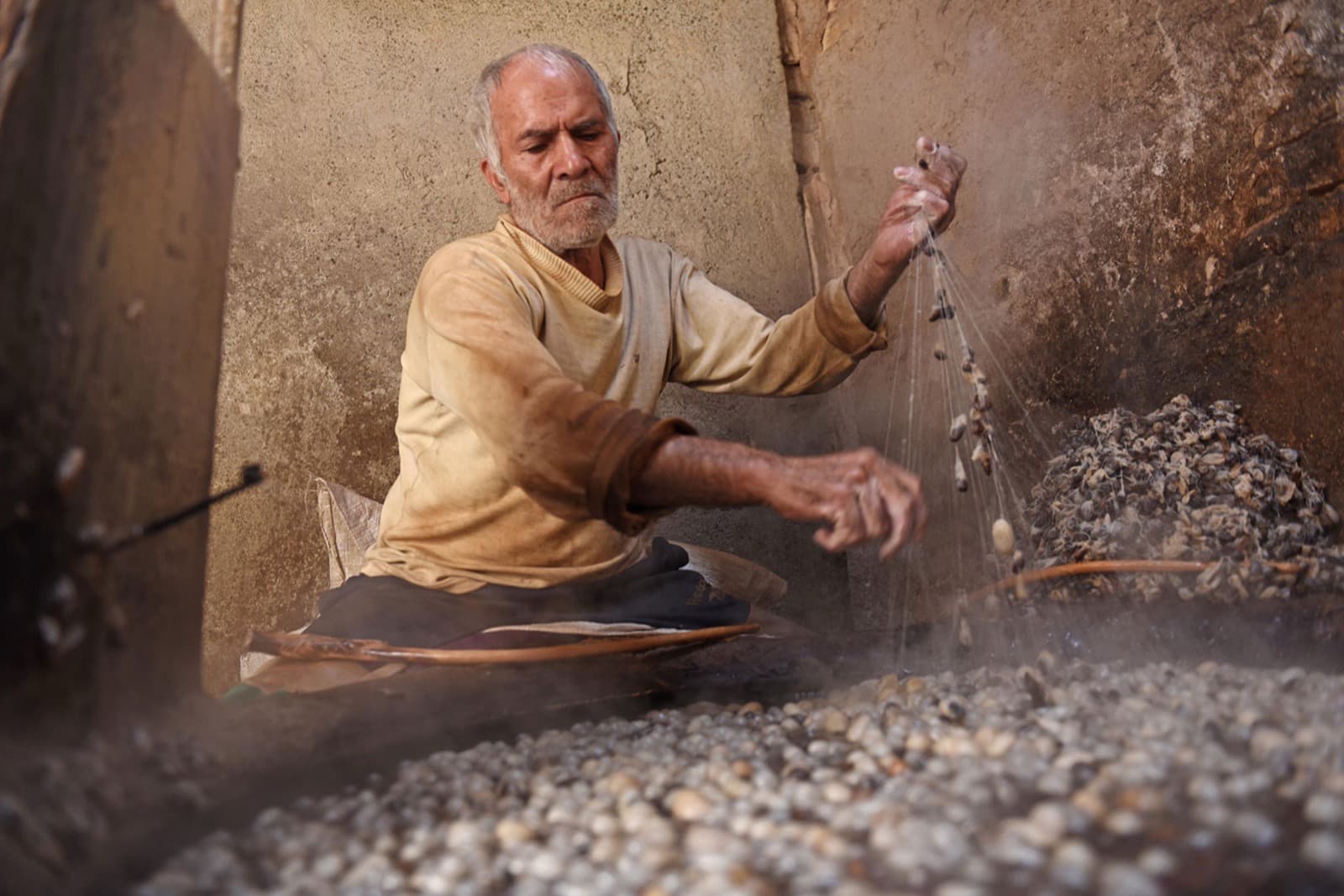
A hot alkaline soap bath dissolves the sericin and uncovers the luster.
Reeled into one long strand, or spun shorter if the moth was let out.
A well degummed, carefully dyed silk carries little. A cheap one carries plenty.
Cultivated silk starts with Bombyx mori, a moth domesticated so long it can no longer fly or feed itself. The caterpillar eats mulberry leaves and spins a cocoon from one filament of the protein fibroin, glued together with a second protein called sericin.
Here the ethics fork opens. To reel off one unbroken thread, most cocoons are steamed or boiled with the pupa still inside, before the moth can chew its way out and cut the filament. Peace silk (sold as ahimsa silk) waits for the moth to emerge, so the thread comes off in shorter spun pieces rather than one long reeled strand. You trade a little strength and shine for a live moth.
Either path ends at degumming: a hot alkaline soap bath that dissolves the sericin and uncovers the soft, high-luster fibroin underneath. Degumming is also where dyes and finishing chemicals go on. A fully degummed, carefully dyed silk carries little; a cheap, half-degummed, crudely dyed one carries the risk the fiber never had on its own.
Not all silk is the same
Silk splits by moth and diet. Mulberry silk, from farmed Bombyx mori raised on mulberry leaves, is fine, even, and near-white before dyeing, the thread behind most fine silk. Wild silk (tussah, eri, muga) comes from moths feeding in the open on oak or castor, so it reels coarser, more textured, and a natural tan or gold. Wild silk is often peace silk by default, since those moths finish their life cycle before harvest.
Is silk safe to wear?
Fibroin, the protein left after degumming, is one of the calmest things you can put on skin. It is smooth enough to create almost no surface friction, it breathes, and it carries moisture and heat away from your body, which helps eczema-prone and reactive skin stay settled. A properly finished silk earns the word hypoallergenic instead of only claiming it.
The old worry was residual sericin, the gum left behind when silk is under-degummed. Sericin was blamed for silk allergies for decades, but recent immunology finds the protein has low allergenicity on its own. The real added risk is the finishing: dyes and process chemicals applied during degumming cause skin trouble far more often than the fiber does. Buy fully degummed and certified and there is little left to react to.
The share of its own dry weight the fiber itself absorbs as water vapor, then releases into the air.
A fiber that can hold and release moisture is a fiber that feels dry against the skin. Polyester holds almost none, which is why a synthetic top feels clammy in the heat and silk does not. Figures are the standard reference values for each fiber at 20°C and 65% humidity, not a measurement of any one garment.
- Almost no friction The smooth, round filament rubs and chafes less against sensitive skin than nearly any other textile, which is why it suits reactive and eczema-prone skin.
- Breathes and wicks Moves moisture and heat away from your body, so skin stays dry and calm instead of damp.
- Hypoallergenic when clean A fully degummed, well-finished silk is one of the few fabrics that earns the label rather than borrowing it from marketing.
- Works across seasons Feels cool in heat and holds a little warmth in cold, with no added finish doing the work.

Silk begins as a clean animal protein, so its hazard base sits low, near other undyed natural fibers. What pulls a specific piece down the scale is incomplete degumming or a cheap, unregulated dye, added after the cocoon, not the fibroin itself. See the full method.
Doing this check on every product page yourself is the tedious part. The Toxome Chrome extension reads the composition for you while you shop, so you see whether something is silk (and what else is in it) before you buy, not after it arrives.
How silk affects the planet
Silk has the thinnest data in this whole guide. The often-quoted "worst fiber for water" figure traces back to a single small study, and its carbon estimates swing thirty-fold between studies, so no clean number is honest here.
What is clear is that silk is a protein fiber, so it biodegrades and sheds no plastic. Its real costs are energy and water in production, plus the ethics of how it is harvested.
The data is thin and single-study, so the range is huge. Treat it as illustrative, not precise.
A protein fiber that breaks down enzymatically.
Natural protein, not plastic.
Environmental figures are separate from the health score above, which reflects wearer health only. Numbers are per kilogram of finished fiber and rounded; see sources.
How silk is made
Conventional silk boils or steams the cocoons with the pupae still inside, to keep the filament in one unbroken thread. Peace silk, also called ahimsa silk, lets the moth emerge first and accepts the shorter, broken fibers that result.
A 2003 Human Rights Watch report documented hundreds of thousands of bonded children working in India's silk industry. That report is now over two decades old and conditions have reportedly improved, but current prevalence is not well documented, so read it as history, not a live statistic.
How to care for silk
Shop Silk




Silk, answered
The fiber is not. Silk is a natural protein your skin tolerates well. Risk comes from residual sericin gum or the dyes and finishes applied during processing, so a certified, fully degummed silk carries little.
Mostly, once it is properly degummed. Older reports blamed leftover sericin for reactions, but recent studies show the protein has low allergenicity, and dyes and finishes are the more common irritant. Quality and finishing matter more than the reputation.
Also called ahimsa silk, it lets the moth leave the cocoon before the thread is harvested, so no pupa is boiled. The tradeoff is a shorter, spun thread instead of one long reeled filament: slightly less strength and shine for a live moth.
Yes. It carries moisture and heat away from your skin, which is why it feels cool in summer and holds a little warmth in winter without any added finish.
- Silk for Sensitive Skin: Hypoallergenic Properties & Evidence · Selvane
- What Is Degummed Silk? Processing & What It's Used For · Mayfairsilk
- Safety Assessment of Silk Proteins as Used in Cosmetics · Cosmetic Ingredient Review (CIR)
- Biomarkers Reveal 8,500-Year-Old Silk in Prehistoric Tombs at Jiahu · PLOS ONE
- Small Change: Bonded Child Labor in India's Silk Industry · Human Rights Watch
The health score reflects wearer health only and mirrors the Toxome app. This guide is educational and is not medical advice.