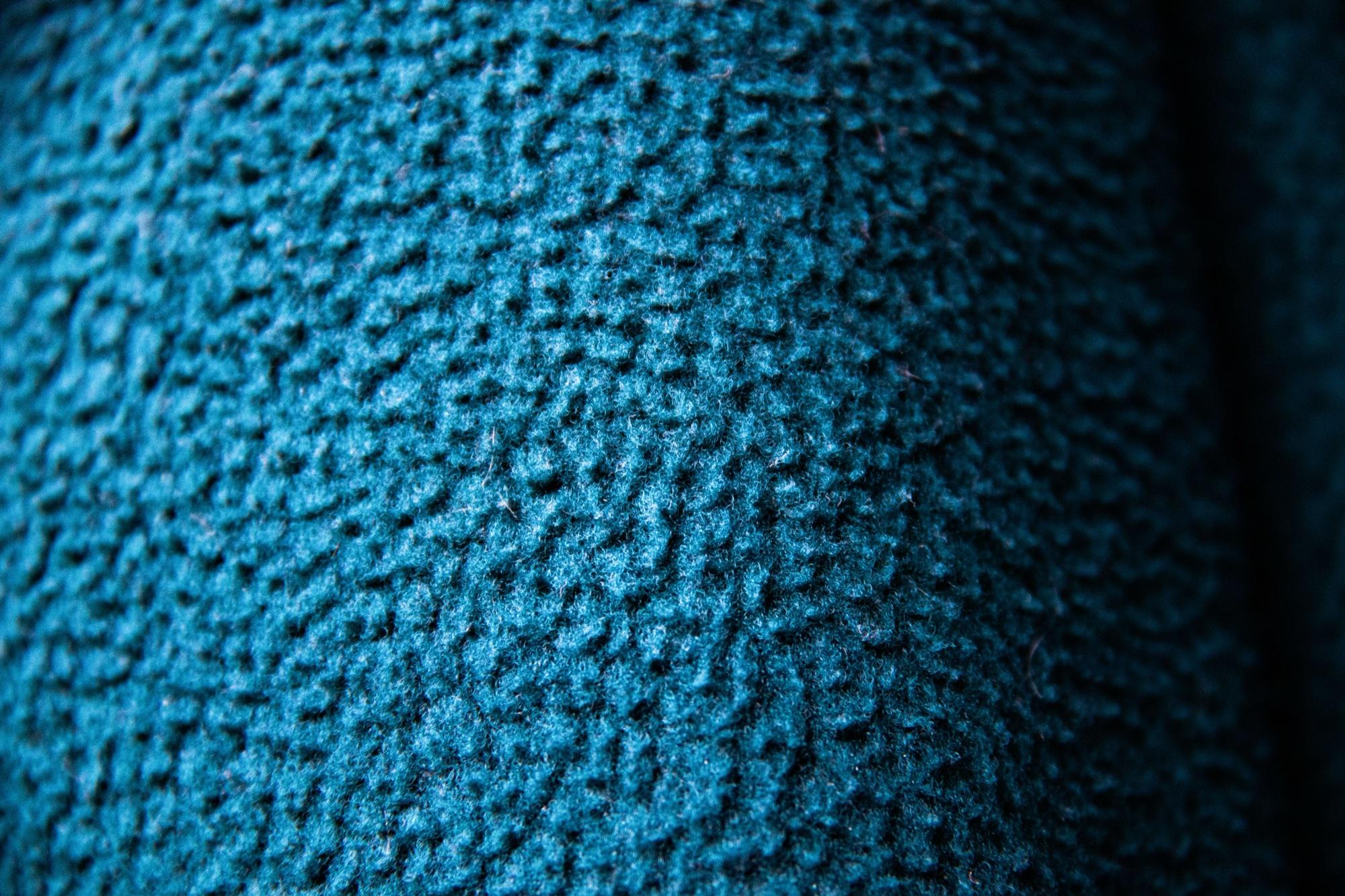
Is fleece polyester? Usually, yes. Polar fleece, microfleece and most sherpa are 100% polyester, a plastic called polyethylene terephthalate (PET), the same one in a clear water bottle. But fleece is the name of a fabric construction, not a fiber, and it can be knit just as well from organic cotton or merino wool.
The word on the tag tells you how it was made. Only the fiber line tells you what it's made of.
| Polyester fleece | Cotton fleece | Wool fleece | |
|---|---|---|---|
| Fiber | Polyester (PET plastic) | Cotton | Wool, often merino |
| Moisture it holds | 0.4% | 8.5% | 13.6% |
| Sheds plastic microfibers | Yes | No | No |
| Fuzzy side | Usually both | Inside only | Varies |
| Where you'll find it | Zip-ups, sherpa, throws, plush pajamas | Sweatshirts, sweatpants, hoodies | Mid layers, quarter-zips |
Moisture figures are the textile industry's standard regain values from ASTM D1909.
What is fleece made of?
Fleece starts as a knit. The mill runs it past rollers covered in fine wire brushes, which pull the fibers up out of the yarn and raise a soft, airy pile. That pile traps warm air, and it's what makes fleece feel like fleece.
Any fiber can go through those brushes. The classic grey sweatshirt is cotton fleece, with a smooth face and a brushed, cloudy inside. The zip-up in every outdoor store is polar fleece, and polar fleece is polyester.
Polar fleece is young. Polartec, the mill once called Malden Mills, dates the birth of synthetic fleece to 1981. Patagonia's Synchilla Snap-T pullover, made from it, followed in 1985. In 1993 the first fleece with recycled content came out in the color of the bottles it was made from, which Polartec calls soda-bottle green.
Polyester is now 59% of all the fiber the world produces, according to Textile Exchange.
Is fleece made from animals?
The word is. A fleece is a sheep's coat, the wool shorn off in one piece. Synthetic fleece borrowed the name for a plastic built to do the same job.
So the original fleece is wool. Most of what's sold under the name today is polyester, which is why the label matters more than the word.
Are fleeces 100% polyester?
Most are. Polar fleece jackets, microfleece pullovers, sherpa linings and plush throws are usually 100% polyester, new or recycled from bottles.
Some fleece is a blend. A lot of sweatshirt fleece mixes cotton and polyester, and some wool fleece adds a synthetic. US law requires clothing to list every fiber by percentage, according to the Federal Trade Commission, so the answer is always on the tag sewn into the side seam.
Recycled fleece is still polyester. A bottle that becomes a jacket stays out of a landfill for now, and it behaves like any other polyester once it's on you.
Is 100% polyester fleece bad?
It isn't harmful to touch. The trade-offs show up in how it handles heat and what it leaves behind.
It's warm, then clammy
Polyester fleece is warm for its weight, dries fast and costs very little. Those are real advantages on a mountain. Against your skin all day, the numbers in the table above start to matter.
Polyester holds 0.4% moisture. Cotton holds 8.5% and wool 13.6%. Cotton and wool take up your body's moisture and move it along. Polyester leaves it sitting on your skin, which is why a fleece feels cozy for the first hour and damp by the third. It's also why plush pajama sets leave so many people waking up hot, which we covered in our Christmas pajamas guide.
It sheds in the wash
Brushing a fabric on purpose to raise loose fibers has a cost. Those fibers come loose.
Researchers at UC Santa Barbara washed fleece jackets in home machines and published the results in Environmental Science & Technology. Around 100,000 fibers came off a single jacket in each wash. Top-loading machines shed more than front-loaders, and older jackets shed more than new ones.
A University of Plymouth team found a similar picture across fabrics, with a single load of polyester releasing close to half a million fibers. These are microplastics: tiny threads of plastic that leave with the rinse water. We cover the wider picture in Polyester Is Plastic.
How to tell if fleece is cotton or polyester
Start with the label. Product names won't help: polar fleece, microfleece, sherpa, minky, plush and teddy all describe a texture, not a fiber. Unless the page names a natural fiber, assume polyester. We flagged the same words in our blanket guide.
When you're holding it, a few things give polyester away:
- Both sides are fuzzy. Cotton fleece is usually smooth on the outside and brushed only on the inside.
- It feels slick and cool before it warms up. Cotton feels dry and matte.
- It crackles with static when you pull it over your head.
- It pills into small, hard balls that won't brush off. Cotton pills soften and wear away.
On cotton fleece, look for 100%. Blends are common, and the label will say so.
Can fleece be 100% cotton?
Yes. Cotton fleece gives you the sweatshirt, the hoodie and the sweatpant: soft, breathable, washable, and the easiest swap in your closet. GOTS certification on an organic cotton fleece confirms the fiber and rules out a list of harsh processing chemicals.
Wool fleece gives you the warmth polar fleece promised without the plastic. Merino holds moisture without feeling wet and resists odor between washes. Look for wool that hasn't been through superwash, a chlorine and resin treatment we explain in What Is Superwash Wool?
Sherpa can be cotton too, though it's rare. If you love the shearling look, real sheepskin is wool on one side and leather on the other, which is what lines the cozy slippers on our list. For a layer that does fleece's job in a sweater, our quarter-zip sweater guide is all merino, cashmere and cotton.
What to buy instead
All five are 100% natural fiber, checked against each brand's own composition listing on November 10, 2026.
| Piece | Fiber | Price |
|---|---|---|
| MATE the Label Organic Fleece Oversized Sweatshirt | 100% organic cotton, GOTS | $138 |
| Harvest & Mill Organic Heavyweight Hoodie | 100% organic cotton, undyed, made in the USA | $185 |
| MATE the Label Organic Fleece Wide Leg Pant | 100% organic cotton | $138 |
| Known Supply Libby Sherpa Jacket | 100% organic cotton sherpa, GOTS | $118 |
| Dilling Merino Wool Fleece Quarter-Zip (men's sizing) | 100% organic merino, no superwash | $288 |
None of them crackles when you pull it over your head.
Fleece was always meant to keep you warm. Read the fiber line before you buy, and pick one that breathes as well.
Frequently asked
Usually, yes. Polar fleece, microfleece and most sherpa are 100% polyester, often recycled from plastic bottles. Fleece can also be knit from organic cotton or merino wool, so check the fiber line on the label.
No. Polyester is a fiber, a plastic spun into thread. Fleece is a fabric, a knit brushed until its surface turns soft and fuzzy. Most fleece is made from polyester, which is why the two get used as if they mean the same thing.
Most are. Polar fleece jackets, microfleece and sherpa linings are usually 100% polyester. Some fleece is a blend with cotton or wool, and some is 100% organic cotton or merino wool. The fiber content label lists every fiber by percentage.
Yes. Cotton fleece is the soft, brushed knit inside most classic sweatshirts and sweatpants. Brands like MATE the Label and Harvest & Mill make it in 100% organic cotton, and GOTS certification confirms the fiber is organic.
Read the fiber content label, which US law requires on clothing. Cotton fleece has a smooth outer face with the fuzz only on the inside. Polyester fleece is usually fuzzy on both sides, feels slick, builds static and pills into small, hard balls.


Comments
No comments yet.
That didn't go through. Try again.