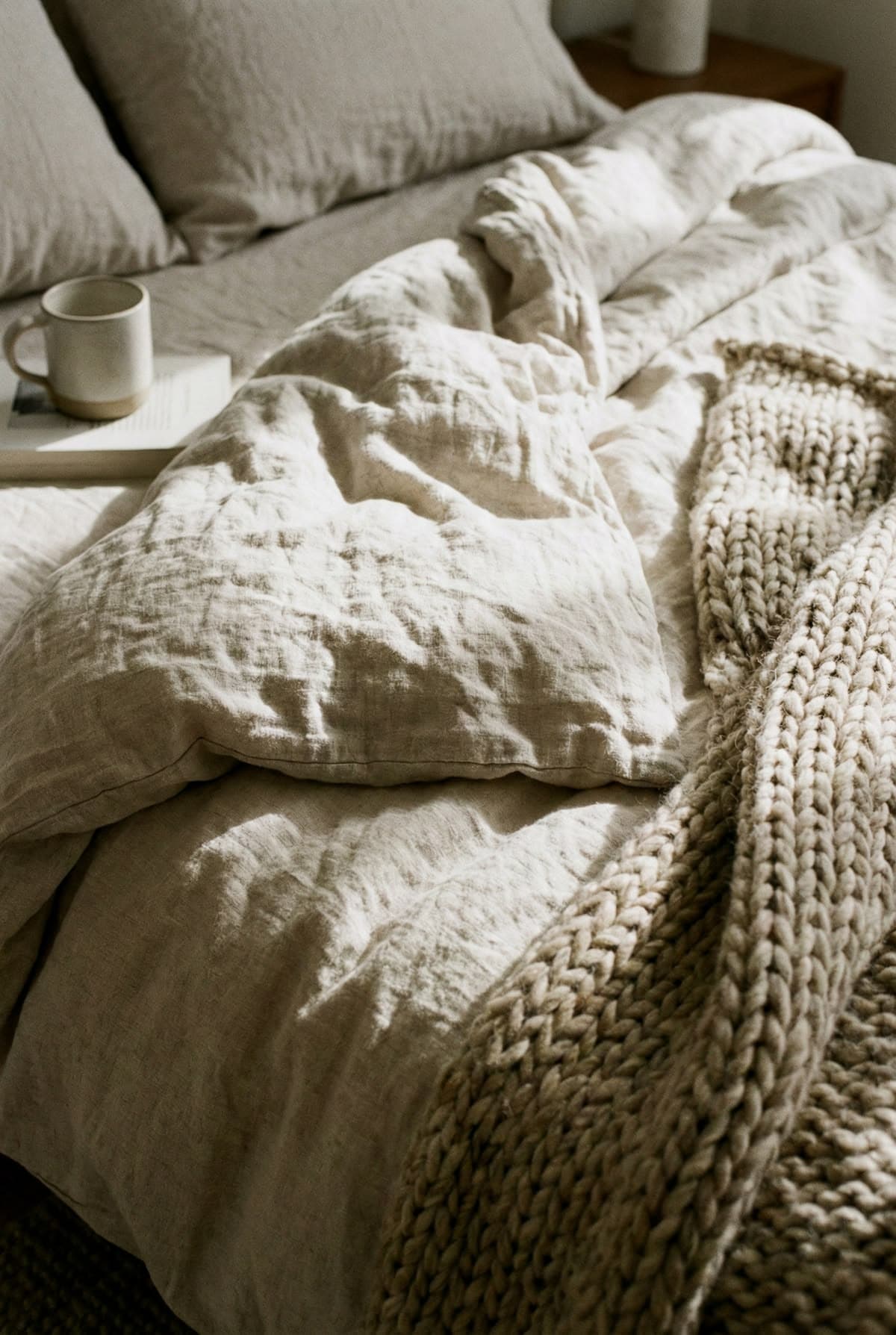
Lola Blankets got big the way viral home products always do, on feel. The weight, the stretch, the way it settles over you. Then people started reading the label.
Lola prints the composition on its own product pages: 95% polyester, 5% spandex, described as OEKO-TEX Standard 100 certified faux fur. Both of those fibers are plastic. Nothing is being hidden. The spandex is exactly what produces the stretch the brand sells on, and it could not come from wool or cotton.
Run that composition through the Toxome score and it comes back 24. Crediting the OEKO-TEX certification in full lifts it to 30. For comparison, a 100% merino throw scores 90 and a 100% organic cotton one scores 92.
The certification is real and worth understanding rather than dismissing. OEKO-TEX Standard 100 tests finished cloth for harmful substances against defined limits, and Lola's fabric passed. What it does not test is whether the fiber is plastic. A blanket can be entirely polyester and carry that seal honestly. That distance, between what the seal tests and what a shopper assumes it means, is the whole reason this list exists.
So here are six that get to the same place on weight and softness from fibers you can name. They run $179 to $495, against Lola's $125 to $425, so this is a comparable spend rather than a trade down.
Where the Lola claim runs out
Two things, and both come from Lola's own pages rather than anywhere else.
It is plastic all the way through. 95% polyester, 5% spandex. There is no natural fiber in it at any percentage. That matters most for the thing the blanket is bought for, which is how it feels: the softness on a brushed synthetic is a surface treatment rather than the fiber, so it arrives at its best and mats down from there. Wool and cotton run the opposite way and are better in year three than year one. Synthetic textiles also shed microfibers in washing and ordinary use, and a raised faux fur pile has more loose surface area to shed from than almost any other construction.
The certification has no number attached to it. OEKO-TEX issues every Standard 100 certificate with an identifying number, and it runs a public Label Check where anyone can enter that number and see the certificate, the institute that issued it and the date it expires. Lola prints "OEKO-TEX® Standard 100 Certified" on its product pages and prints no number. We looked at the product page, the homepage, the About page, both FAQ pages, Our Story and the terms of service: the phrase appears on product pages only, and a certificate number appears nowhere on the site. There is nothing for a shopper to look up.
That absence is common and it is not evidence the certificate does not exist. Plenty of brands hold real certificates and never publish the number. It does mean the claim has to be taken on trust, and a certification exists precisely so that it does not have to be.
And even fully verified, the seal would not say what most people read into it. OEKO-TEX Standard 100 tests finished cloth for harmful substances against defined limits. It does not test whether the fiber is plastic. A blanket can be 95% polyester and carry that certificate honestly, which is the real gap here: not between the claim and the truth, but between what the seal tests and what a shopper assumes it means.
What to look for in an alternative
You will not find an exact dupe. The stretch is spandex and no natural fiber does it. What you can match is the weight, the loft and the drape, and those come from construction rather than from a brushed surface.
The composition label is the only thing that settles what you are buying. What to look for:
- A single fiber at 100%. The cleanest answer a label can give, and the easiest to verify.
- Every fiber named with a percentage. A blend is fine when it is disclosed. "Wool blend" with no number is not a disclosure.
- A certificate number, not just a seal. GOTS and OEKO-TEX both issue them, and both run public databases you can check the number against.
- The colorway you are buying. Heathers and marls often get their tone from blended-in polyester, so the grey can differ from the natural.
What to treat as a flag:
- Faux fur, fleece, sherpa, minky, plush with no fiber named anywhere on the page. These describe a construction, never a fiber, and nearly all of them are polyester.
- Microfiber, which is a fineness measure, and the fine filament it describes is synthetic.
- A care label that says the fiber and a product page that does not. The care label is the one that has to be accurate.
One of the six below is worth reading twice on this point. The Brooklinen Prism is genuinely free of polyester and still carries 4% polyamide, which is nylon under its chemical name. Polyester free and plastic free are not the same claim, and that blanket is the proof.
Here are the six, cheapest first:
1. Aran Knit Throw Blanket
Boll & Branch
100% organic cotton · $179



The closest thing here to the Lola feel. Aran is the cable-knit pattern off the west coast of Ireland, and it is the look most responsible for polyester chunky knits existing at all. This is the pattern in organic cotton, with GOTS for the fiber and its processing, OEKO-TEX for the finished cloth and Fair Trade for the factory. The cheapest thing on this list and the most thoroughly answered.
2. Sequoia Washable Organic Cotton & Wool Throw
Coyuchi
70% organic cotton, 30% organic wool · $198


The only washable wool on this list, and the reason it is here. Everything else with wool in it means dry cleaning, which is its own chemical exposure repeated for the life of the blanket. Both fibers are organic and GOTS covers the pair. The cotton keeps it from going scratchy, which is what makes 30% wool wearable for people who bounce off the pure stuff.
3. Heirloom Classic Merino Blanket
Pendleton
100% merino wool · $285
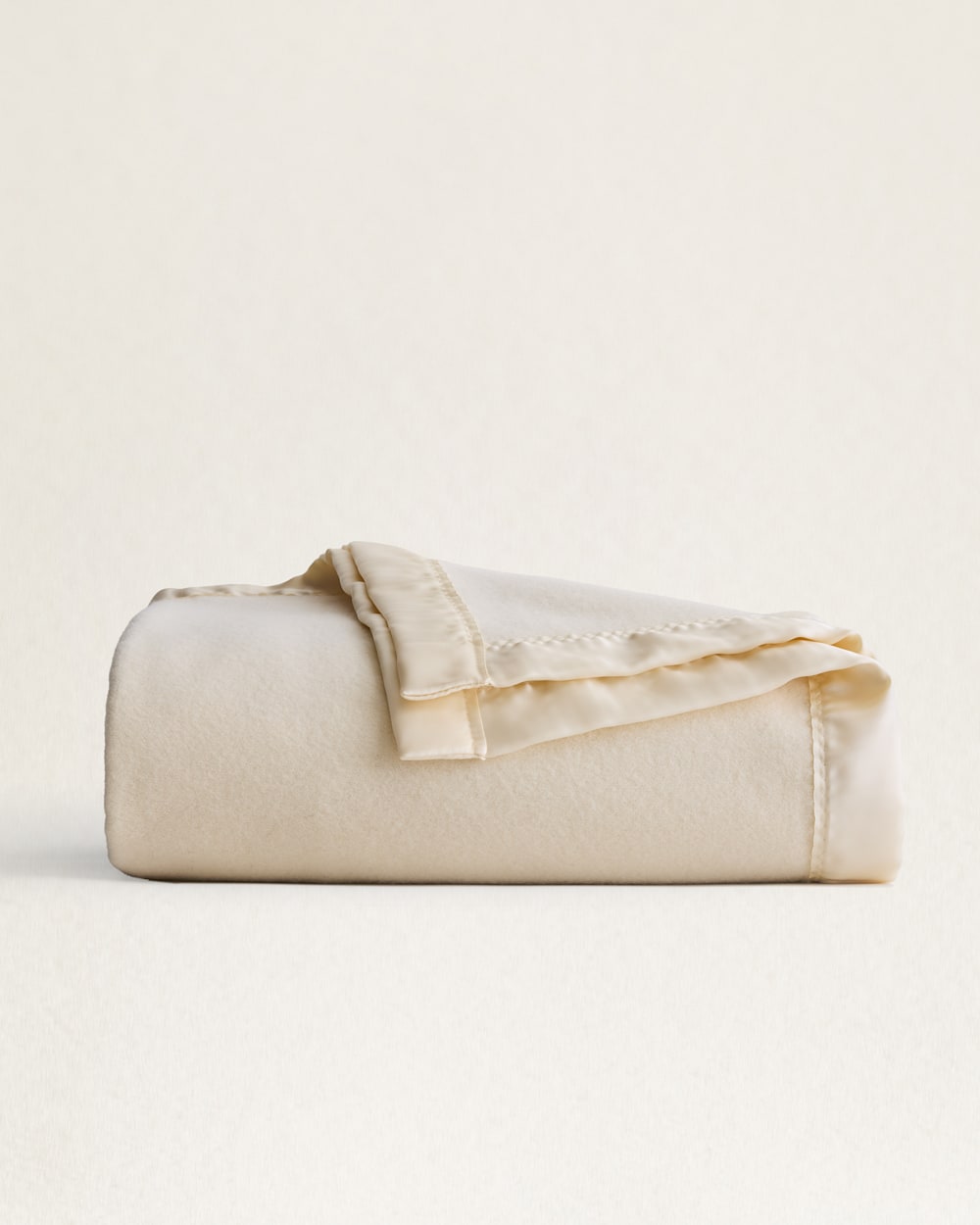
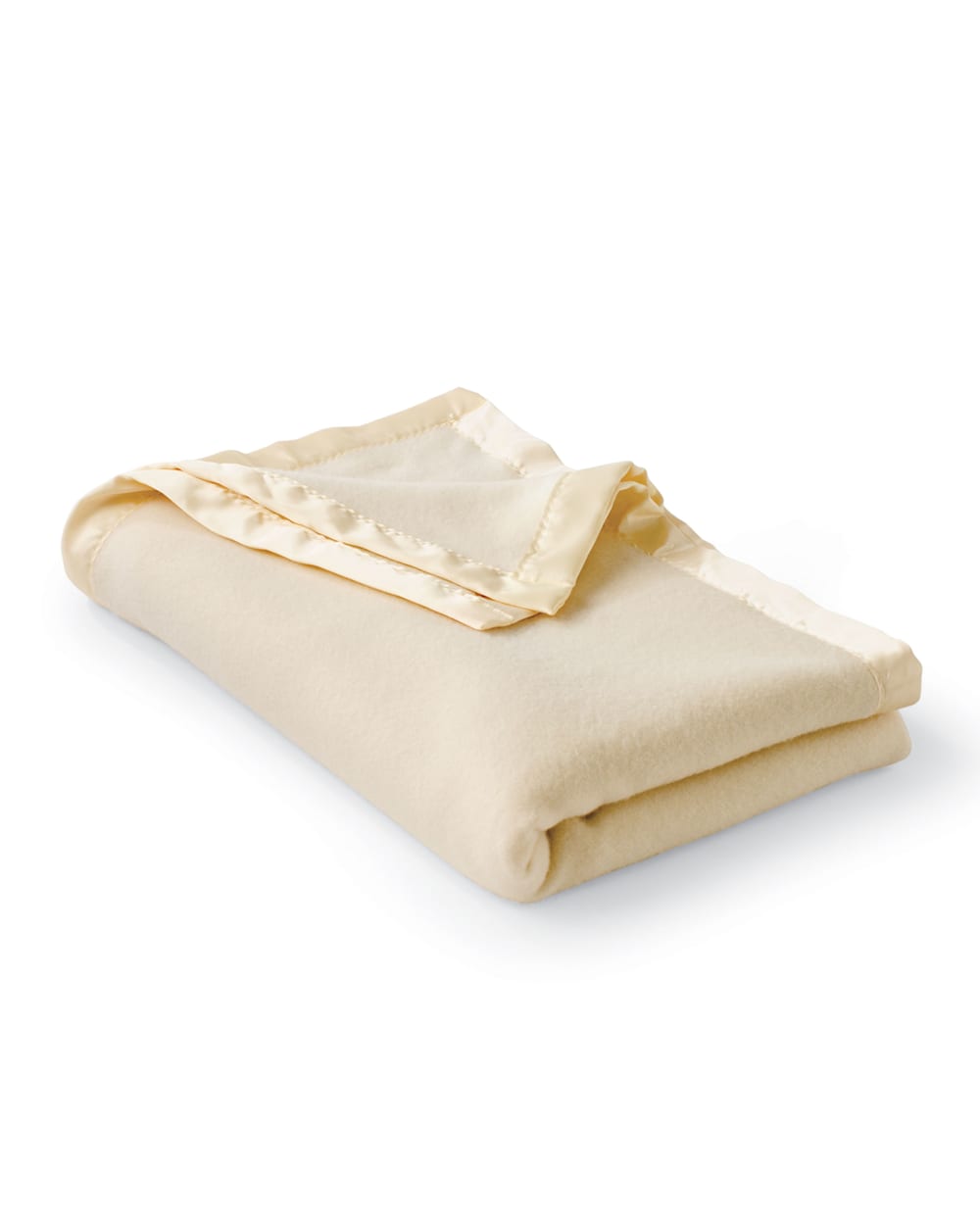
Merino at 100% with nothing blended in for durability, which is the compromise most mills make. Woven at Pendleton's own mills in Oregon, rare enough now that most heritage labels have outsourced the weaving and kept the name. Pendleton names the fiber and no processing certification, so the wool is read as conventionally scoured until they say otherwise.
4. Prism Alpaca Throw Blanket
Brooklinen
51% cotton, 35% wool, 10% alpaca, 4% polyamide · Made in Peru · $299


Brooklinen names all four fibers with percentages, which is more than most brands manage, and the fourth one is polyamide. That is nylon under its chemical name, so this throw is accurately polyester free and is not plastic free. Four percent of a synthetic is the whole distance between it and everything else on this list. It is here because it is the honest version of a compromise most blankets make silently, and because the alpaca and wool in the other 96% are real.
5. SuperLoop Throw Blanket
Boll & Branch
100% organic cotton · $399


Loop pile is the construction that usually arrives as polyester chenille, because the loops are what make a synthetic feel expensive. This is the same texture built from organic cotton, which is why it costs what it does. The weight comes from the pile rather than from a brushed surface, so it holds up to washing instead of matting down after a season.
6. Wool Fisherman Throw
Jenni Kayne
100% Andean Highland wool · Made in Peru · $495


The most expensive thing here and a single fiber all the way through, with no synthetic blended in to hold the braided texture. That texture is the reason most fisherman knits carry acrylic or nylon, and this one does not. Andean Highland wool names where the fleece came from rather than how it was processed, and Jenni Kayne states no processing certification, so the wool is read as conventionally scoured until they say otherwise.
The short version
If you want the closest thing to the Lola feel, the Aran knit at $179 is it. Heavy cable knit in organic cotton, three certifications, and the cheapest thing here.
If it will get washed often, the Coyuchi at $198 is the only washable wool on the list. Every other wool here means dry cleaning.
For warmth rather than weight, the Pendleton merino at $285 beats any synthetic of the same thickness, because the crimp in the fiber traps air instead of relying on a brushed surface.
The Prism is the one to read twice. It is polyester free and it is not plastic free, and Brooklinen tells you so on the label.
One rule survives the whole list. If the page will not name the fiber, assume polyester.
Frequently asked
Lola states the composition on its own product pages as 95% polyester and 5% spandex, and describes the fabric as OEKO-TEX Standard 100 certified faux fur. Both of those fibers are plastic. That is not a hidden detail, it is printed on the page, and it is the reason the blanket behaves the way it does: the spandex is what creates the stretch the brand markets.
No. OEKO-TEX Standard 100 tests finished cloth for harmful substances against defined limits, and a certified fabric has passed those tests. It says nothing about whether the fiber is natural or synthetic. A blanket can be entirely polyester and carry the certification honestly, which is exactly the gap between what the seal tests and what shoppers assume it means.
Not an exact one, because the stretch comes from spandex and no natural fiber reproduces it. What you can match is the weight and the loft. A chunky organic cotton knit gives you the same heavy drape, and merino gives more warmth per ounce than any synthetic of the same thickness.
Because the softness is a surface treatment rather than the fiber. Brushing or napping a synthetic pile raises fine filaments that feel plush immediately and mat down with washing. Wool and cotton start firmer and soften over time, which is the opposite curve and the reason a natural fiber blanket tends to be better in year three.
Synthetic textiles release microfibers during washing and ordinary use, and brushed or faux fur constructions have the most loose surface area to shed from. A wool or cotton blanket sheds fiber too, but that fiber is protein or cellulose rather than plastic.
No. GOTS certifies organic fiber content and the processing chemistry behind it, so it speaks to how the crop was grown and what was used to finish it. OEKO-TEX Standard 100 tests the finished cloth for harmful substances and says nothing about how the fiber was farmed. A blanket carrying both has answered two separate questions.


