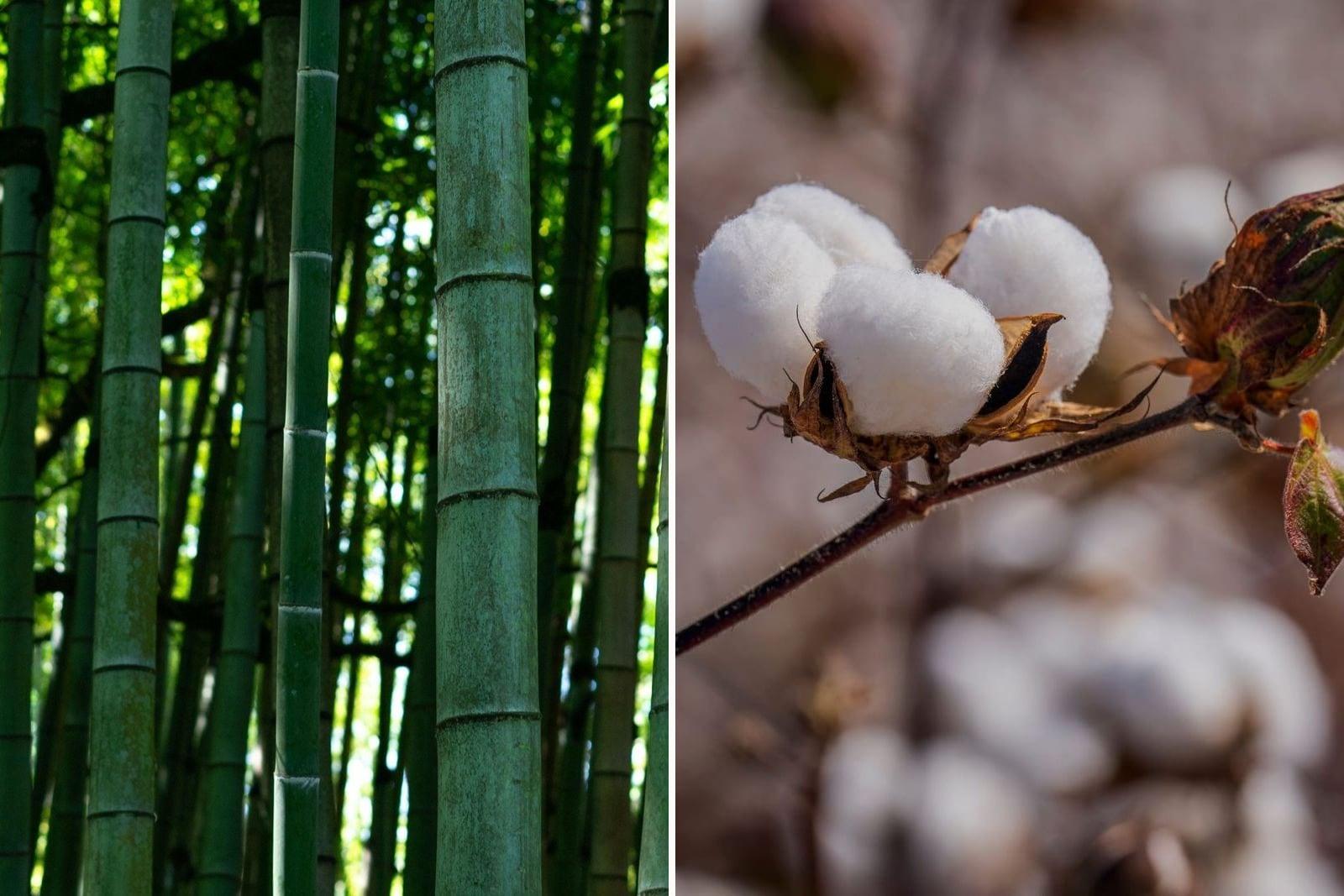
Bamboo vs cotton comes down to one fact most bamboo labels leave out: soft bamboo fabric is almost always rayon. The bamboo is dissolved in carbon disulfide, a harsh industrial solvent, and spun back into thread, the same way any viscose is made. Cotton is spun as it grows. On the Toxome Score, plain bamboo viscose lands at 64, conventional cotton at 84, and organic cotton at 92.
There's one exception. Bamboo made as lyocell, in a process that recycles its solvent, scores 88. We don't sell a bamboo line, so the numbers are the whole argument.
| Bamboo viscose | Bamboo lyocell | Cotton | Organic cotton | |
|---|---|---|---|---|
| Toxome Score | 64 | 88 | 84 | 92 |
| What it is | Rayon made from bamboo pulp | Bamboo pulp dissolved in a recycled solvent | A natural fiber, spun as it grows | Cotton grown without synthetic pesticides |
| Chemistry to make the fiber | Sodium hydroxide, carbon disulfide, sulfuric acid | NMMO solvent, about 99.8% recovered | None to make the fiber | None to make the fiber |
| What the label says | Rayon or viscose from bamboo | Lyocell from bamboo | Cotton | Organic cotton, often GOTS |
Scores come from our published rubric. Bamboo viscose with an OEKO-TEX STANDARD 100 label also scores 88. Solvent recovery is from Lenzing.
What is bamboo fabric?
Bamboo fabric is any cloth made from the bamboo plant, and nearly all of it is rayon. The soft, drapey bamboo sold as sheets, pajamas and baby clothes is bamboo pulp turned into viscose. The Federal Trade Commission puts it plainly: when bamboo is chemically processed into rayon, there's no trace of the original plant left.
Three different fabrics can come from bamboo, and the tag tells you which one you're holding.
Bamboo viscose
This is most of what's sold as bamboo. By law it has to be labeled rayon or viscose made from bamboo, according to the FTC's labeling guidance. A tag that says only "100% bamboo" on a soft, silky fabric is breaking that rule.
Bamboo lyocell
The same bamboo pulp, dissolved in a solvent that's captured and reused instead of released. It's the one bamboo fabric we'd buy. Brands that pay for it name it on the tag, often as lyocell from bamboo.
Bamboo linen
Bamboo crushed and combed into fiber, the way flax becomes linen. It's a true natural fiber, but it's coarse, expensive to make and rare. If a bamboo fabric feels like butter, it isn't this.
How is bamboo fabric made?
Bamboo fabric is made by dissolving the plant and rebuilding it as thread. A bamboo stalk is hard and woody. To get something soft enough for a pillowcase, it has to be broken down to its cellulose, the plant's building material, and spun again from scratch.
The viscose process
The stalks are chipped and soaked in sodium hydroxide, a strong alkali also called caustic soda. Carbon disulfide turns the pulp into a thick, honey-like liquid. That liquid is pushed through a showerhead of tiny holes into a bath of sulfuric acid, where it sets into strands. The strands are washed, bleached and spun into yarn.
Carbon disulfide is the part to know. The Agency for Toxic Substances and Disease Registry documents nerve and heart damage in viscose workers exposed to it over years. That harm happens in the factory, to the people who make the fabric, which is why it never shows up on a hangtag.
The lyocell process
Lyocell dissolves the pulp in a solvent called NMMO and pulls it back out as fiber. The difference is what happens to the solvent. Lenzing, which makes TENCEL lyocell, recovers and reuses about 99.8% of it. Fewer steps, no carbon disulfide, and very little chemistry leaves the mill.
The mechanical process
Bamboo linen skips the chemistry. The stalks are crushed, softened with natural enzymes, and combed into fiber. It's slow and costly, which is why so little of it reaches a store.
Is bamboo healthier than cotton?
No. The health claims on bamboo belong to the plant, and the plant doesn't survive the trip to your closet. Living bamboo resists bacteria, but the FTC says there's no evidence that rayon made from bamboo is antibacterial.
What actually touches your skin
The fiber against your skin is cellulose either way, the same basic material in bamboo rayon and in cotton. What changes from one piece to the next is everything added after: dyes, softeners, wrinkle-resistant finishes. Those are what OEKO-TEX STANDARD 100 tests the finished fabric for, and they matter more to your skin than the plant on the label.
The moisture claim
Bamboo brands often say their fabric is far more absorbent than cotton. The industry's standard values, from ASTM, put rayon at about 11% of its weight in moisture and cotton at 8.5%. That's a real difference, and it's why bamboo sheets can feel cool. It's a modest one. Cotton breathes well, too.
Why the score is lower
We score the process, not the plant. Plain bamboo viscose scores 64 because of the carbon disulfide chemistry and because you can't see how cleanly a mill ran it. An OEKO-TEX label or a lyocell process lifts it to 88. Organic cotton, grown without synthetic pesticides, sits at 92, and GOTS certification also limits the finishes allowed on the fabric.
What are the benefits of bamboo fabric?
Bamboo fabric's real strengths are how it feels and where it starts. They're worth knowing, even if the process takes most of the shine off.
It feels cool and soft
Bamboo viscose is smooth, drapes close to the body and holds a little more moisture than cotton. That's the cool, silky hand people buy it for.
The plant grows fast
Bamboo grows quickly with little or no pesticides, according to the FTC. That advantage belongs to the field. The mill is where it gets spent.
It isn't plastic
Bamboo fabric is cellulose, so it doesn't shed plastic microfibers the way polyester does, unless it's blended with spandex.
What are the disadvantages of bamboo fabric?
The biggest disadvantage of bamboo fabric is how it's made. Most of it runs through the viscose process, carbon disulfide and all, and the plant's fast-growing reputation doesn't change that.
The labels
Bamboo is one of the most mislabeled fibers in the US. In 2022 the FTC fined Kohl's $2.5 million and Walmart $3 million for selling rayon as bamboo and making green claims about it. Both had been warned in 2010.
The blends
Read the full fiber line. Many bamboo pajamas and fitted sheets are 5 to 7% spandex, which is plastic. Bamboo itself isn't.
The care
Bamboo viscose is a delicate fabric. Most bamboo sheets and pajamas ask for cold water and low heat, and the fabric can lose its shape when it's dried hot. Cotton takes a hot wash.
Which material is better, cotton or bamboo?
Cotton is the better default, and organic cotton is the best of the four. It's simpler to make, easier to care for and higher on the score. Bamboo earns a place only as lyocell, or with an OEKO-TEX label, and only if you want that cool, slippery drape.
For sheets
If you sleep hot and love a silky feel, bamboo lyocell sateen is a good choice at 88. If you want sheets you can wash hot for years, organic cotton percale or sateen is the one. Our Bedding Edit has both, with the fiber listed on every set.
For pajamas and tees
Organic cotton knit, especially pima, gets close to bamboo's softness without the chemistry. Our organic cotton pajamas guide has seven sets we've scored.
How to read the tag
- "Rayon from bamboo" or "viscose from bamboo": bamboo viscose, 64 unless it carries OEKO-TEX.
- "Lyocell from bamboo" or a named lyocell: the closed-loop version, 88.
- "100% bamboo" on a soft fabric: a label the FTC says is wrong. Assume viscose.
- "Organic cotton" with GOTS: the cleanest of the four, 92.
For the rest of the plant-pulp family, our guide to semi-synthetic fabrics covers viscose, modal and lyocell side by side.
What to buy instead
Four organic cotton pieces for the places bamboo usually shows up, and one bamboo lyocell set for when you want the real thing. We checked each against the brand's own composition listing on November 17, 2026.
| Piece | Fiber | Price |
|---|---|---|
| Coyuchi Pima Organic Knit Wide-Leg Pant + Henley Set | 100% organic cotton, GOTS | $206 |
| Coyuchi Isla Organic Cotton Long Sleeve Pajama Set | 100% organic cotton, GOTS | $128 |
| Lunya Organic Pima Curved Hem Tank | 100% organic cotton, GOTS | $78 |
| Avocado Organic Cotton Sheets | 100% organic cotton, GOTS | From $127 |
| Ettitude Signature Bamboo Sheet Set | 100% bamboo lyocell, OEKO-TEX | From $359 |


The plant on the label was never the question. Turn the tag over and read how it was made.
Frequently asked
For most people, cotton. Most bamboo fabric is rayon made with carbon disulfide and scores 64 out of 100 on the Toxome Score. Conventional cotton scores 84 and organic cotton 92. Bamboo lyocell is the exception, at 88.
Bamboo fabric is made by chipping the stalks, dissolving them in sodium hydroxide and carbon disulfide, and pushing the liquid through tiny holes into an acid bath that sets it into thread. Bamboo lyocell uses a recycled solvent instead. Bamboo linen is crushed and combed.
No. Once bamboo becomes rayon, the FTC says no trace of the plant is left, and there's no evidence the fabric is antibacterial. What matters on your skin is the finish and dye, so look for OEKO-TEX STANDARD 100 whichever fiber you buy.
Most bamboo fabric is rayon, made with carbon disulfide, a solvent that harms factory workers. It's often blended with spandex, needs cold washes and low heat, and is regularly labeled "100% bamboo" when the law says it must say rayon or viscose from bamboo.
Cotton is the better default: simpler to make, easier to wash, and higher on the Toxome Score. Choose bamboo only as lyocell or with OEKO-TEX STANDARD 100, and only if you want its cool, drapey feel.
It's soft and drapes well, but bamboo viscose is a weaker fabric to care for. Most bamboo sheets and pajamas ask for cold water and low or no heat. Bamboo lyocell holds up better. Check the fiber line and the care tag before you buy.
Three fabrics are made from bamboo: bamboo viscose, also sold as rayon from bamboo, which is most of it; bamboo lyocell, made in a closed-loop process; and bamboo linen, a rare, rougher fabric made by crushing the stalks.
No. Bamboo fabric is cellulose, the same plant material as cotton, so it doesn't shed plastic microfibers or come from oil. It's semi-synthetic: a plant dissolved with chemicals and rebuilt as thread. Many bamboo pieces are blended with spandex, which is plastic.
No. Soft bamboo fabric is made from a natural plant, but it's chemically dissolved and respun, which makes it semi-synthetic, like rayon. Only mechanically processed bamboo linen counts as a natural fiber, and it's rare.
Comments
No comments yet.
That didn't go through. Try again.