Cashmere scores 90 out of 100 for wearer health on Toxome's fiber scale, where 100 is cleanest. That puts it in the safest band to wear. Cashmere is soft goat down that insulates without the plastic of acrylic knits. The score rates the fiber, not the finished garment. Mills add dyes and finishes later, so check the label for those.
What is cashmere?
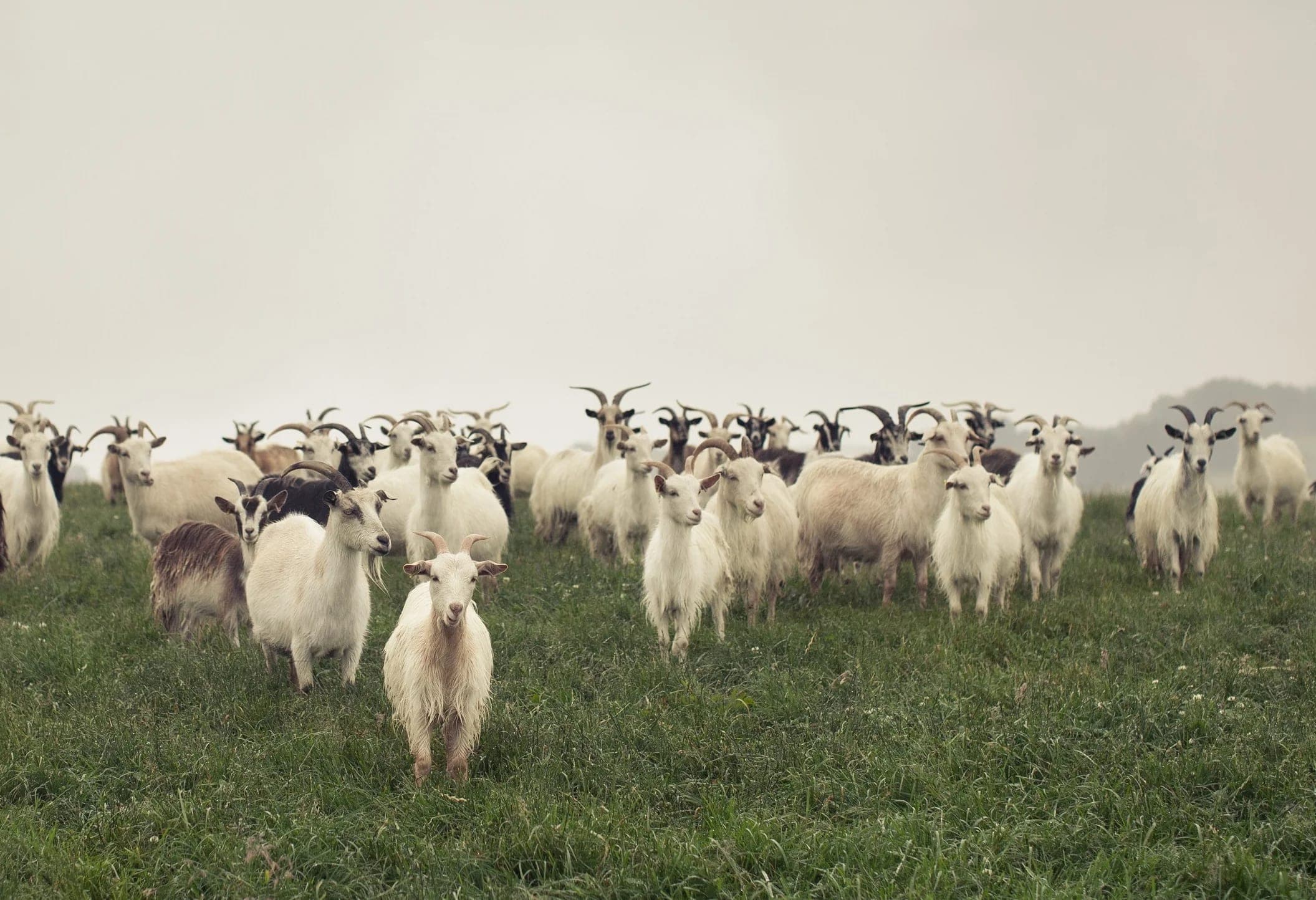
True cashmere is not a breed, it is an undercoat: the fine down cashmere goats grow each winter to survive the cold, then shed in spring. It takes the fleece of roughly four goats to make one sweater, part of why real cashmere costs what it does, and part of why the cheap version cuts corners you can feel.
The fiber takes its name from Kashmir, the trading hub through which it first reached the West. Most of today's cashmere comes from goat herds on the Mongolian and northern Chinese steppe, which together supply the bulk of the world's supply.
How cashmere is made
Combed or shorn once a year, when the winter down loosens.
Only a few ounces per goat, graded on micron count and staple length.
Sorts fine down from 50 to 100 micron guard hairs. Rush it and it scratches.
Just 30 to 50 percent of the raw fleece survives as usable cashmere.
Longer staples pill less and hold a knit together.
The down is skin-kind. The question is the dye and any anti-moth finish.
Cashmere goats are combed or shorn once a year in spring, when the winter down loosens. A single goat gives only a few ounces of usable down, graded on two things: micron count (how thin the fiber is) and staple length (how long each fiber is, since longer staples pill less and hold a knit together).
The raw fleece mixes fine down, 19 microns or less with the best around 14 to 15.5, with coarse guard hairs at 50 to 100 microns that shielded the goat from weather. Dehairing sorts the two by width. Only about 30 to 50 percent of the raw fleece survives as usable cashmere; the rest is guard hair and waste. Do the sort well and the sweater is soft. Rush it and a few missed guard hairs make it scratch.
The quality collapse is a grazing story. Global demand pushed Mongolia's goat herd to roughly 20 million, nearly five times what it was two decades ago, and goats crop grass to the root and cut the soil crust with sharp hooves, so roughly 70 percent of Mongolia's grasslands are now degraded. Herds bred for volume over fineness, plus rushed dehairing to keep prices low, are why so much fast-fashion cashmere pills and prickles within a season.
The down itself is skin-kind. The health question sits in what goes on afterward: dyes, and the anti-moth finish sometimes applied because cashmere is a favorite of clothes moths.
Not all cashmere is the same
The real spec is micron count (how thin the fiber is) and staple length (how long each fiber runs). To be legally called cashmere in the US, it has to average 19 microns or finer, with almost no coarse guard hair left in. The grade a / b / c labels are informal marketing, not a standard, and one brand's grade a is another's grade b, so ask for the micron number instead. Finer and longer means softer and slower to pill. And ply only counts how many strands are twisted together, so a high ply number describes the knit, not the fiber.
the finest and rarest, hand-combed from changthangi goats that live above 4,500 meters. it is the one origin with a real legal geographic mark, india's GI tag, which caps it at 16 microns. most pashmina sold elsewhere is machine-spun cashmere or a silk blend, so read a pashmina label with suspicion.
the white-cashmere benchmark behind most luxury knitwear. long, dry, bitter-cold winters push the goats to grow fine down, and the white fiber takes dye cleanly, which is part of why it commands the premium.
the second-largest producer after china, in white and natural brown or grey. fineness is comparable, with a lower yield per goat.
coarser and shorter, mostly grey or brown, so it dyes only to darker shades. the lowest price point on the raw market, and the fiber behind a lot of cheap cashmere.
two labels to read past: white cashmere costs more because it takes color without harsh bleaching, while grey and brown are held to darker shades. and scottish cashmere almost always means spun in scotland from mongolian-grown fiber, a mark of the mill, not the origin. china and mongolia together grow roughly 80 to 90 percent of the world's cashmere.
Is cashmere safe to wear?
With cashmere, comfort comes down almost entirely to how well it was sorted, not to anything special about goats over sheep. Fine cashmere down sits below the thickness at which a fiber gets stiff enough to poke the skin's nerve endings, so a well-dehaired piece should not prickle at all.
The itch people read as a cashmere allergy is usually prickle from a stray guard hair that dehairing missed, and it takes only a few to make a soft sweater scratch, which is why two sweaters at the same advertised micron can feel nothing alike. True allergy to the down is rare. The real added risk is what was applied after: dyes, and any anti-moth finish. Cashmere is a prime moth target, so knitwear is sometimes treated with permethrin, an insecticide the EPA caps on clothing at 1.25 grams per square meter. OEKO-TEX Standard 100 is what confirms those residues stayed within safe limits.
The share of its own dry weight the fiber itself absorbs as water vapor, then releases into the air.
A fiber that can hold and release moisture is a fiber that feels dry against the skin. Polyester holds almost none, which is why a synthetic top feels clammy in the heat and cashmere does not. Figures are the standard reference values for each fiber at 20°C and 65% humidity, not a measurement of any one garment.
- Low prickle when well-made Fine cashmere down sits below the fiber thickness that irritates skin, so a properly dehaired piece reads as soft rather than scratchy.
- Warm without bulk Traps heat efficiently for its weight, so it works as a thin layer instead of a heavy one.
- Breathable Like other animal fibers, it manages moisture and temperature better than most synthetic insulation.

The fiber is a clean animal protein with a low hazard base, near other undyed natural fibers. What lowers a specific piece is dye and any anti-moth finish, since the down's other weakness, prickle from poor dehairing, is a comfort problem rather than a health one. The overgrazing behind cheap cashmere is a heavy environmental cost, but it does not change what the fiber does to your skin. See the full method.
Doing this check on every product page yourself is the tedious part. The Toxome Chrome extension reads the composition for you while you shop, so you see whether something is cashmere (and what else is in it) before you buy, not after it arrives.
How to care for cashmere
Shop Cashmere


Cashmere, answered
Good cashmere should not be. The itch is almost always a missed guard hair from rushed dehairing, not an allergy. Fine, well-sorted cashmere around 14 to 16 microns is one of the softest fibers there is.
True allergy to cashmere is rare. What feels like a reaction is usually prickle from coarse leftover hairs, or irritation from the dyes and any anti-moth finish added in manufacturing, not the down itself. OEKO-TEX Standard 100 keeps those residues in check.
A goat yields only a few ounces of usable down a year, it takes about four goats' worth of fleece for one sweater, and separating the soft down from coarse guard hair is a slow, labor-heavy step. Skip that step and the price drops, but so does the softness.
Cheap cashmere can be. Demand has pushed Mongolia's goat herd to around 20 million, and the goats graze grass to the root and cut the soil crust, leaving roughly 70 percent of the country's grasslands degraded. Buying less, better-graded cashmere and keeping it for years is the honest way to wear it.
- Dehairing and Cashmere Quality: A Guide · Selvane
- What Good Cashmere Actually Is · Wolf vs Goat
- Facts About Cashmere - Quality, Care & Origins · GOBI Cashmere
- Definition of Cashmere Wool · Cashmere & Camel Hair Manufacturers Institute (CCMI)
- Kashmiri Pashmina and the GI Tag · Pashmina.com
- The Good Cashmere Standard · Aid by Trade Foundation
The health score reflects wearer health only and mirrors the Toxome app. This guide is educational and is not medical advice.