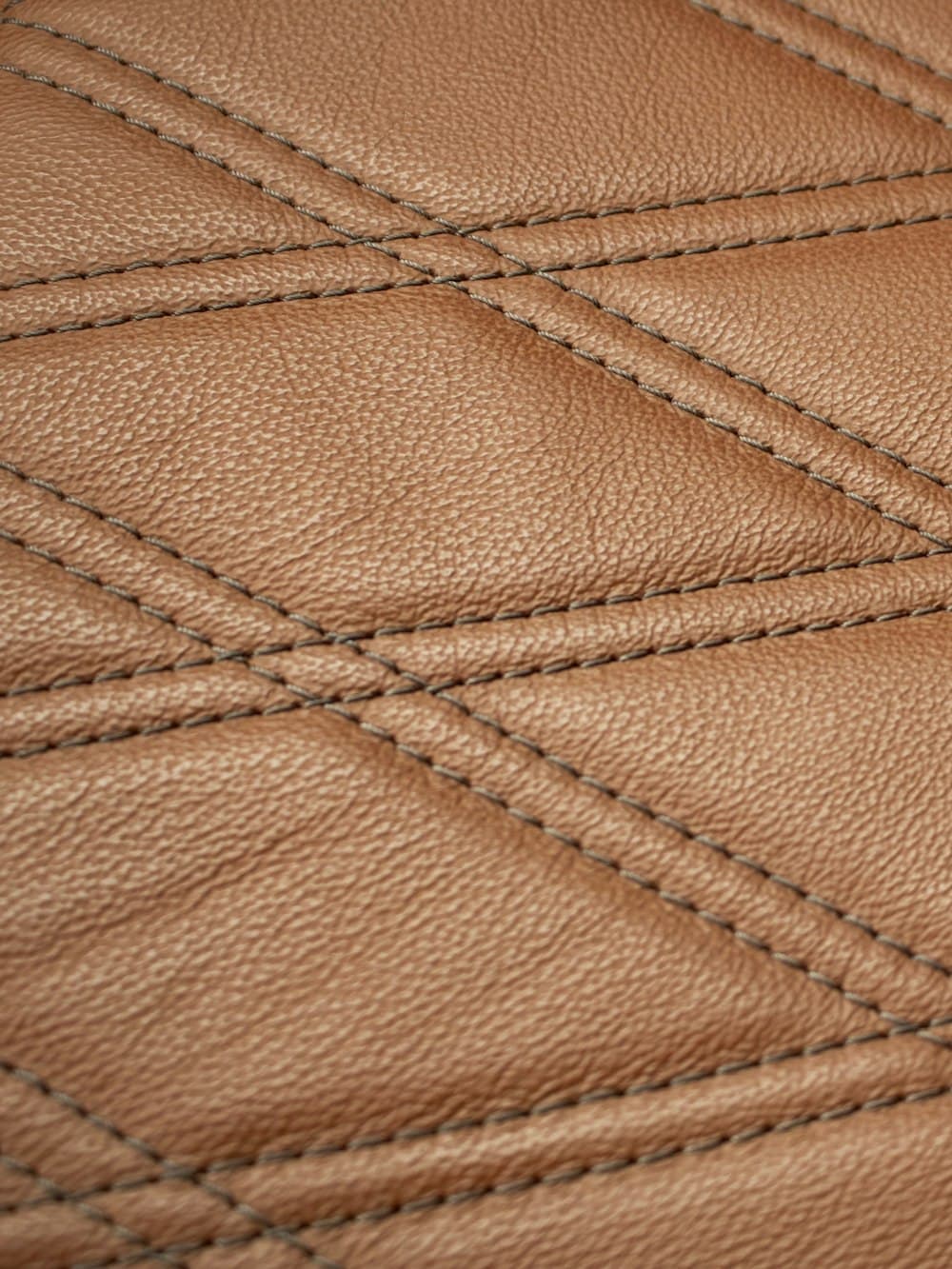
Polyurethane scores 28 out of 100 for wearer health on Toxome's fiber scale, where 100 is cleanest. That puts it in the band worth avoiding. Polyurethane is a plastic film or coating, the faux-leather layer laminated onto fabric. The score rates the fiber, not the finished garment. Mills add dyes and finishes later, so check the label for those.
What is polyurethane?
Polyurethane is a plastic coating or film. It is the material behind most so-called vegan leather. It is usually made by dissolving plastic resin in a heavy solvent called DMF and softening it with other chemicals. DMF is known to harm the liver and reproduction, and Europe lists it as a chemical of very high concern. Some of it can be left behind on the finished product.
German chemist Otto Bayer worked out polyurethane chemistry in 1937. It reached clothing decades later as a leather substitute, sold now under the marketing names vegan leather, PU leather, and pleather.
How polyurethane is made
A petrochemical resin. As a textile, PU is not a woven fiber at all.
The resin is dissolved in dimethylformamide, an EU reproductive toxicant.
Spread as a film over a fabric backing. What you touch is a sheet of plastic.
Pressed with a grain pattern to imitate leather.
The finished plastic still needs softening chemicals to stay flexible.
Water-based PU costs more and is rarer. It is the version to look for.
As a textile, polyurethane is not a woven fiber. It is a plastic coating or film spread over a fabric backing and embossed to imitate leather grain. What you touch is a sheet of plastic.
Most of it is made by the solvent-based route: the polyurethane resin is dissolved in dimethylformamide (DMF) to make it liquid enough to coat, then the DMF is evaporated off. Europe lists DMF as a reproductive toxicant and a substance of very high concern, and some of it stays behind in the finished material.
A newer water-based process carries the resin in water instead of DMF. It costs more and is less common, and it is the version to look for in a PU alternative.
Whichever route is used, the finished plastic still needs softening chemicals to stay flexible and leather-like. That is where the marketing story of vegan and cruelty-free and the health story pull furthest apart.
Not all polyurethane is the same
The processing method decides most of polyurethane's health story, and it is rarely on the label. Solvent-based PU is the cheaper, more common version and relies on DMF. Water-based PU skips DMF for a water carrier and is the one worth seeking out.
Is polyurethane safe to wear?
The softeners that keep polyurethane flexible are often phthalates, endocrine disruptors that can interfere with your hormones and absorb through skin. The EU restricts several of them, including DEHP, under REACH, and research links DEHP to breast cancer.
The solvent-based version can leave residual DMF in the finished product. DMF absorbs readily through skin and is documented to harm the liver, kidneys, and reproductive system, which is why Europe flags it as a substance of very high concern.
A watchband, a jacket lining, or a bag strap held against warm, sweaty skin is exactly the condition that helps phthalates and any leftover DMF move off the plastic and onto you. As the coating ages, cracks, and flakes, it sheds plastic microfragments the way every plastic textile does.
Polyurethane lands around 28, deep in the worth-avoiding band. Water-based PU, which skips the DMF solvent, is the cleaner version, but the phthalates used to keep any PU soft are the bigger unresolved risk, and it is still plastic worn against your skin. See the full method.
Doing this check on every product page yourself is the tedious part. The Toxome Chrome extension reads the composition for you while you shop, so you see whether something is polyurethane (and what else is in it) before you buy, not after it arrives.
How to care for polyurethane
Shop Cleaner Pieces Instead


Polyurethane, answered
It carries a real, often overlooked risk. The softeners that keep it flexible are usually phthalates, which disrupt hormones and absorb through skin, and the solvent-based version can leave behind DMF, a chemical linked to liver, kidney, and reproductive harm.
Not by default. Most vegan leather is polyurethane or PVC, both plastics, and neither is cleaner against your skin than a vegetable-tanned real leather. It avoids the chromium VI risk of chrome-tanned leather but trades it for phthalates and, in the solvent-based version, DMF.
Solvent-based PU dissolves the resin in DMF, a substance of very high concern in Europe, to make it coatable. Water-based PU uses water instead and skips the DMF. It costs more but is the version worth looking for.
No. It is a plastic film over fabric, so it cracks, peels, and flakes within a few years, where real leather can last decades. Each crack is also shed plastic, so a short life for PU means more microplastic sooner.
- Is Polyurethane Toxic? · The Filtery
- PVC vs. PU Leather Sustainability: A Chemical Audit · Hoplok Leather
- Material on Trial: PU Leather, aka 'The Vegan Leather' · Vegan Fashion Repository
The health score reflects wearer health only and mirrors the Toxome app. This guide is educational and is not medical advice.