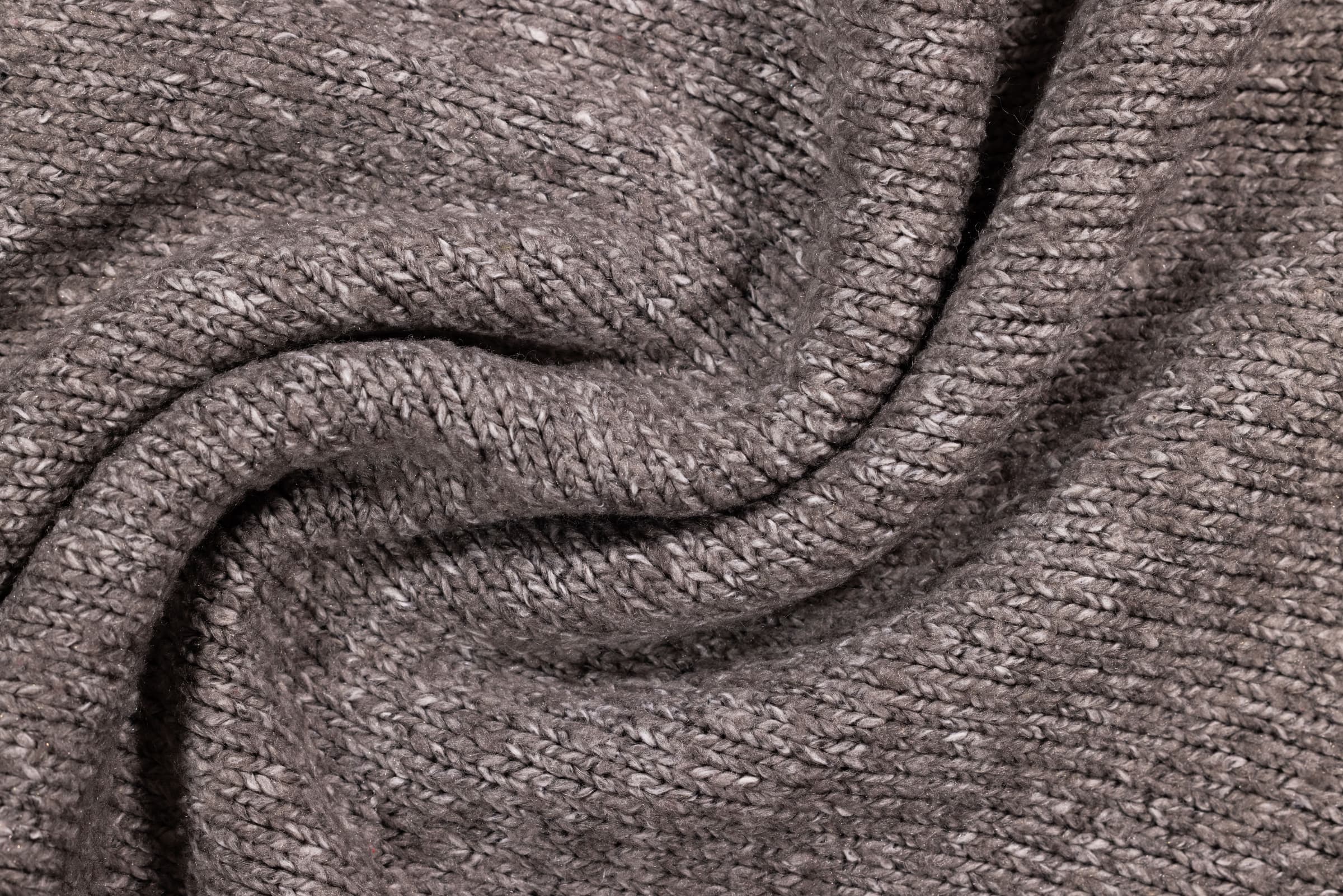
Acrylic scores 28 out of 100 for wearer health on Toxome's fiber scale, where 100 is cleanest. That puts it in the band worth avoiding. Acrylic is a plastic knit made from acrylonitrile; it pills fast and sheds microplastics. The score rates the fiber, not the finished garment. Mills add dyes and finishes later, so check the label for those.
What is acrylic?
Acrylic is a plastic fiber made mostly from an oil-based chemical called acrylonitrile. When acrylic is made, the linking is never perfect, so a tiny bit of leftover acrylonitrile stays in the fiber, historically estimated at under one part per million.
DuPont introduced acrylic as Orlon in 1950, marketed as a warm, machine-washable alternative to wool. The building block has not changed since.
How acrylic is made
Acrylonitrile, an oil-derived chemical, is the monomer.
Linked into polyacrylonitrile chains. The reaction never fully consumes the monomer.
Wet or dry spun into a soft, lofty yarn made to mimic wool.
A brittle plastic knit that pills and breaks constantly.
That breakage is why acrylic sheds so heavily in the wash.
Here the fiber is the problem, not a finish added on top.
Acrylic is polyacrylonitrile, spun mostly from acrylonitrile, an oil-derived chemical linked into long chains and then wet- or dry-spun into a soft, lofty yarn made to mimic wool in sweaters and fleece.
The linking reaction never fully consumes the monomer, so a small amount of leftover acrylonitrile stays locked in the finished fiber, historically estimated at under one part per million. On top of that, acrylic is a brittle plastic knit that pills and breaks constantly, which is why it sheds so heavily in the wash.
Acrylic exists to imitate wool at a lower price. Here the fiber itself is the problem, not a finish added on top: acrylonitrile's chemistry and heavy microplastic shedding are built into the polymer, under every soft, cheap sweater made from it.
Is acrylic safe to wear?
Acrylonitrile is classified as carcinogenic to humans (Group 1) by IARC, which reclassified it in 2024 on sufficient evidence that it causes lung cancer, with limited evidence for bladder cancer. It absorbs through skin, so warm, sweaty contact with an acrylic sweater or fleece is a real, if small, ongoing exposure to the trace monomer left in the fiber.
Acrylic sheds more microplastic than almost any other fabric. In the Napper and Thompson study at Plymouth University (2016), a single 6 kg wash load of acrylic released roughly 730,000 microfibers, more than polyester or a poly-cotton blend in the same test. Those fibers land on your skin, in your home's air, and in the water. Like other synthetics, acrylic also carries dyes and finishing chemicals that bother sensitive skin.
The share of its own dry weight the fiber itself absorbs as water vapor, then releases into the air.
A fiber that can hold and release moisture is a fiber that feels dry against the skin. Acrylic holds a fraction of what wool and cotton do, which is why it goes clammy in the heat when they do not. Figures are the standard reference values for each fiber at 20°C and 65% humidity, not a measurement of any one garment.

Acrylic lands at 28, near the bottom of the scale, for two reasons built into the fiber: the acrylonitrile residue baked into the polymer and its record as the heaviest microplastic shedder tested. There is no clean-process version to unlock a better score. Wool and cotton knitwear reach the same warmth without either problem. See the full method.
Doing this check on every product page yourself is the tedious part. The Toxome Chrome extension reads the composition for you while you shop, so you see whether something is acrylic (and what else is in it) before you buy, not after it arrives.
How to care for acrylic
Shop cashmere & merino wool Instead


Acrylic, answered
The concern is acrylonitrile, the chemical acrylic is built from, which IARC classifies as carcinogenic to humans (Group 1). Trace amounts stay in the finished fiber and can absorb through skin during warm, sweaty contact. A single sweater is a small, ongoing exposure rather than an acute one, but the risk is in the polymer, not a coating you can wash off.
It can be, from residual acrylonitrile and from the dyes and finishing chemicals typical of synthetic knitwear. It is also the heaviest microplastic shedder in fabric-shedding tests, and those fibers land on your skin as well as in your laundry water.
Not for wearer health. Acrylic copies wool's warmth and softness but carries acrylonitrile residue and heavy microplastic shedding that wool does not. Wool costs more, and it is the cleaner choice against skin.
No. It is a plastic fiber, so it traps heat and moisture instead of releasing them, which is why it can feel warm but clammy compared with wool.
- Acrylonitrile, 15th Report on Carcinogens · NCBI Bookshelf (NTP)
- Volume 136: Talc and acrylonitrile (Group 1 classification) · IARC Monographs (WHO)
- Acrylonitrile Hazard Summary · US EPA
The health score reflects wearer health only and mirrors the Toxome app. This guide is educational and is not medical advice.