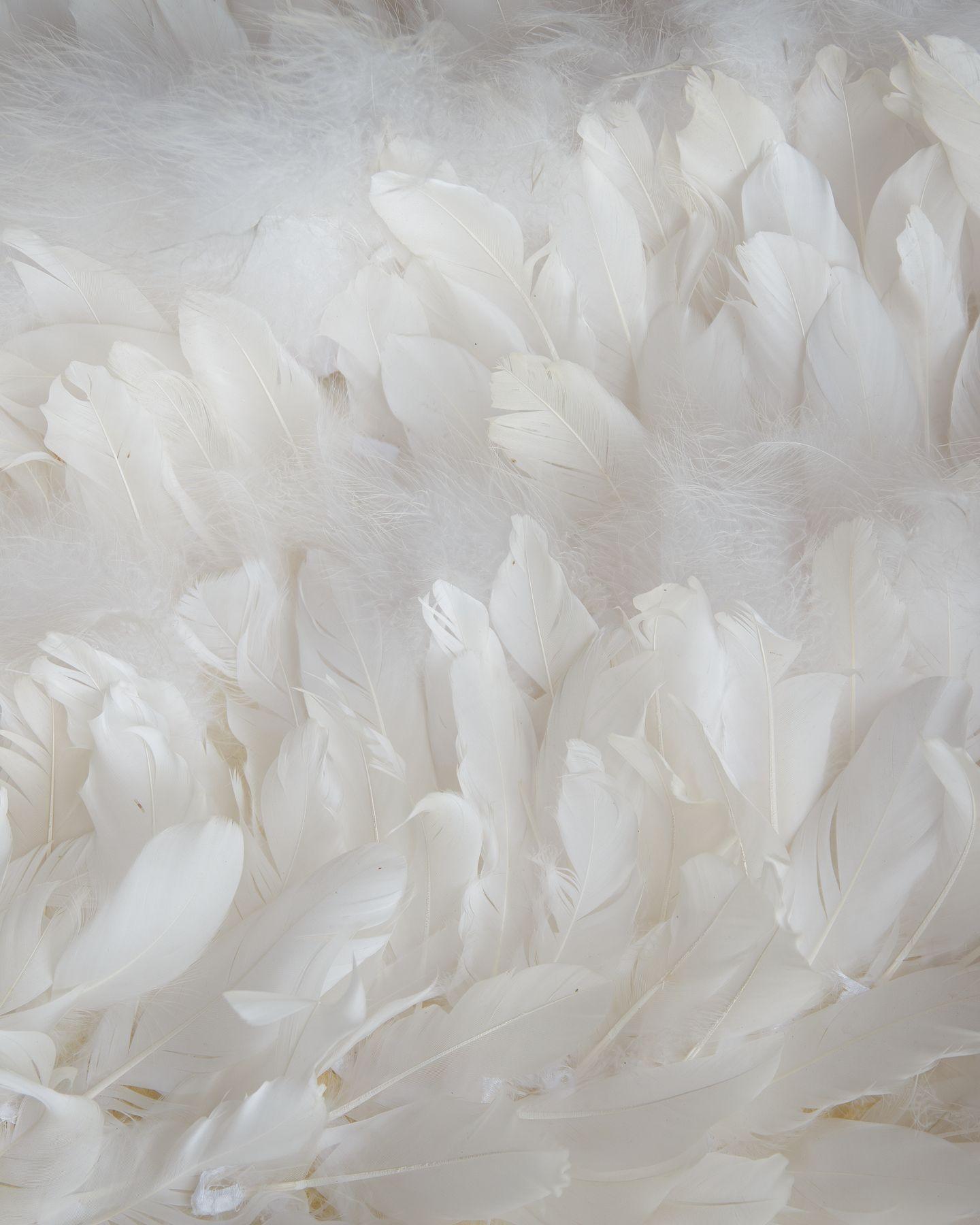
Down fill scores 76 out of 100 for wearer health on Toxome's fiber scale, where 100 is cleanest, the same as wool. It rarely touches your skin, so Toxome scores a puffer on its shell and lining and lists the fill separately. The shell is usually nylon or polyester, and a water-repellent finish costs points unless the brand says it's PFAS-free or PFC-free, or it's bluesign certified.
What is down?
Down is the soft undercoat cluster of ducks and geese, the fluffy layer under the outer feathers. A down cluster has no quill, which is what separates it from a feather. In the US, a product labeled down must hold at least 75% down clusters, with no tolerance. Most down is a byproduct of the duck and goose meat industry.
How down is made
Ducks and geese, mostly raised for meat. RDS bans live-plucking and force-feeding.
Washed with detergent, rinsed, and dried at high heat.
Clusters are separated from feathers. A US down label needs 75% clusters.
Optional water-repellent treatment. Ask whether it's fluorocarbon-free.
Blown into a tight weave, usually nylon or polyester, sometimes downproof cotton.
Read the shell and its finish. That's the part that touches you.
Down is collected from ducks and geese, mostly raised for meat. The welfare questions sit at this step: live-plucking and force-feeding, which the Responsible Down Standard bans.
The raw down is washed with detergent, rinsed, dried at high heat and sorted. The European hygiene standard EN 12935 sets cleanliness limits for washed down. We found no public data on detergent or biocide residue left in finished fill.
Some down is coated so it sheds water, sold as hydrophobic or water-repellent down. Early coatings were fluorocarbons, part of the PFAS family, and brands now sell wax- and lipid-based versions they describe as fluorocarbon-free. The down is then blown into a shell, almost always tightly woven nylon or polyester, because a loose weave lets the clusters escape.
Not all down is the same
Fill power measures how much space a fixed weight of down fills, so a higher number means more warmth for the weight. US and European test methods give different results, so compare numbers measured the same way. The label word matters too. In the US, down means at least 75% down clusters. Feather-heavy fill is heavier for the same warmth, and quills can poke through the shell.
Is down safe to wear?
Down sits inside a shell, so it rarely touches you. What does touch you is the shell and lining, and on most jackets that's nylon or polyester. That's why Toxome scores a puffer on its shell and lining, and lists the fill separately.
PFAS in outerwear mostly comes from the water-repellent finish on the shell. In testing commissioned by the advocacy group Toxic-Free Future, 9 of 13 stain- or water-resistant jackets bought in 2020 had been treated with PFAS. A label that says PFAS-free or PFC-free, or a bluesign certification, is how you know the finish was checked.
Feather allergy is mostly dust mite. In a study of 269 adults, 24 reacted to commercial feather extracts on skin-prick tests, but mite allergen in the extracts explained most of it, and only one person had a confirmed feather allergy. Case reports link feather bedding to a rare lung reaction, hypersensitivity pneumonitis, which is a duvet question more than a jacket one.
- Warmth without bulk Fill power measures loft per ounce, so high-fill down keeps you warm with less weight.
- Rarely an allergen True feather allergy turned up in 1 of 269 adults tested. Dust mite was the usual culprit.
- No plastic in the fill Down is a natural keratin cluster, the same protein family as wool.
- Fluorocarbon-free options Untreated down needs no coating, and water-repellent down now comes in versions sold as fluorocarbon-free.


The down itself scores 76, the same as wool. On a jacket, Toxome scores the shell and lining, the layers against you, and lists the fill on its own line without counting it, so a nylon or polyester shell pulls the number down and a polyester fill doesn't. A stated water-repellent or DWR finish costs points unless the brand says it's PFAS-free or PFC-free, or the piece is bluesign certified, because PFAS in jackets mostly comes from the shell coating. RDS is a welfare standard, so it doesn't change the health score. See the full method.
Doing this check on every product page yourself is the tedious part. The Toxome Chrome extension reads the composition for you while you shop, so you see whether something is down (and what else is in it) before you buy, not after it arrives.
Animal welfare in down
The two practices to ask about are live-plucking, pulling down from a living bird, and force-feeding, which ties down to foie gras production. The Responsible Down Standard bans both and audits the chain from hatchery to finished product, and its logo only goes on fill that's 100% certified. Neither RDS nor any welfare standard says anything about chemistry, so it doesn't change the health score.
How to care for down
Down, answered
Down is the soft undercoat cluster of ducks and geese. It has no quill, unlike a feather. In the US, a product labeled down must contain at least 75% down clusters.
The fill is a natural protein cluster with no plastic in it, and Toxome scores it 76. The chemistry worth asking about sits in the shell's water-repellent finish, which can contain PFAS. Look for PFAS-free or PFC-free on the label, or bluesign.
Probably not to the down itself. In a study of 269 adults, most positive feather skin tests traced back to dust mite, and only one person had a confirmed feather allergy.
Fill power is how much space a fixed weight of down fills. Higher means more warmth for the weight. US and European methods give different numbers, so compare within one standard.
It depends on the supply chain. The Responsible Down Standard bans live-plucking and force-feeding and audits each stage from farm to finished product. Look for RDS on the label.
- USA labeling questions and answers · IDFL
- Allergy to feathers · Allergy (Kilpiö et al., 1998)
- PFAS in stain- and water-resistant products: results · Toxic-Free Future (advocacy-commissioned testing)
- Quick Guide to the Responsible Down Standard 3.0 · Textile Exchange
- EN 12935: Feather and down, hygiene and cleanliness requirements · CEN
- Feather duvet lung · BMJ Case Reports
The health score reflects wearer health only and mirrors the Toxome app. This guide is educational and is not medical advice.