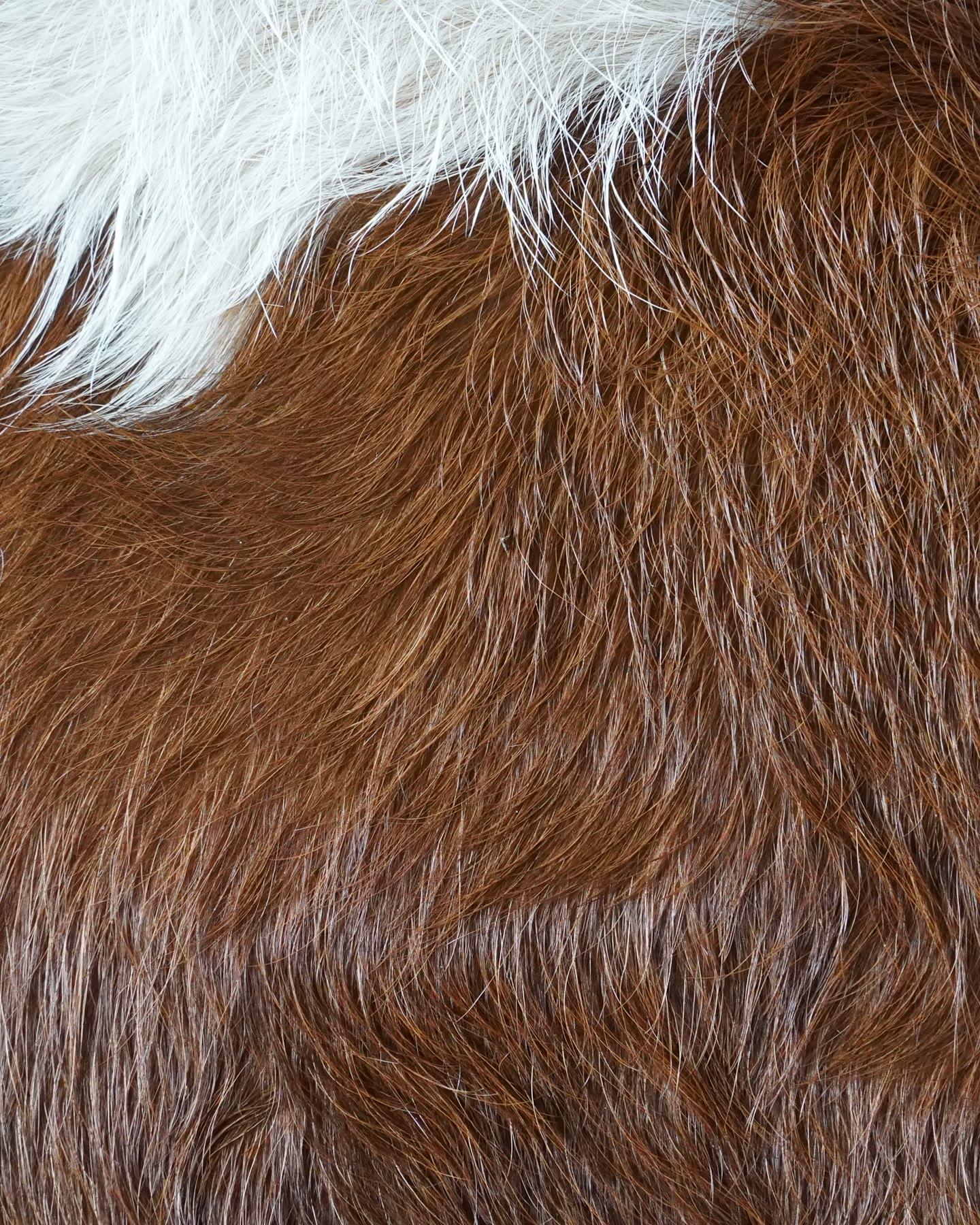
Real fur scores 76 out of 100 for wearer health on Toxome's fiber scale, where 100 is cleanest, the same as shearling. Fur is a pelt dressed with the hair on, and brands rarely say how it was dressed or dyed. A stated clean dressing or tannage, or OEKO-TEX Leather Standard certification, raises it to 90. Faux fur is a synthetic pile, scored as modacrylic at 28.
What is real fur?
Fur is an animal pelt tanned, or dressed, with the hair left on. US law defines it as any animal skin with hair, fleece or fur fibers attached. Rabbit, fox and mink are the common ones in clothing, often as trim on hoods, cuffs and pom-poms. Sheared mink has its guard hairs clipped to a velvety pile. Faux fur is a different material altogether: synthetic fibers knit or woven to look like a pelt.
How real fur is made
Rabbit, fox and mink are the common furs in clothing.
Soaked, fleshed, pickled and tanned, traditionally with alum, sometimes chrome.
Dyes and bleach are optional. US labels must say when fur is dyed or bleached.
Sheared, plucked or left long, then cut and sewn, often into trim.
Undyed fur with a named dressing carries the least to ask about.
A pelt is soaked, scraped clean of flesh, pickled in acid, then tanned. Fur dressing has traditionally used alum, an aluminum salt, and sometimes chrome. Formaldehyde has a history in dressing too. The Fur Institute of Canada, an industry group, says it hasn't been used in North American fur dressing for many years but may still be used in some Asian countries.
Dyeing and bleaching come next. Fur dyes include the p-phenylenediamine family, a well-known contact allergen, and bleaching uses hydrogen peroxide. US labels must say when fur is bleached, dyed or otherwise artificially colored.
Last, the pelt is sheared, plucked or left long, then cut and sewn. Pieces made from paws, tails or bellies must say so on a US label.
Not all real fur is the same
The US Fur Products Labeling Act requires the label to name the animal and the country of origin, and to say whether the fur is dyed or bleached, pointed (with hairs inserted), or made from paws, tails or bellies. Faux fur sits outside that law's animal names: it's a pile fabric, usually modacrylic or acrylic on a polyester backing.
Is real fur safe to wear?
The side you see is hair. The skin side has been dressed with metal salts and, at times, formaldehyde. All the residue testing we found was commissioned by groups that campaign against fur. In one, a German lab hired by the Dutch group Bont voor Dieren found up to 260 mg/kg formaldehyde in fur trim on children's jackets. The industry disputes results like these, and we found no regulator survey either way.
For scale, the EU limits formaldehyde in clothing to 75 mg/kg, and that rule doesn't cover items made entirely of natural fur, leather or hide. Dyed fur can also carry dyes from the p-phenylenediamine family, a common contact allergen. We found no published series of skin reactions to fur specifically.
- No plastic in the pile The hair itself is a natural keratin fiber, so real fur doesn't shed microplastics.
- Undyed is an option Natural-color fur skips the dye and bleach steps, which is where the known allergens come in.
Real fur scores 76 by default, the same as shearling, because dressing chemistry is rarely stated. A stated clean dressing or tannage (vegetable-tanned, chrome-free or wet-white) or OEKO-TEX Leather Standard certification raises it to 90. Faux fur is scored as modacrylic, a synthetic, at 28. The score measures wearer health only, so it says nothing about animal welfare, which is covered below. See the full method.
Doing this check on every product page yourself is the tedious part. The Toxome Chrome extension reads the composition for you while you shop, so you see whether something is real fur (and what else is in it) before you buy, not after it arrives.
Animal welfare and the law
In 2025, the EU's food safety authority, EFSA, published a scientific opinion on mink, foxes, raccoon dogs and chinchillas farmed for fur. It found that in most cases, the welfare problems it identified can be neither prevented nor substantially reduced within the current cage systems.
In the US, California's AB 44 banned the sale and manufacture of new fur products from January 1, 2023. It exempts used fur and several other materials, including leather, cowhide and shearling. Other places set their own rules, so check where you live.
How to care for real fur
Fur, answered
Fur is an animal pelt dressed with the hair left on. US law defines it as any animal skin with hair, fleece or fur fibers attached, which is why shearling counts as fur on a US label.
We don't have independent data to say. Fur is dressed with metal salts and has historically used formaldehyde, and every residue test we found came from anti-fur groups, which reported formaldehyde in children's fur trim. Undyed fur with OEKO-TEX Leather Standard certification carries the clearest proof.
Faux fur is plastic, usually modacrylic or acrylic on a polyester backing, and Toxome scores it 28. Real fur scores 76. Neither score covers animal welfare.
California's AB 44 banned the sale and manufacture of new fur products from January 1, 2023. Used fur, leather, cowhide and shearling are among the exemptions.
No. Toxome's score measures what touches your skin. Welfare and the law are covered in their own section on this page.
- 15 U.S.C. § 69: Fur Products Labeling Act definitions · US Code
- 16 CFR Part 301: Rules and regulations under the Fur Products Labeling Act · US Code of Federal Regulations (FTC)
- Fur industry · ILO Encyclopaedia of Occupational Health and Safety
- Fur on children's wear full of toxics · Fur Free Alliance (advocacy-commissioned testing)
- Processing · Fur Institute of Canada (industry)
- REACH restriction of CMR substances in clothing, textiles and footwear (Regulation (EU) 2018/1513) · ChemSafetyPro
- Welfare of American mink, red and Arctic foxes, raccoon dog and chinchilla kept for fur production · EFSA Journal 2025;23(7):e9519
- California becomes first state in the nation to ban fur (AB 44) · Office of Assemblymember Laura Friedman
The health score reflects wearer health only and mirrors the Toxome app. This guide is educational and is not medical advice.