The Resort Edit
Heat is the one condition that makes fiber content impossible to ignore.
4 min read

Most of the year you can get away with not knowing what your clothes are made of. Then you land somewhere at thirty-two degrees with ninety percent humidity, and the fabric becomes the only thing you can think about.
Here is the mechanism, because it is worth understanding once. Your body cools itself by evaporating sweat off your skin. For that to work, the moisture has to move off you and into the air, which means it has to pass through whatever you are wearing. Linen and cotton are hydrophilic: they absorb that moisture and release it. Polyester is hydrophobic and does not, so the sweat stays on your skin with nowhere to go. That is the clammy feeling, and it is a property of the fiber rather than the fit or the colour or the price.
Which is why linen has been the hot-climate default for four thousand years, and why almost all resortwear is made of polyester. Here is the version that works.
Linen is the whole argument
Linen comes from flax, and its fibers are hollow and highly absorbent, which is the entire reason it feels cool. It takes up moisture readily, moves it to the surface, and dries fast. It also conducts heat away from the body better than cotton, so a linen dress in still air is measurably more comfortable than a cotton one of the same weight.
The trade is that it creases, and there is no version that does not. Any product sold as linen that stays smooth all day has something else in it, usually polyester, and the crease resistance is the tell. The look is a rumpled one and it either reads as expensive to you or it does not, but a genuinely crisp linen dress at 4pm is not linen.


The separates that do the packing
A holiday wardrobe is a maths problem: the fewest pieces that make the most outfits, all of which have to survive a suitcase. Linen separates are unreasonably good at this, partly because they already look creased so nothing you do to them in a bag makes it worse.
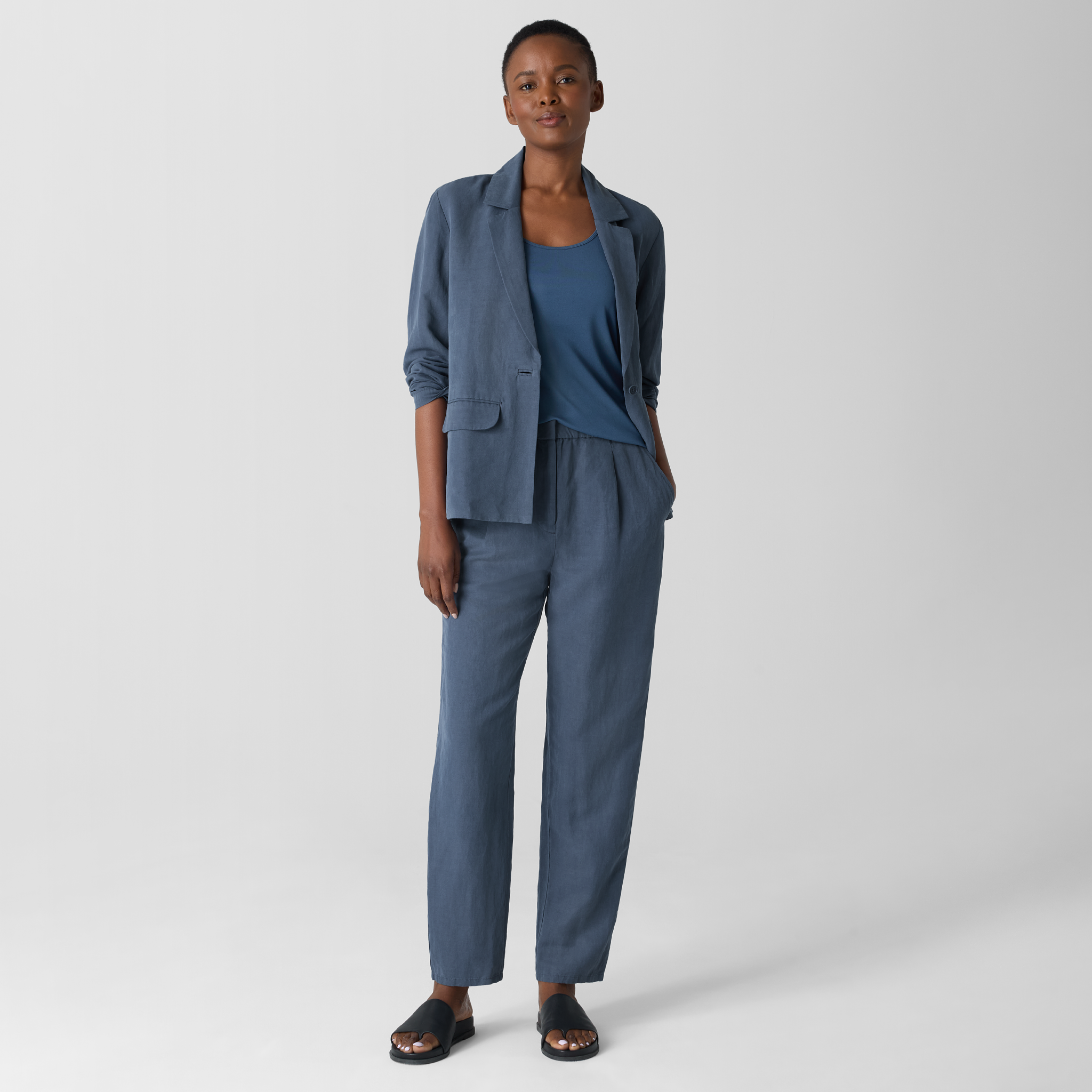
What earns its place is a wide trouser, a short, a sleeveless top and one oversized shirt that works over everything, including a swimsuit. Buy them in the same three or four colours and every combination works. Everything below is 100% linen, which also means it dries overnight if you rinse it in a sink, and that is the difference between packing for a week and packing for two.


For evening, when it is still warm
The hardest hour to dress for on holiday is nine at night, when it has dropped five degrees and you want to look like you have made an effort without putting on anything that holds heat. This is where the blends earn their keep.
A linen-silk cloth is the best answer we have found: linen gives it the breathability and silk gives it the drape and the low sheen that reads as evening. A high-linen blend with a little silk, like the Posse dress here, does the same job from the other direction. The one thing to avoid is the polyester maxi that gets sold for exactly this slot, which is the single worst garment you can own in warm weather because it combines maximum coverage with zero breathability.



Two things about hot-weather clothing that get sold badly.
The first is UPF. Plenty of resortwear is marketed on sun protection, and tightly-woven fabric does block UV, which is a genuine and measurable property. What is worth knowing is that a rated UPF garment sometimes gets there through a chemical finish rather than the weave alone, and the label rarely distinguishes. A densely woven natural fiber gives you real protection without a treatment. If sun cover is why you are buying, weave and coverage are the things to look at.
The second is water repellency. This is the one place in a summer wardrobe where regulation has genuinely moved. PFAS, the fluorinated chemicals used to make fabric shrug off water and stains, are being restricted out of apparel: California's textile ban took effect in 2025 and other states have followed. That is a documented regulatory fact rather than a vibe, and it is a reason to be sceptical of a beach cover-up sold on how fast water beads off it.
Neither of those applies to a plain linen dress, which is rather the point. Toxome scores what a garment is made of, and in heat that single number tells you almost everything you need.
Linen, and enough of it to get through a week. You can shop the resort edit, every piece scored by Toxome on its published composition, and pack for the heat instead of against it.
Sources
- Toxome. Linen: the fiber guide.
- Toxome. Polyester: what the fiber is and how it scores.
- California Department of Toxic Substances Control. PFAS in textiles (AB 1817).
pins Toxome in your Google results, so our reporting shows up first when you search fabrics and brands.