
Every other garment you own has to tell you what it's made of. There's a law about it. Pull the tag on a shirt and you get percentages, fiber names, a country of origin.
Now look inside your shoe. A size. A brand. Maybe the word "leather," maybe "man-made materials," which means nothing at all. No percentages. No fiber list. Nothing about what tanned the leather, what glued the sole on, or what was sprayed on the outside to make water bead off it.
So the shoe that makes your feet sweat is usually made of plastic, and there is no label to tell you so.
The sealed foot
The soles of your feet carry the densest concentration of sweat glands on your body, roughly 600 per square centimetre, matched only by your palms. That's a cooling system, and it's built to be open to the air.
A shoe closes it. Add a synthetic upper that doesn't breathe, a foam midsole that holds warmth, and a sock made of polyester, and you've built a small humid room around the most actively sweating skin you own. Then you walk around in it all day.
That warm, damp, closed environment is the whole story. It's why athlete's foot exists. It's also the exact condition that pulls chemistry out of a shoe and onto your skin.
Sweat is the activator. It is the reason the same pair that felt fine in October starts causing trouble in July, and the reason a shoe's materials matter more than a shirt's despite touching thicker skin.
What a shoe is actually made of
Rubber accelerators. These are the compounds used to vulcanise rubber, meaning to turn soft raw rubber into something springy and durable. They have names like thiurams and carbamates. In data from the North American Contact Dermatitis Group, rubber chemicals as a group were the single most common cause of shoe-related skin reactions, ahead of both adhesives and leather chemicals. Heat and sweat are what draw them out.
Chrome-tanned leather. Roughly nine out of ten leathers are tanned with chromium. The form used is trivalent chromium, which is fairly inert. The trouble is that it can convert to hexavalent chromium, a well-documented skin sensitiser, and that conversion is encouraged by heat, moisture, and age. The European Union capped hexavalent chromium in skin-contact leather at 3 milligrams per kilogram in 2015. The United States has no equivalent limit.
PFAS. The "forever chemicals," used here as the invisible coating that makes water bead and roll off. Anything sold as waterproof, water-resistant, or stain-resistant is a candidate. Several states have moved to ban PFAS in apparel. Lawmakers have been slower to cover footwear, which leaves shoes one of the last places the coating is still routine.
PVC and phthalates. The material behind cheap synthetic uppers, jelly shoes, and a lot of children's footwear. Phthalates are the softeners that keep vinyl flexible, and they don't stay put.
Solvents and glue. Most shoes are assembled with adhesives rather than stitching. Synthetic "vegan leather" is often made using dimethylformamide, a solvent whose real cost lands mostly on factory workers. Residue is a smaller story than the manufacturing is, but it's part of what you're smelling in a new shoe.
Antimicrobial insoles. Anything marketed on odour control has been treated with something. Usually silver or zinc compounds.
The shoe industry's answer to a sweaty synthetic foot has been to add a chemical that kills the smell, rather than a material that lets the foot breathe.
That new shoe smell
Open a shoebox and the first thing that hits you is the smell. It gets described as new, which makes it sound like cleanliness. It is closer to the opposite.
What you are smelling is volatile organic compounds coming off the glue, the foam, and the solvents used to bond the shoe together. Volatile means they evaporate at room temperature, which is the only reason your nose can find them. The smell is the shoe releasing its manufacturing into the air around it, and it fades because those compounds are leaving.
That gives you a free test nobody sells you. A shoe that arrives smelling is telling you how much went into assembling it. Leave a new pair somewhere ventilated for a few days rather than in a closed wardrobe or a car, and treat a pair that still smells after weeks as a pair worth returning.
Five that pass
One caveat first, and it is the same caveat the whole piece is built on. The compositions below are what each brand states, and for footwear a stated composition covers the part the brand chose to describe. Most of them do not publish the adhesive. That gap is the point of this article, and no amount of good fiber closes it.
What these five do have is a natural upper, no waterproofing claim, and a brand willing to name the material at all. That is a low bar. It also rules out most of the shoe aisle.
1. Platform Smoking Espadrille
Soludos
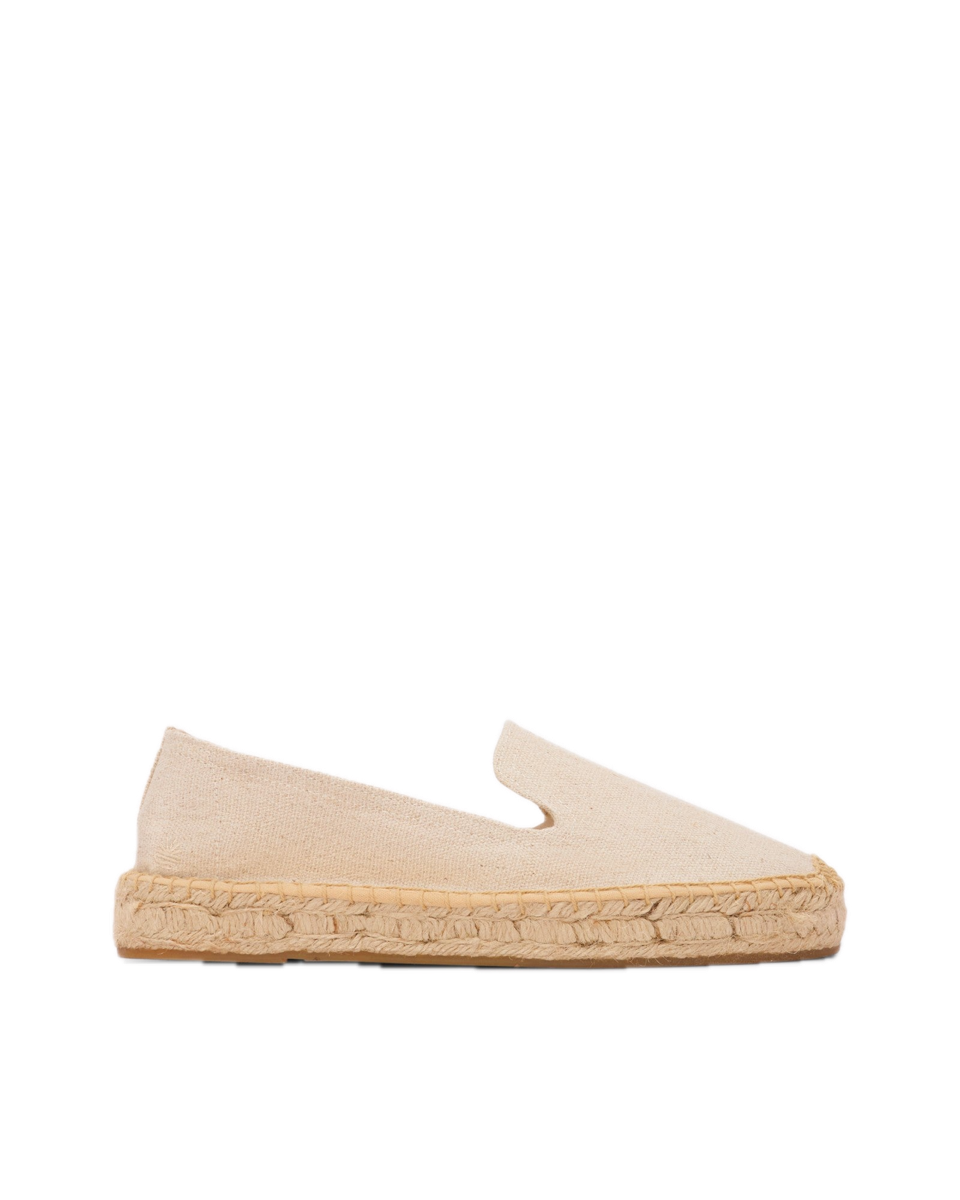
100% organic cotton basketweave upper, undyed cotton twill lining · $109
A basketweave is a loose weave, which means the upper is full of small gaps for air to move through. Undyed cotton twill on the inside is the detail worth noticing, because the lining is the layer actually touching skin and it is the layer most brands leave undescribed. Soludos is also unusually specific about the sole, calling it 68% naturally derived rather than natural, which is a more honest sentence than the category is used to.
2. 2432 Works Low Cut Canvas Sneaker
Superga
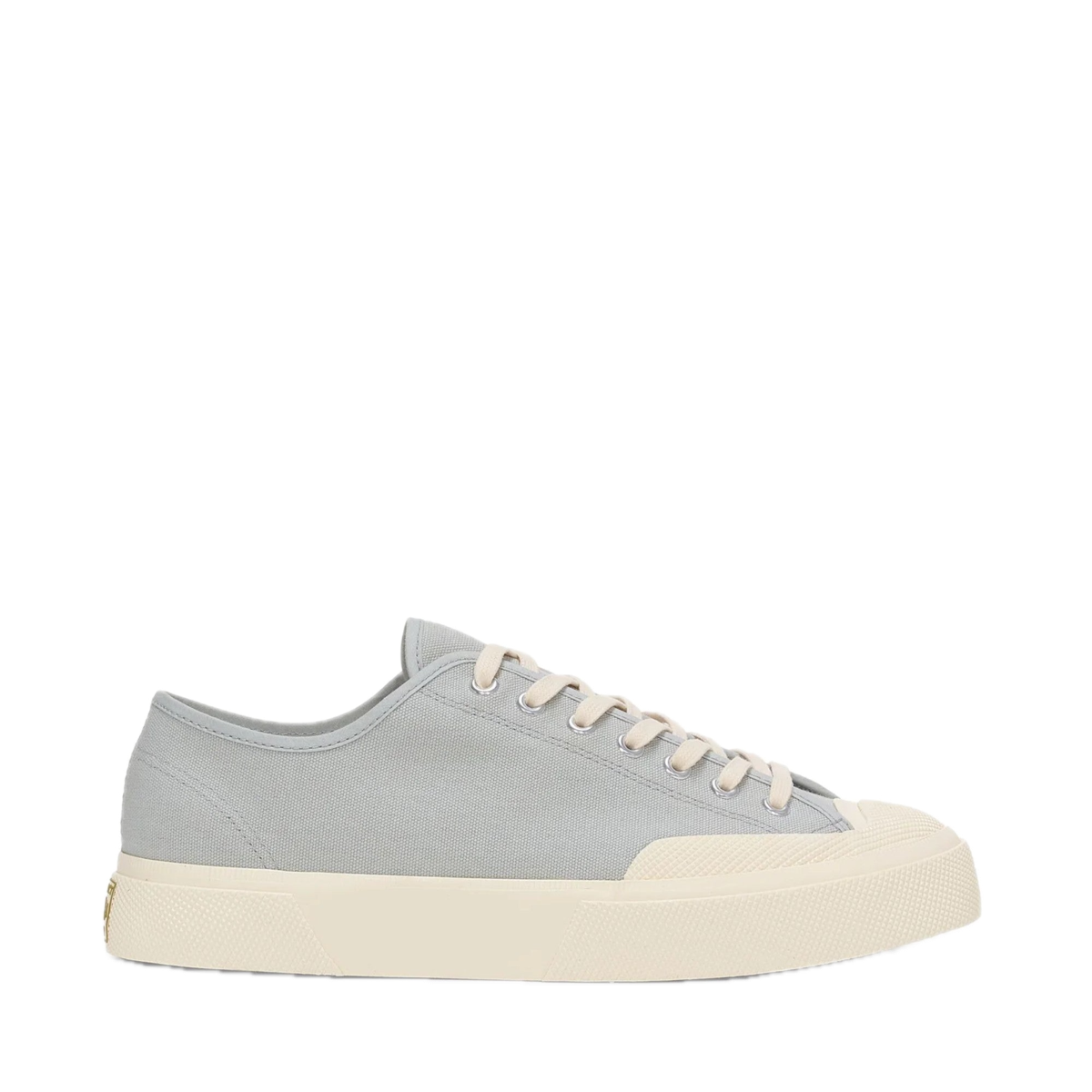
Cotton canvas upper, cotton lining, cotton laces, vulcanised natural rubber sole · $110
The everyday shoe on this list, and the one whose composition goes furthest. Upper, lining, and laces are all cotton, which is rare enough to be worth stating twice, because the lining and the laces are usually where a synthetic quietly reappears. Vulcanised natural rubber underneath rather than a foam midsole.
3. Barefoot Espadrille 080
Ohne Project
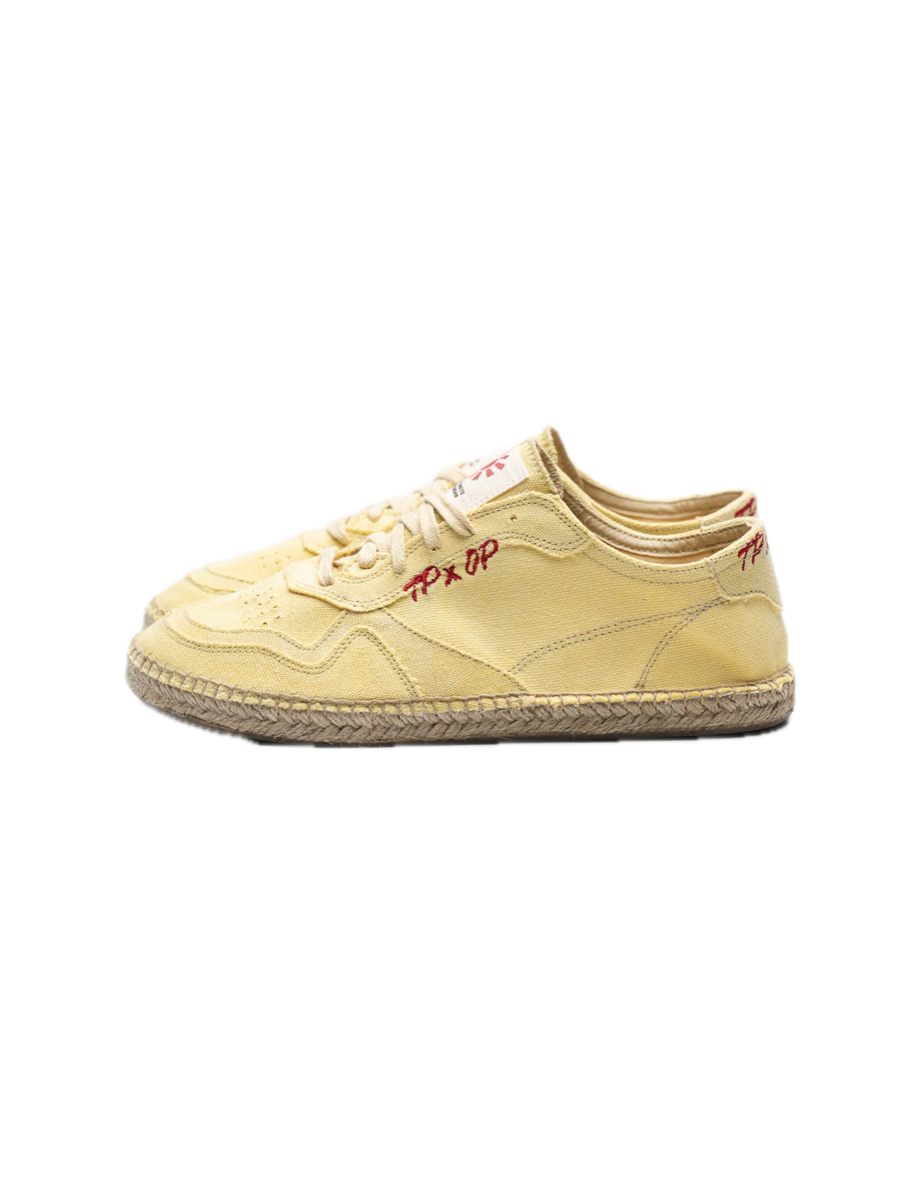
100% cotton · $189
Cotton canvas on a braided jute sole, which is about as close to an unsprayed shoe as the category gets. The barefoot last is the other half of the argument: a toe box wide enough for toes to sit where they actually grow. The most expensive pick here, and the one that answers the shape question as well as the materials one.
4. Dali Mule Espadrille
Soludos
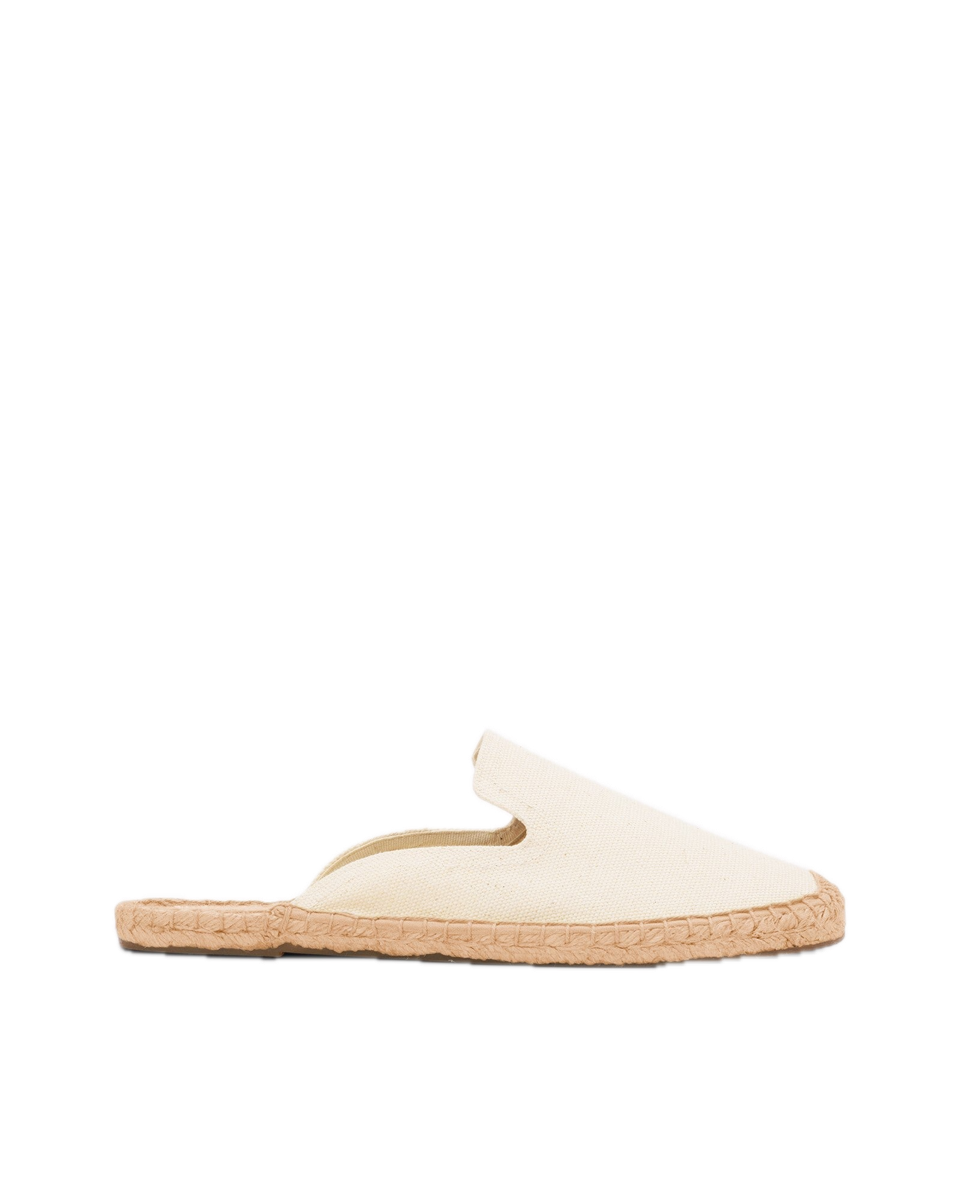
10oz cotton upper, undyed cotton twill lining · $79
Backless, which is the most direct answer to the sweat problem on this page: a shoe that never fully encloses the foot cannot trap much around it. Cotton over a jute base, undyed lining, and the cheapest pick here by thirty dollars.
5. Bishkek Kicks
Kyrgies
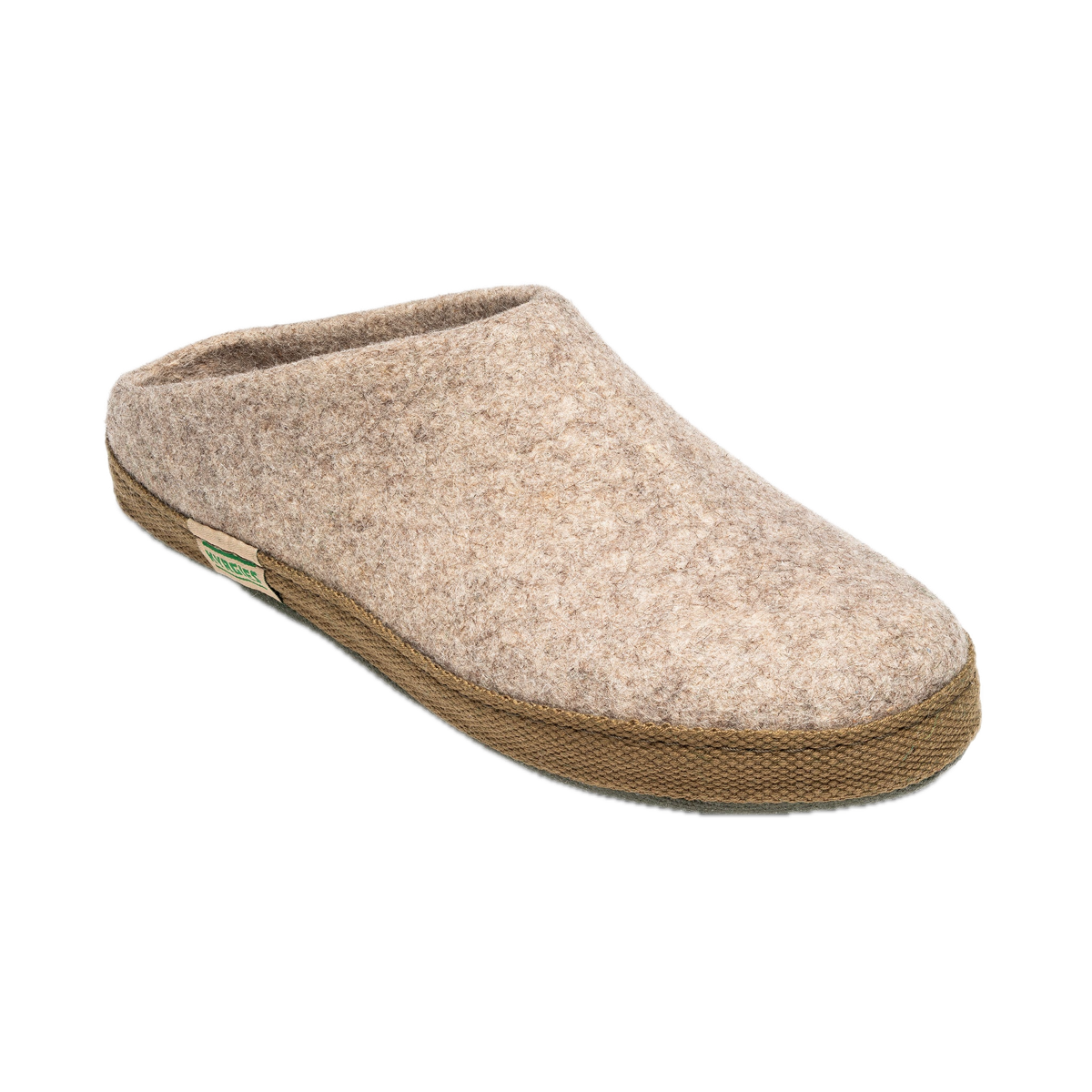
100% wool · $99
The indoor one, handfelted from Kyrgyz wool. Wool is the other way to solve moisture, holding it inside the fiber rather than in a film against skin, which is why a wool slide does not go clammy the way a synthetic slipper does. This is the pair for the sixteen hours a day most people spend indoors and never think about.
What the traditions got right
Chinese medicine puts a single point on the sole and calls it a gushing spring. Ayurveda oils the feet before sleep. Kneipp built a nineteenth-century water cure around cold foot baths. Reflexology draws the organs across the arch. None of these traditions were talking to each other, and all of them arrived at the same instruction: keep the foot bare, warm, dry, and touched.
The explanations do not survive contact with anatomy. Nothing drains out through the sole, and the organ map has never been demonstrated.
The practice is another matter. In 1999, Kräuchi and colleagues at Basel published work in Nature showing that the opening of the blood vessels in the feet is the strongest physiological predictor of how fast a person falls asleep. Warm feet, around ten minutes. Cold feet, closer to twenty-five. A Bavarian priest with no physiology available to him had the protocol right by about a century.
That is the pattern for all of it. The traditions were reading a real signal off the feet. They wrote the wrong caption underneath it.
What to look for instead
Skip the waterproofing unless you need it. It's the most reliable place PFAS shows up, and most people buy it for weather they never walk in.
Read the lining, not just the upper. A cotton canvas shoe with a synthetic lining has put the plastic on the side that touches you. Brands that use natural linings say so, because it costs them more.
Vegetable-tanned over chrome-tanned. Brands that go to the trouble of veg-tanning say so on the product page. Silence usually means chrome.
Natural rubber outsoles, and natural uppers: canvas, hemp, jute, wool, veg-tan leather. A plain canvas sneaker on a natural rubber sole is one of the cleanest shoes you can buy, which is a pleasant accident, because it's also one of the cheapest.
Wide toe box, flat, flexible. Your toes should be able to spread inside the shoe. This is a shape question rather than a materials one, and it's the one that changes how your feet age.
Rotate your pairs. A shoe needs a full day to dry out. Wearing the same pair daily is what turns the humidity problem chronic.
Natural fiber socks. Wool or cotton rather than polyester. The cheapest fix on this list, and the one touching your skin most directly.
Check the certification, not the adjective. "Eco," "natural," and "conscious" mean nothing on a shoebox. The marks that carry a standard behind them are the ones worth reading, and footwear carries far fewer of them than clothing does.
The short version
Feet sweat more than anything else on you, and a shoe is the only garment built to seal that in. The plastic is what does the sealing, and there is no label on a shoe to tell you where it is.
A warm, wet, enclosed space draws chemistry out of whatever it is made of and holds it against your skin for ten hours at a stretch. So the material question and the sweat question turn out to be one question.
The old advice was right all along, for reasons nobody involved could have known. Bare when you can. Breathable when you can't. Dry either way.
Frequently asked
Shoes with a natural, open upper and no waterproof layer. Cotton canvas, jute, raffia, and wool all move moisture instead of holding it against skin, and a backless or open shape does even better because it never encloses the foot. The thing to avoid is the combination that most shoes are: a synthetic upper, a foam midsole, and a water-repellent finish over the top of both.
Not really, and this is the part almost everyone has backwards. The sole is the least absorbent skin on your body. In the classic 1967 study by Feldmann and Maibach, the arch of the foot took up about a seventh of what the forearm did, the lowest of every site they tested. The skin there is roughly ten times thicker than the skin on your arm. What happens in a shoe is irritation and allergy at the surface, not absorption into the body.
No. The water in an ionic foot bath turns brown because electricity corrodes the metal electrodes and produces rust. Run the machine with no feet in it and the water changes colour exactly the same way. When researchers analysed the sludge, the elements present matched the composition of stainless steel, and there was no measurable change in what participants excreted. Foot pads darken from moisture and oxidation for the same kind of reason.
For most people it's the rubber chemistry. In North American Contact Dermatitis Group data, rubber compounds as a group were the most common cause of shoe dermatitis, ahead of adhesives and leather chemicals. These are the accelerators used to vulcanise rubber, and warmth and sweat are what draw them out. If you want a second answer, it's the waterproofing, because that's where PFAS lives.
About nine in ten leathers are chrome-tanned. The chromium used is the trivalent kind, which is largely inert, but it can convert to hexavalent chromium, a well-established skin sensitiser. The European Union capped that at 3 milligrams per kilogram in leather that touches skin in 2015. The United States has no equivalent limit. Vegetable-tanned leather sidesteps the question, and brands that use it almost always say so.
Because you are smelling the manufacturing. That smell is volatile organic compounds coming off the adhesives, the foams, and the solvents used to bond a shoe together, and it fades as those compounds off-gas. A strong chemical smell is a reasonable signal to air a pair out somewhere ventilated for a few days before wearing them all day, and to be wary of a shoe that still smells weeks later.
Not automatically, and the two are easy to confuse. Barefoot describes a shape: a wide toe box, a flat sole, and a thin flexible base. It says nothing about what the shoe is made of. Plenty of barefoot shoes are built from synthetic uppers with water-repellent treatments. The shape question and the materials question are separate, and a shoe has to answer both.
For reducing what sits against your skin: vegetable-tanned leather rather than chrome-tanned, natural rubber rather than synthetic compounds, and uppers in organic cotton canvas, hemp, jute, or wool. Water-based adhesives over solvent ones, and no waterproof membrane unless you need one. The pattern is the same one that holds across a wardrobe, which is that fewer treatments beat better treatments.
Because warming the feet opens the blood vessels there, and that dilation is the strongest physiological signal that sleep is coming. Kräuchi and colleagues at Basel published this in Nature in 1999: warm feet took around ten minutes to fall asleep, cold feet closer to twenty-five. It is the mechanism behind the hot foot soak in Chinese medicine, the Kneipp contrast bath, and oiling the feet at night in Ayurveda, none of which knew why they worked.
One narrow part of it is real physics. Standing on the earth drains the small electrical charge that indoor wiring induces on your body, and that is measurable. The health claims built on top of it are a different matter: the studies are small, largely funded by people selling grounding products, and have not been independently replicated. Walking barefoot outside is genuinely good for your feet. The reasons given for it are mostly not the reasons it works.


