The Sunday Reset
What you wear for the nine hours nobody sees, which is most of the hours.
4 min read

Do the arithmetic on sleepwear once and you never look at the category the same way. Eight hours a night is a third of your life, spent in one garment, on a warm bed, with nothing over it and nothing under it. No other clothing you own comes close to that contact time, and almost nobody checks what it is made of.
The category is also unusually full of synthetics, because polyester fleece and poly-modal blends are cheap, come out of the dryer looking new, and photograph as cosy. The problem is what happens at 2am. Falling and staying asleep depends on your body shedding heat, dropping its core temperature by around a degree, and that heat has to leave through whatever you are wearing. A fiber that absorbs moisture and lets air through helps. One that does neither traps both against you, which is the mechanism behind waking up hot in sleepwear that felt soft in the shop.
Cotton, linen and silk all do the first thing. Here is how to choose between them.
What to actually sleep in
Organic cotton is the default and there is nothing wrong with being the default. It absorbs moisture, it breathes, it washes at temperature without complaint, and it is soft from the first night rather than the tenth. If you want one answer and no thinking, this is it.
Linen is the answer if you run hot. It is the most breathable of the common fibers and it moves moisture off the skin faster than cotton does, which is why it is the historic hot-climate fabric everywhere it grows. It starts crisper and softens over a year or two into something better than it began. Silk sits in between: it regulates temperature in both directions, so it is the one that works in a cold room and a warm one. All three are natural fibers, and the choice between them is genuinely about how you sleep rather than which is cleanest.


The lounge set, which is not the same thing
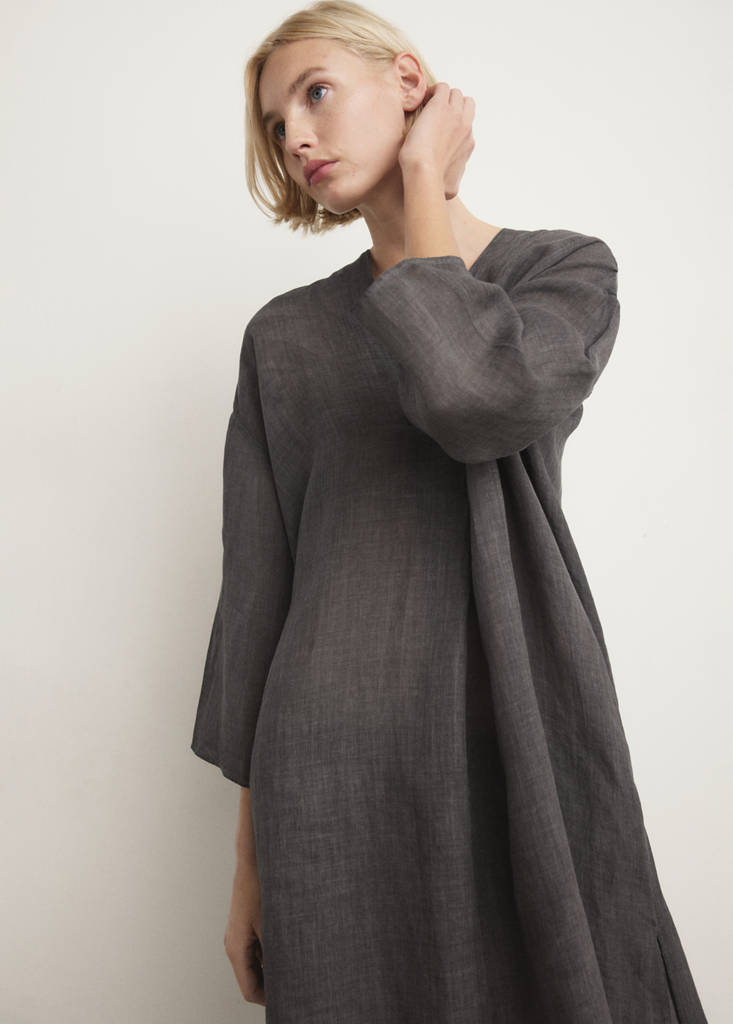
Sleepwear and loungewear have quietly become one category and they should not be. What you want in a lounge set is something you could answer the door in, that does not look like you have given up, and that survives being worn for six hours on a sofa. That is a different brief from a pajama, and it is usually solved with a knit rather than a woven.
The pieces worth having are linen knits and hemp-cotton blends: soft enough to sit around in, structured enough to leave the house in. Linen knit in particular is an underused thing, all the breathability of linen with the give of a jersey, and it does not need elastane to have that give because the knit structure provides it.


The sweatshirt problem
The one thing everybody reaches for on a Sunday is the hardest to buy well. Most fleece is polyester, including a great deal of the expensive kind, because polyester fleece is warm, cheap and easy to make. It is also the single heaviest microfiber shedder in a normal wash load, which is the strongest environmental argument against any garment in your house.
Organic cotton fleece and hemp-cotton fleece do the same job. They are heavier, they take longer to dry, and they cost more, and in exchange they breathe, they do not go bobbled in a season, and they are not plastic. If you are going to replace one synthetic garment on principle, the sweatshirt you wear every weekend is the one where it counts most.


Sleepwear is the category where we get asked most often for a stronger claim than we are willing to make, so here is the line.
It is true that this is the longest contact time of anything you wear, and it is true that a fiber that traps heat and moisture against warm skin is worse at the one job sleepwear has. Those are physical properties of the fabric and they are not controversial. It is also true that synthetic textiles shed microplastic fibers in the wash, and sleepwear is washed often.
What we will not say is that polyester pajamas are making you ill. There is no good evidence for that, and the honest reason to change what you sleep in is comfort and shedding, not disease. Anyone selling you sleepwear on a health scare is selling you something.
There is one real regulatory wrinkle worth knowing about, which is flame retardancy. Children's sleepwear in the US must either meet a flammability standard or be sold snug-fitting, and one of the ways manufacturers meet it is with treated fabric. Snug-fitting cotton is the common route and does not require treatment. It applies to kids' sleepwear rather than adults', and the pieces in this edit are adult, but it is the one place in the category where a finish you cannot see is genuinely part of the picture.
A third of your life, in one garment, against warm skin. You can shop the sleep edit, every piece scored by Toxome on its published composition, and make the longest hours the cleanest ones.
Sources
- Toxome. Organic cotton: the fiber guide.
- Toxome. Linen: the fiber guide.
- Toxome. Silk: the fiber guide.
pins Toxome in your Google results, so our reporting shows up first when you search fabrics and brands.