The Knitwear Report
The sweater aisle is mostly acrylic. Here is what the alternative actually costs, and what it buys you.
4 min read

Acrylic is plastic knitted into the shape of a sweater. That is not a slur, it is a description: it is a synthetic polymer, spun into a fiber, and it became the default in knitwear because it is cheap, it takes dye brilliantly, and it can be made to feel soft in the hand for exactly as long as it takes to buy it.
Then you wear it. Acrylic pills faster than almost any other fiber, because the short synthetic staples work loose and tangle. It holds static. It does not absorb moisture, so it goes clammy under a coat rather than regulating. And it sheds: research on laundry has repeatedly found acrylic among the heaviest microfiber shedders of the common textiles, which is a real environmental problem rather than a claim about your health.
The alternative is not one fiber, it is four, and they do different jobs at genuinely different prices. Here is which one to buy for what.
Alpaca is the warm one
If you want the most warmth for the least weight, alpaca is the answer and it is not close. Alpaca fibers are hollow, so they trap more still air than a solid wool fiber of the same thickness, and still air is what insulation actually is. A thin alpaca knit will out-perform a much heavier acrylic one, which is why it works under a coat where bulk is the enemy.
It has a second advantage worth knowing if wool has ever bothered you. Alpaca carries no lanolin, the waxy grease in sheep wool that some people react to, and its surface is smoother, so it tends to itch less. It is not hypoallergenic, and we would not claim that, but it is a genuinely different fiber against the skin. Pure alpaca is the expensive end; the blends below bring it into reach.


Cashmere, and what you are paying for
Cashmere is the fiber people buy on reputation and then feel let down by, usually because they bought a bad one. The quality that matters is staple length: long fibers spin into a yarn that resists pilling, short fibers make a sweater that looks tired by February. That difference is invisible on a website and it is most of the price gap between a cheap cashmere and a good one.
The honest guidance is to buy less of it and buy it better. A single well-made cashmere cardigan worn for a decade is a different proposition from three cheap ones that go bobbled in a season, and it is the only version of cashmere that is actually good value. Everything here is 100% cashmere with nothing spun through it.



Hemp and cotton for everything else
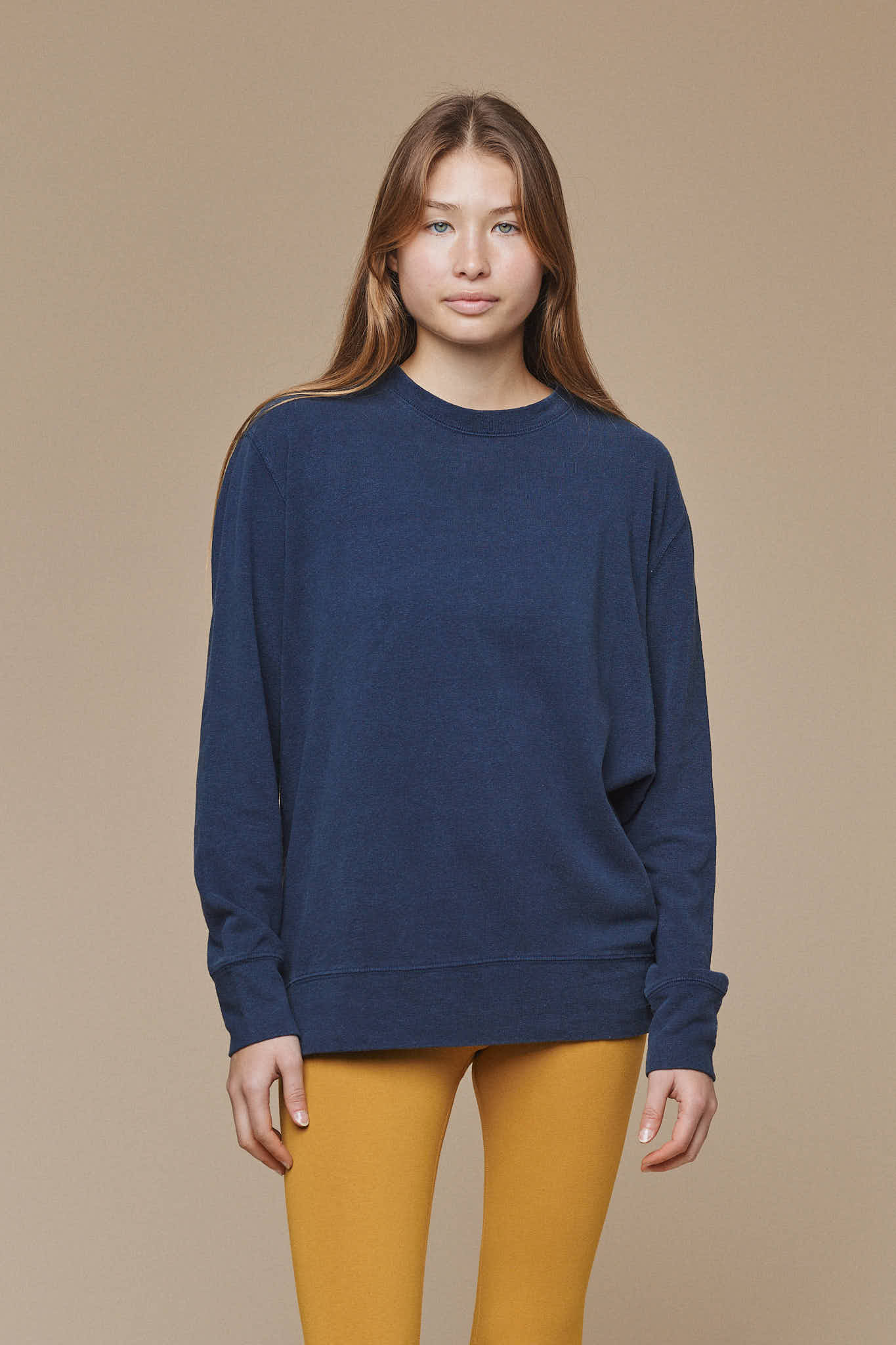
Most of the year is not actually cold, and most of what people reach for is not a sweater in the alpine sense. It is a sweatshirt, a pointelle cardigan over a dress, a heavy crew you put on in a cool house. This is where hemp and organic cotton do the work, at a fraction of the price of the animal fibers, and where acrylic fleece is most entrenched.
Hemp is the underrated one. It is stiffer than cotton when new and softens with every wash without losing its shape, it is strong enough that a hemp-cotton sweatshirt outlasts a pure cotton one, and it grows with very little water and generally without pesticides. A 55/45 hemp-cotton fleece is the version most people will actually want: the durability of hemp with cotton's softness against the skin.


Two things worth flagging in knitwear, because both are easy to miss on a label.
The first is superwash. Most machine-washable wool has been treated to stop it felting, and the common method coats each fiber in a thin polymer resin. It works, and it is the reason a merino sweater can go in the machine at all. It also means a garment sold as 100% wool can carry a plastic coating that the composition label will never mention, because a finish is not a fiber. This is not a health scare and we are not presenting it as one. It is a gap between what the label says and what is on the cloth, and you should know it exists.
The second is the blend that gives the game away. A sweater listed as 70% acrylic, 30% wool is an acrylic sweater with enough wool in it to put the word wool on the swing tag. That ratio is extremely common in the mid-market and it is the single most useful thing to check before you buy. Toxome reads the whole composition rather than the headline fiber, which is exactly the case this is built for.
What we will not tell you is that wearing acrylic will harm you. There is no good evidence for that. What is documented is that it is a plastic fiber, that it sheds heavily in the wash, and that it wears out faster than the alternatives. That is enough to make the case without inventing a scarier one.
Alpaca for warmth, cashmere bought once and properly, hemp for everything in between. You can shop the knitwear edit, every piece scored by Toxome on its published composition, and skip the plastic entirely.
Sources
pins Toxome in your Google results, so our reporting shows up first when you search fabrics and brands.