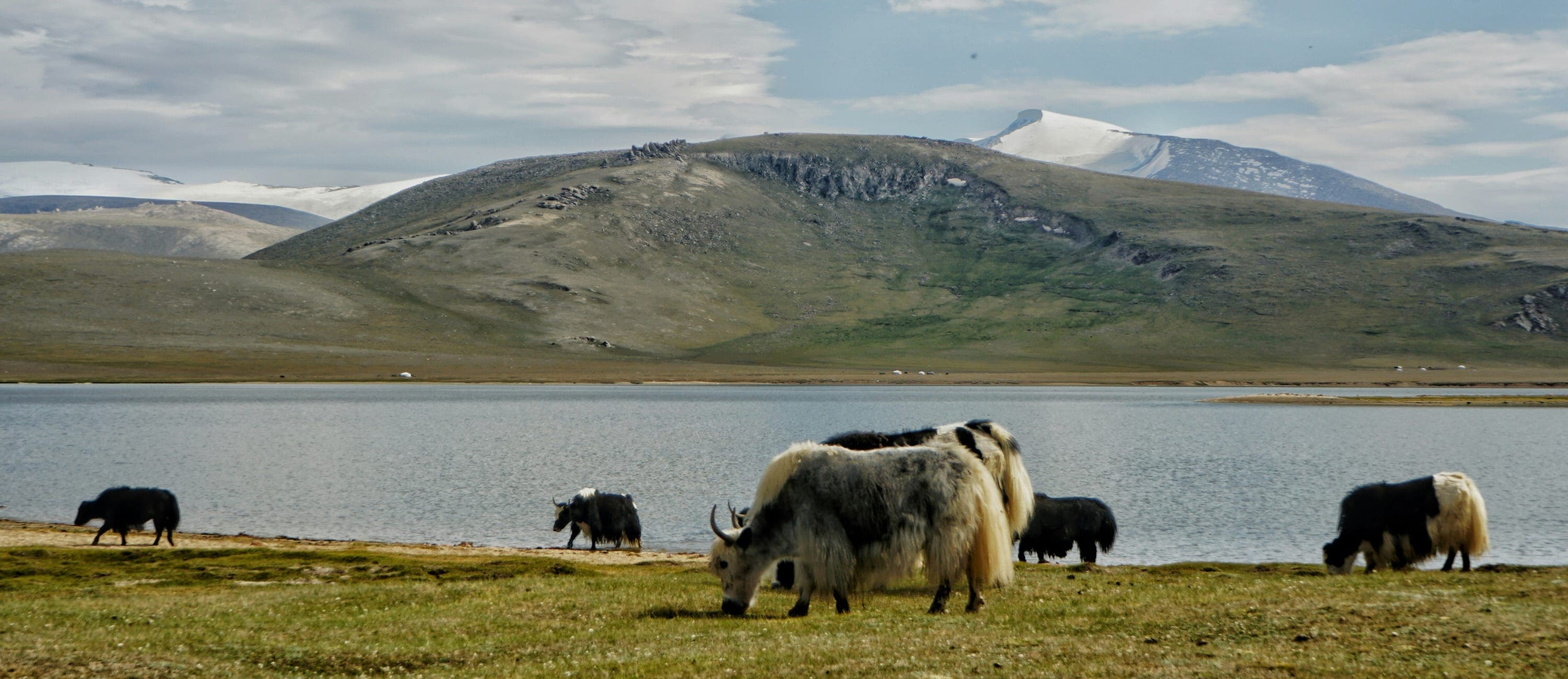
Yak wool scores 90 out of 100 for wearer health on Toxome's fiber scale, where 100 is cleanest. Fine yak down sits close to cashmere in width, but the same animal also grows hair more than four times as thick, so the word yak on a label tells you little on its own. Some pieces sold as yak wool are mostly sheep wool, with labels as low as 8% yak.
What is yak?
Yak down is a rare, ultra-soft, and remarkably warm undercoat fiber combed or naturally shed from domestic yaks living in high-altitude regions like Tibet and Mongolia. The yak is a long-haired relative of cattle, and China holds about 80 percent of the world's yaks, more than 13 million animals. The fiber still plays a small part in global textiles, so the claims about it run well ahead of the research.
Herders on the high plateaus have long worked with the whole coat. The coarse outer hair went into tents and ropes, and the mid-type hair into rugs and blankets. The fine down is the part fashion wants now, which is why you are starting to see it next to cashmere and merino.
How yak is made
Herds live at high altitude across the Tibetan Plateau, the Himalayas and Mongolia.
Brands say the down is combed out by hand in spring, as the animal sheds it.
Scoured at low heat and near-neutral pH to protect the fiber.
A machine sort pulls coarse hair from the fine down. Leftover hair is what pokes.
Down fibers run short, so fine, strong yarn is hard to spin. Many pieces are blends.
Read the percentage. The name yak wool can mean 8% or 100%.
Yaks grow their down for the cold and start to lose it in late spring. Brands and trade sources say herders comb it out by hand around then, so the animal is not shorn. We found no certification that checks this, so treat it as a brand claim.
The raw fleece holds fine down mixed with much thicker hair. Mills scour it at low heat and near-neutral pH to protect the fiber, then dehair it, a machine sort that pulls the coarse hair out. How well that step goes decides how soft the finished piece feels.
Down fibers run short, which makes fine, strong yarn hard to spin. Many pieces blend yak with sheep wool, merino or lyocell, so the percentage on the label matters more here than on most fibers. After that, your added risk sits in the dye and finish, the same as any animal fiber.
Not all yak is the same
Yak has no legal grade system, so go by micron count, the fiber's width in millionths of a meter. One coat holds three very different materials. Fine down, also called khullu, runs about 16 to 20 microns and is the part to look for in anything worn against your skin. Mid-type hair runs 20 to 50 and goes into rugs, blankets and outerwear. Coarse outer hair runs 79 to 90 and goes into tents and ropes. Published numbers for the down vary: one lab study measured white yak at about 22 microns and brown yak at about 28, and found pigmented fibers coarser than white ones in both yak and cashmere.
Is yak safe to wear?
Comfort on your skin comes down to thickness. Thin fibers bend when they touch you, and thick ones poke, a feeling called prickle. That is irritation, not an allergy. Well-dehaired down has low surface scales and little to no hollow core, so it feels soft, while a piece with mid-type hair left in can poke. People report both on the same fiber, and that spread usually traces back to which part of the coat ended up in the yarn.
You will see claims that yak is lanolin-free, antimicrobial, or 40% warmer than merino. We could not trace those claims to a published test, so they play no part in this score. We also found no skin study on yak, so if you have reactive skin, treat hypoallergenic on a yak label as marketing.
- Fine at its best Yak down runs about 16 to 20 microns in most sources, close to cashmere, so a well-dehaired piece stays under the thickness that pokes.
- Low surface scales Trade research describes smoother, lower scales than sheep wool, which means less to catch on your skin.
- Warm without plastic A coat built for the cold, and a textile researcher at Hong Kong PolyU calls it warmer than cashmere and merino. No published test pins down by how much.
- Natural color, less dye Yaks grow in browns, grays and black, plus some white, so a yak piece can reach you with no dye bath at all.
Yak scores 90, level with cashmere and merino. It is a clean animal protein fiber with no plastic in it, so its base runs low. A blend scores by its parts, so a coat that is 8% yak scores mostly as the wool it is made of. See the full method.
Doing this check on every product page yourself is the tedious part. The Toxome Chrome extension reads the composition for you while you shop, so you see whether something is yak (and what else is in it) before you buy, not after it arrives.
How to care for yak
Shop Yak


Yak, answered
Yak wool is fiber from the yak's coat. The soft part is the down, an undercoat of about 16 to 20 microns. The name also gets used for blends, so a sweater called yak wool can be mostly sheep wool. Check the percentage.
Well-dehaired yak down usually is not, because it is fine enough to bend against your skin. A piece with coarser hair left in can feel prickly, and people report both on knitting forums. That itch is thickness, not an allergy.
They sit close on softness, and cashmere usually measures finer. On wearer health, Toxome scores both 90. Claims that yak is warmer and tougher come mostly from brands selling it, so buy on fineness and the label.
Possibly, but nobody has published the number. Claims run from 10 to 40 percent warmer, and we could not trace them to a test. Merino has far more independent research behind it.
No. Yak is a natural protein fiber with no plastic in it. Any risk comes from dyes and finishes added later, so OEKO-TEX Standard 100 certified or undyed yak carries the least.
- Yak fiber · Wikipedia
- Determining the Effect of Pigmentation on Some Physical and Mechanical Properties of Yak and Cashmere Down Fibers · Journal of Natural Fibers
- Yak Fibre as a Sustainable High-Altitude Textile Resource · Textile Value Chain
- Technology Frontier, October 2017 · The Hong Kong Polytechnic University
- Impacts of Livestock Grazing on Vegetation Characteristics and Soil Chemical Properties of Alpine Meadows in the Eastern Qinghai-Tibetan Plateau · Ecoscience
The health score reflects wearer health only and mirrors the Toxome app. This guide is educational and is not medical advice.