Cupro scores 70 out of 100 for wearer health on Toxome's fiber scale, where 100 is cleanest. That puts it in the safest band to wear. Cupro is a silky fiber regenerated from leftover cotton fuzz; its cleanliness rides on the maker. The score rates the fiber, not the finished garment. Mills add dyes and finishes later, so check the label for those.
What is cupro?
Cupro, also sold as Bemberg, is made from the fuzzy bits left over after cotton is processed. That waste is dissolved in a copper-and-ammonia liquid called Schweizer's reagent, then spun back into thread and rinsed in acid baths that pull the copper and ammonia back out.
Cupro traces to 1890s Germany, where J.P. Bemberg turned the copper-and-ammonia method into thread. Today one company makes it: Japan's Asahi Kasei, under the Bemberg name, spinning it in Nobeoka since 1931.
How cupro is made
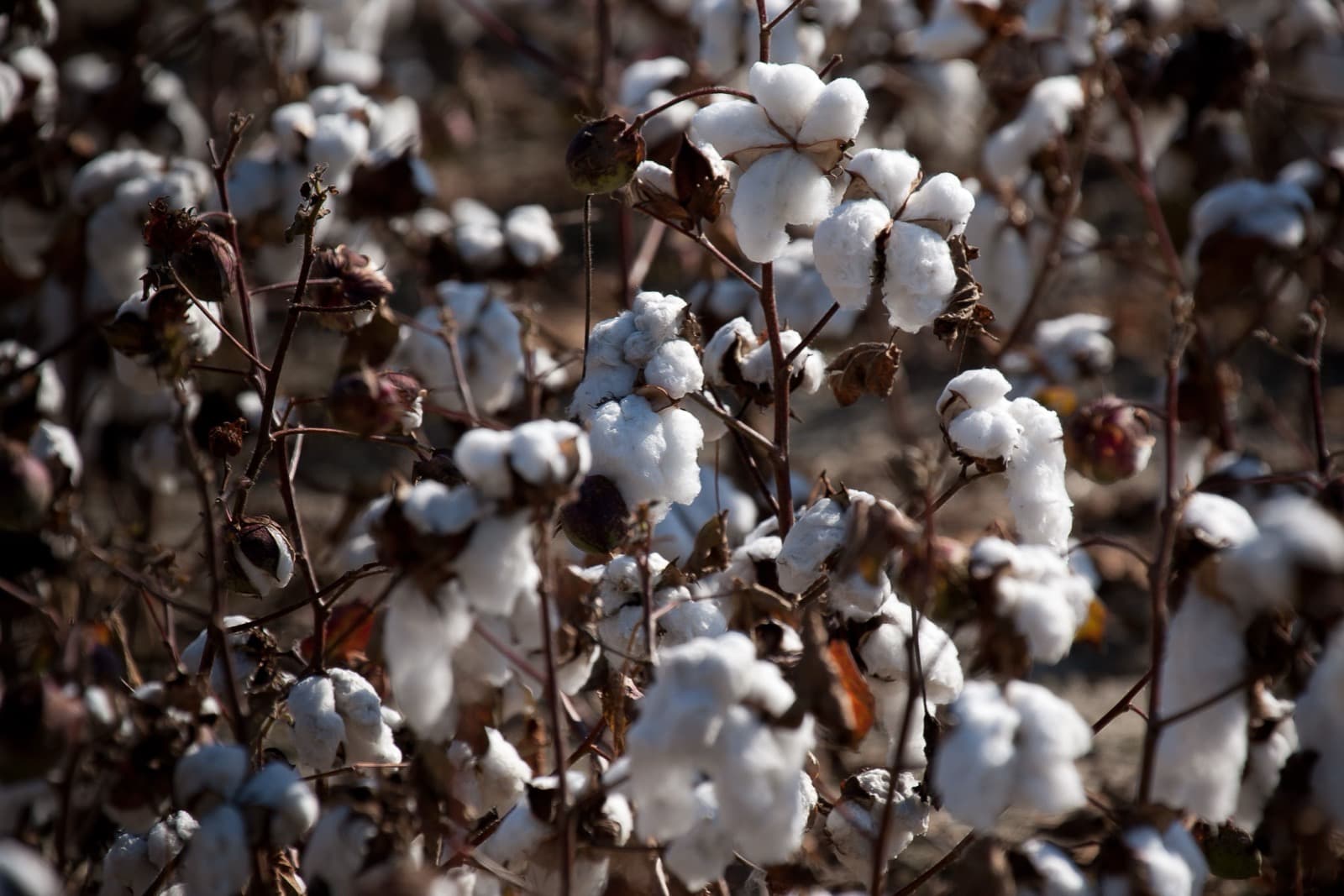
The short fuzz left on cotton seeds after ginning, a cottonseed oil byproduct.
Dissolved in Schweizer's reagent, a copper and ammonia liquid.
Spun back into thread that comes out almost perfectly round.
Acid baths draw the copper and ammonia back out of the fiber.
The one remaining maker recaptures both, the control American mills never managed.
The hazard sits in the mill's wastewater, not in the washed fabric.
Cupro starts as cotton linters, the short fuzz left clinging to cotton seeds after ginning. It is a byproduct of cottonseed oil, not a crop grown for cloth.
Those linters dissolve in Schweizer's reagent, a copper-and-ammonia liquid (cuprammonium), then spin back into thread and rinse through acid baths that draw the copper and ammonia back out. The threads come out almost perfectly round, which is why cupro drapes and feels so much like silk.
That chemistry decides where cupro can be made. America's last cuprammonium plant, American Bemberg in Elizabethton, Tennessee, spent decades dumping copper-and-ammonia waste into the Watauga River. The EPA named it a major polluter, its cleanup orders proved impossible to meet at a profit, and it shut down in the early 1970s. No cupro has been made in the US since.
Asahi Kasei, the only maker left, now runs a closed-loop system that recaptures its copper and ammonia, the control the American mills never managed. The hazard sits in the mill's wastewater, not in the washed fabric you wear.
Not all cupro is the same
Cupro sold as Bemberg, made by Japan's Asahi Kasei, is the only version with a real track record and a solvent-recovery system behind it. Generic, unbranded cupro tells you nothing about how its mill handles the copper-and-ammonia waste that shut US production down.
Is cupro safe to wear?
On the body, cupro is kind. Its round threads sit smoothly against skin and rarely irritate, which is why it is often called hypoallergenic, less likely to trigger a reaction. It breathes better than silk, cotton, nylon, or polyester, and holds a lot of moisture before it feels damp.
The chemistry that troubles cupro stays at the factory. Copper and ammonia are a wastewater problem for the mill, not a residue that lingers in a washed, finished piece. Dyes and coatings on the final cloth are the real leftover question, so the finished garment still needs testing.
- Smooth, round fiber Its almost perfectly circular threads sit gently against skin, with little of the rubbing rougher fibers cause.
- Breathes exceptionally well Outperforms silk, cotton, nylon, and polyester at letting moisture and heat move away from your skin.
- Often hypoallergenic Its smooth surface makes it less likely than most fibers to trigger a skin reaction.
- Made from a byproduct Uses cotton linters left over from cottonseed oil instead of a crop grown for fabric.
Cupro's copper-and-ammonia route is different chemistry from carbon-disulfide viscose, and the finished fiber is kind to skin. But it is still a heavily processed regenerated fiber whose production was dirty enough to be run out of the US, and the generic version has no routine finished-fabric testing behind it, landing it at 70, alongside generic modal rather than the closed-loop lyocells. See the full method.
Doing this check on every product page yourself is the tedious part. The Toxome Chrome extension reads the composition for you while you shop, so you see whether something is cupro (and what else is in it) before you buy, not after it arrives.
How to care for cupro
Shop Cupro


Cupro, answered
The chemicals that make it, copper and ammonia, are a factory-handling and wastewater concern, not a residue in the finished, washed fabric you wear. Look for OEKO-TEX STANDARD 100 to confirm the dyes and finishes were checked too.
No, but it is sold as a vegan silk substitute because its round, smooth threads drape and feel similar. It is a regenerated cellulose fiber made from cotton waste, not an animal fiber, and unlike silk it is machine washable with care.
Its copper-and-ammonia process polluted heavily. America's last plant, American Bemberg in Tennessee, could not meet EPA cleanup orders and closed in the early 1970s. Production moved to Japan, where Asahi Kasei now recovers the solvents in a closed loop.
For traceability, yes. Bemberg, made by Japan's Asahi Kasei, has a long, documented record and a solvent-recovery system for handling its copper-and-ammonia process. Generic, unbranded cupro gives you no such history to check.
- Cuprammonium rayon · Wikipedia
- What is Bemberg? And Why It's The Best Lining Fabric · The Modest Man
The health score reflects wearer health only and mirrors the Toxome app. This guide is educational and is not medical advice.