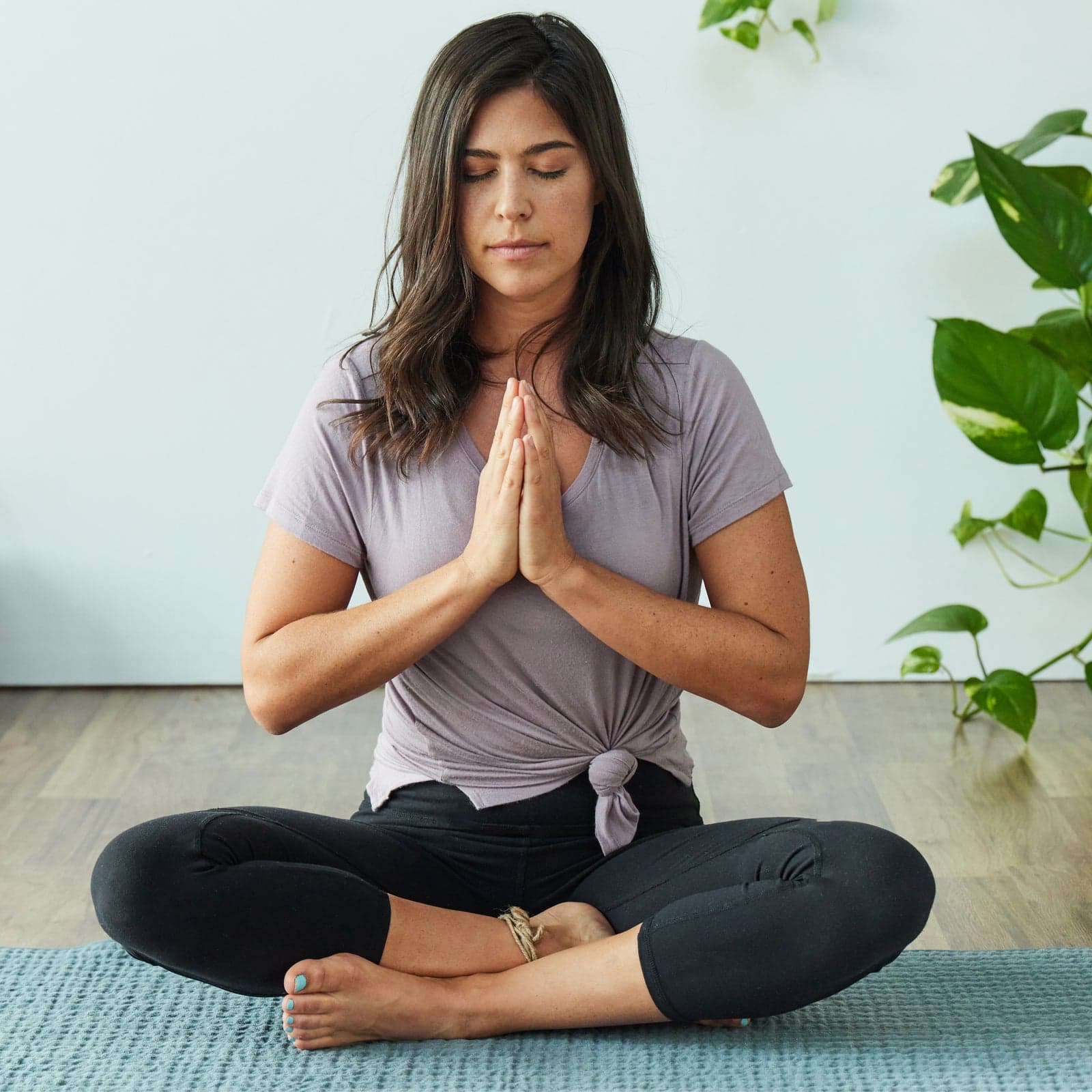
A yoga mat gets more skin contact than almost anything else bought for the practice. Face down in child's pose, palms pressed flat in down dog, bare feet planted for an hour, often warm and sweating. Then it gets rolled up and left in a hot car.
Most of what is sold for that job is plastic. The classic sticky mat is PVC, softened with plasticizers. The "eco" mats that replaced it are mostly TPE foam, a petroleum blend that skips the PVC and rarely says what it is instead. And several of the mats that top other "non-toxic" lists get their grip from a polyurethane top layer. None of that is printed on the front of the box.
Search "non-toxic yoga mat" and the same handful of names comes up, ranked mostly on grip. This list starts one step earlier, with what the mat is made of.
Where most mats go wrong
The surface is named and the base is not. "Cork yoga mat" and "natural rubber yoga mat" describe the top layer. Underneath, budget mats often glue that layer to TPE or PVC foam and never mention it. A cork veneer over plastic foam is a plastic mat with a cork face.
"Eco" describes a feeling, not a material. TPE is the most common thing sold as eco-friendly. It is better than PVC and it is still plastic. "Eco foam," "plant-based foam" and "eco-polyurethane" all need a second question: foam made of what?
The grippiest surfaces are often coated. The smooth, tacky top that sticks to a sweaty hand is frequently polyurethane. It works. It is also a plastic layer sitting exactly where your face goes.
What to look for
The materials line settles it, and it needs to answer for both layers:
- A named top and a named base. Organic cotton, cork or natural rubber on top. Natural rubber or natural latex underneath.
- Certification where it applies. GOTS for cotton, GOLS for latex. Neither exists for cork or plain natural rubber, so those come down to what the brand states.
- A brand that admits what it leaves out. Jade discloses a reinforcing scrim inside its rubber mats and does not name the material. Saying so is better than hiding it, and it still costs points.
What to treat as a flag:
- PVC, TPE, PU, EVA or "eco foam" anywhere in the description.
- "Cork mat" or "rubber mat" with no base listed.
- A strong chemical smell on arrival. That is off-gassing.
Three brands cleared that bar, with nine mats between them from $49.95 to $202.
Oko Living
Every Oko mat is GOTS organic cotton, hand-loomed and plant dyed, on a natural tree rubber coating. They are the softest mats here, they wash in a machine, and they cost the most. There are three styles: the classic herbal mat in a range of plant dyes, a grippier version woven with jute, and a thinner travel mat.
Herbal Yoga Mat
Oko Living
Organic cotton top, natural tree rubber base · 5mm · $202



The one to start with. Six plies of GOTS organic cotton, hand-loomed and plant dyed, over a thin coat of natural tree rubber that keeps it from sliding. The surface is soft and dry under the hands, there is no plastic smell out of the box, and it goes in the washing machine, which no foam mat can say. It comes in a range of plant dyes, including Clay, Indigo Moon and Rose Quartz shown here. Clay hides wear best. Natural indigo can rub off a little before the first wash, because Oko dyes it extra dark knowing plant indigo softens over time.
Jade & Jute Herbal Yoga Mat
Oko Living
91% organic cotton, 8% jute top, natural tree rubber base · 5mm · $202


Oko's grippiest mat. Jute woven through the organic cotton gives the surface more texture under the hands than their plain mats. If a cotton mat sounds too slippery for your practice, start here. It folds for travel and washes like the rest of the line.
Travel Yoga Mat
Oko Living
Organic cotton top, natural tree rubber base · 3mm · $186


Three plies of organic cotton instead of six, 2.5 lbs, and it folds into a suitcase instead of needing a strap. Same cotton and natural rubber as the full-size mats, with less cushion.
Jade Yoga
The natural rubber mat that studios have used for years, made in the US with no PVC, EVA or synthetic rubber. Jade has the widest range here, from a fold-up travel mat to a cork mat to an organic cotton rug, and the most accessible prices.
Voyager Travel Yoga Mat
Jade Yoga
Natural rubber · Made in USA · 1/16" · $49.95


The cheapest way off a PVC mat. A sixteenth of an inch of natural rubber that folds to about the size of a yoga block and weighs 1.5 lbs, so it goes in a carry-on or over a studio mat. It is for packing, not cushioning. The reinforcing scrim Jade hides inside its other mats shows on the back of this one.
Organic Cotton Mysore Yoga Rug
Jade Yoga
Organic cotton · Handwoven in India · $79.95


The highest score on the list. A traditional Mysore rug, handwoven by artisans in India and dyed with indigo, cumin and turmeric. It is cotton and nothing else, so there is nothing else to score. That also means no grip on a wood floor: lay it over a rubber mat for Ashtanga, which is what it was made for, or use it on grass.
Harmony Yoga Mat
Jade Yoga
Natural rubber · Made in USA · 3/16" · $99.95
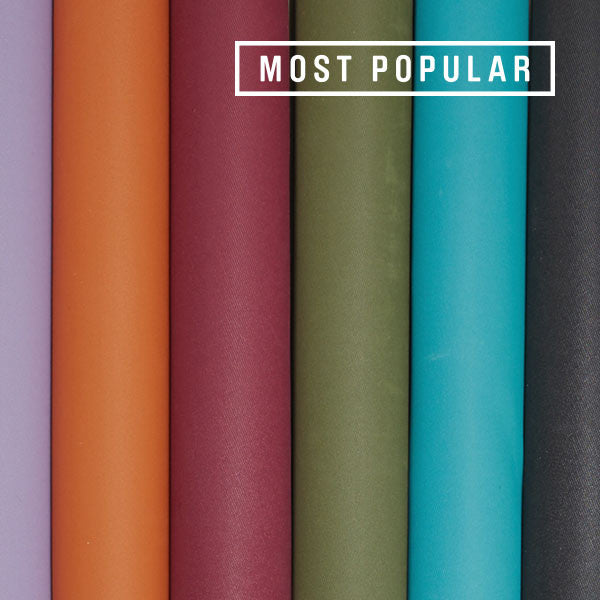


The natural rubber mat most studios already own, and the one people mean when they search for a Jade mat. Made in the US with no PVC, EVA or synthetic rubber, and open-cell rubber holds a sweaty palm better than any cotton surface. It scores lower than the cotton mats for one honest reason: Jade says there is a reinforcing scrim inside and never says what it is made of. Skip it with a latex allergy, and keep it out of the sun.
Cork Yoga Mat
Jade Yoga
Cork top, natural rubber base · Made in Spain · 4.5mm · $99.95


The hot yoga pick. Cork gets grippier as it gets wet, the opposite of rubber. The bark is stripped from living cork oaks in Portugal every nine years and grows back, so no tree is cut. Jade names both layers here and mentions no hidden scrim, which is why it scores ten points above their all-rubber mats.
Fusion Yoga Mat
Jade Yoga
Natural rubber · Made in USA · 8mm · $174.95


Jade's thickest mat, at 8mm of open-cell natural rubber, for Pilates, restorative work and knees that want more under them. Same material story as the Harmony, unnamed scrim included. At 8.5 lbs it is a mat that stays home.
Avocado
Better known for organic latex mattresses, Avocado makes one yoga mat out of the same materials, and it is the most thoroughly certified mat on the list.
Organic Yoga Mat
Avocado
Organic cotton top, organic Dunlop latex base · 5mm · $161


The only mat here certified organic on both layers: a GOTS organic cotton cushion on top and a GOLS organic Dunlop latex base, the same latex Avocado puts in its mattresses. The textured cotton absorbs sweat, which suits restorative and hot practice more than fast flows. Comes in grey, sage and blush.
The short version
For grip in a sweaty or flowing class, the Jade Harmony at $99.95 is the classic natural rubber mat, and the Jade cork mat at the same price is the hot yoga pick.
For the cleanest surface to lie on, Oko Living's organic cotton mats score 88, and the Herbal Yoga Mat at $202 is the one to start with. Pick it by color.
For organic certification on both layers, Avocado at $161 is the only one.
Under $50, the Jade Voyager gets you off PVC for the price of most foam mats.
One rule survives the whole list. If the page names only one layer, assume the other one is foam.
Frequently asked
Organic cotton, then cork, then natural rubber. Cotton and cork are plant materials with little processing, and a woven cotton rug has nothing in it but the cotton and its dye. Natural rubber is a plant material too, but it is vulcanized with sulfur and accelerators, which is a known contact-allergen route. All three are a long way from PVC.
TPE is sold as the safe alternative to PVC, and it does skip the chlorine and the phthalate plasticizers. It is still a petroleum blend of plastic and synthetic rubber, and TPE is a broad family that brands rarely specify. A TPE mat is better than a PVC one. It is not the same as a mat made of plants.
The cork is. The question is what sits under it. Plenty of budget cork mats glue a thin cork veneer to a TPE or PVC foam base and describe the whole thing as a cork mat. Look for a brand that names the base as natural rubber, as Jade does.
A new PVC or foam mat smells because it is releasing volatile compounds from the plastic and its additives, a process called off-gassing. Natural rubber has its own smell, which fades over a week or two of airing out. Cotton and cork mats arrive with almost none.
Usually not. Natural rubber and latex come from the same tree, and even mats described as 99% latex free can carry trace latex proteins. With an allergy, choose an organic cotton or cork mat instead.
On a bare wood floor, a cotton rug with no backing will. The Oko Living mats have a natural rubber coating underneath and stay put. A traditional Mysore rug has no backing, so it goes over a rubber mat or outside on grass.
