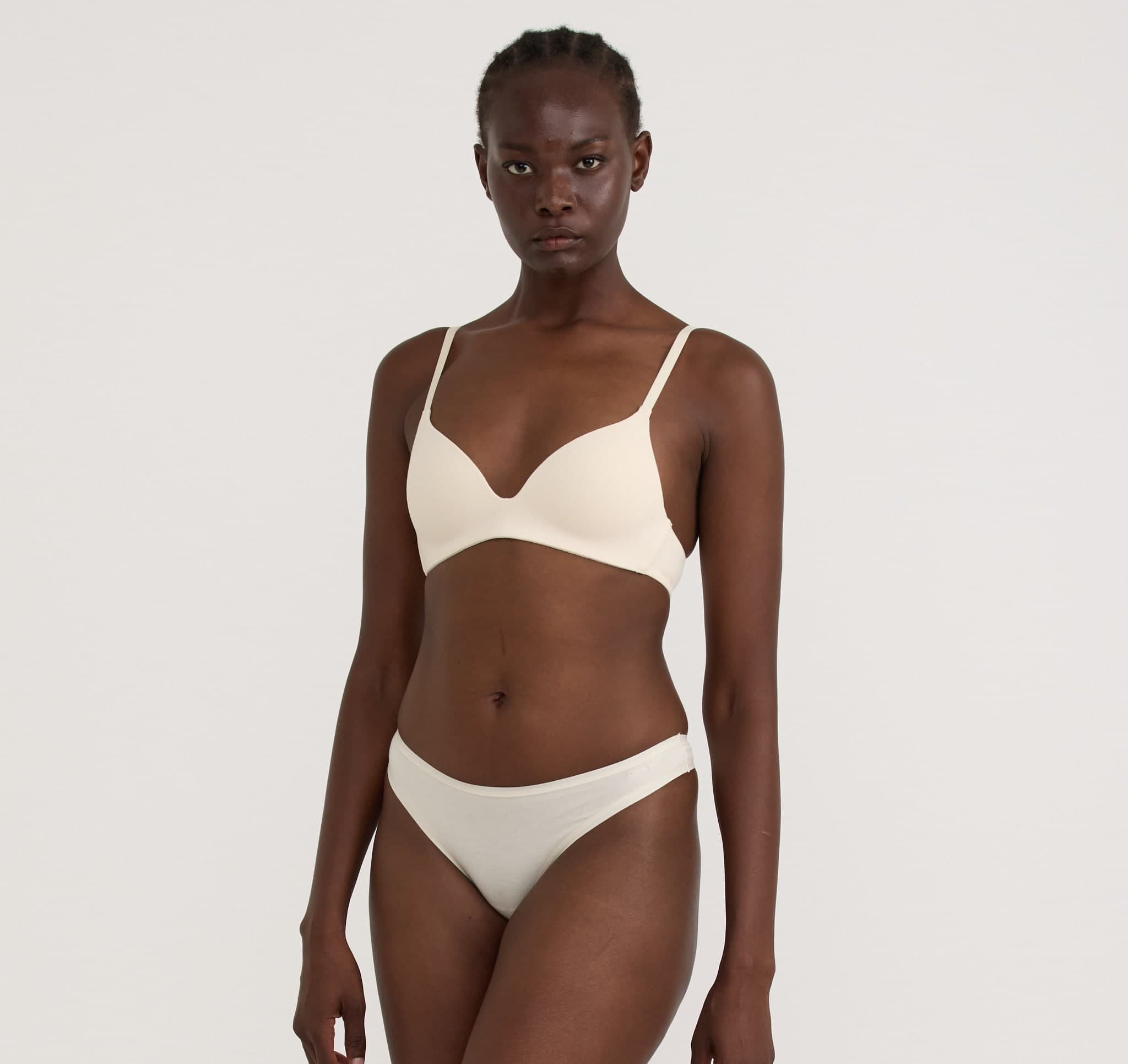
Underwear is the one category where the argument makes itself. Every other garment gets taken off, layered over, worn loose. Underwear sits against the most permeable skin on the body for sixteen hours a day, through heat and friction, and then gets replaced with another pair for the other eight.
That makes contact time the whole game, and the drawer is where it goes wrong. The five-for-$25 multipack is nylon and elastane. So is most of what gets sold as breathable, moisture-wicking or seamless, because those three words all describe things synthetic knits do well. The category has spent two decades optimizing for a smooth line under leggings, and polyester is very good at a smooth line.
The fix is not complicated, which is the frustrating part. Cotton underwear was the default within living memory. It still exists, it still costs less than the technical version at the same brands, and the brands making it well are easy to find once you know that the composition line matters more than the marketing above it.
So here are nine pairs made of fiber worth sitting in, from $8 to $55:
1. Mabel Hipster
Araks
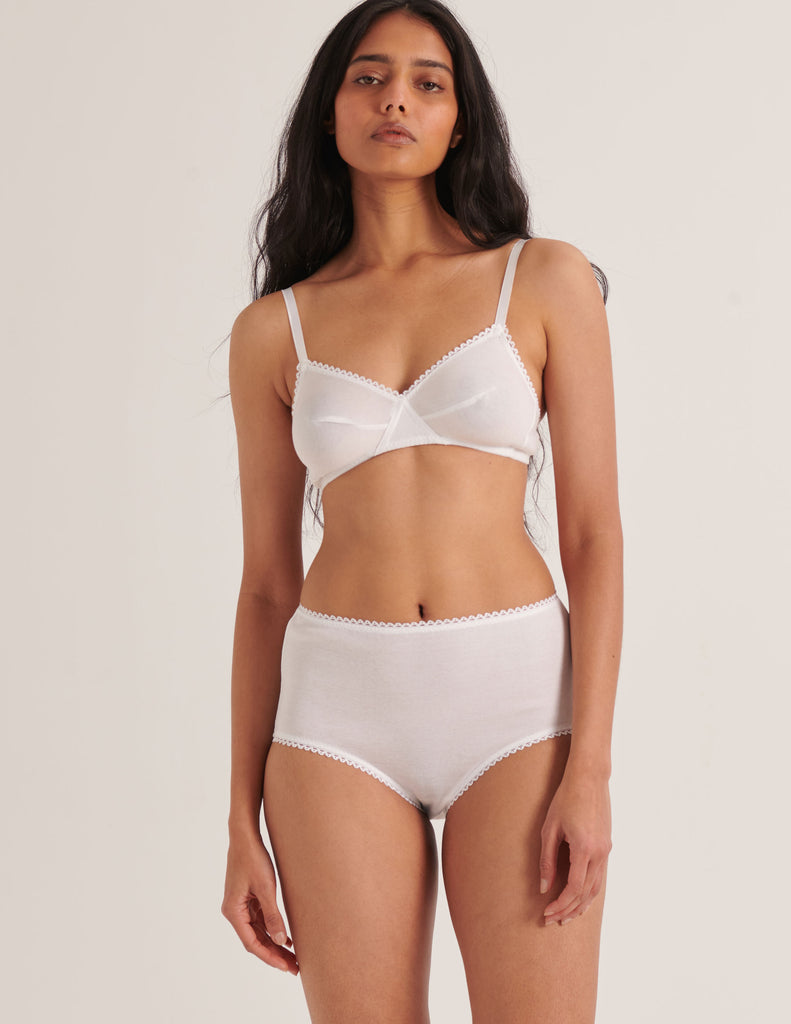
100% organic cotton · $55
The pair that proves the clean version does not have to look utilitarian. Araks builds lingerie first and happens to do it in organic cotton, so the Mabel reads as underwear you chose rather than underwear you settled for. It is the most expensive pick here and the only one that would look at home next to silk.
2. Organic Cotton Bikini Panty
Blue Canoe

100% organic cotton · $40
The rare brand that addresses the waistband instead of hoping nobody asks. Blue Canoe uses covered elastic at the edges, so the stretch is wrapped in cotton rather than pressed bare into skin. A fine baby rib knit, made in a single fiber, from a company that has been doing only this since long before it was a category.
3. Wild Hip Brief
Industry of All Nations

100% organic cotton, undyed · $35
Undyed is the shortest route to a clean garment, because the dye house is where most of the chemistry gets added and skipping it removes the question entirely. The color here is the cotton's own. Industry of All Nations has built the whole label on that idea, and this brief is the most literal expression of it.
4. Alpaca Wool Thong, 160 Ultralight
Arms of Andes

100% alpaca wool · $30
The odd one out, and the most interesting pair on the list. Alpaca handles moisture and odor the way synthetics claim to, which makes this the honest answer to performance underwear rather than the polyester one. The waistband is natural tree rubber with cotton elastic, so the fiber story holds all the way to the edge.
5. The Thong, Pointelle Cotton
Cou Cou Intimates

100% organic cotton · $26
The pair that made cotton underwear a look rather than a compromise, and at $26 it is the best value in the top tier. Pointelle is a knit structure rather than a finish, which is how the fabric gets its texture without anything being added to it. The brand that a lot of people's first clean-drawer purchase turns out to be.
6. Thong
Net Positive

53% hemp, 43% organic cotton, 4% spandex · $18
The only hemp blend on the list, and the cheapest pair here that is not a cotton-elastane knit. Hemp breathes better than cotton and resists odor without anything being added to do it. At $18 this is where the math works for anyone replacing a whole drawer instead of testing one pair.
7. Core Thong 3-Pack
Organic Basics

95% organic cotton, 5% elastane · $45, on sale at $31.50
Sold in threes, which is how underwear gets bought. Worth knowing that Organic Basics also sells a Flex line at 91% cotton and 9% elastane that scores lower, and the two sit side by side in the same shop under similar names. The Core line is the one to reach for.
8. Organic Comfort Mid-Rise Bikini
MATE the Label

95% GOTS organic cotton, 5% spandex · 180 GSM · $28

Notable for being a heather grey that is not hiding polyester. Mills reach for a synthetic blend to get that marled tone, so grey is the colorway worth double-checking on any other product page. This one gets there on cotton alone, with both GOTS and OEKO-TEX Standard 100 behind it.
9. High Rise Thong
La Coochie

95% organic cotton, 5% elastane · $8
The price that makes the whole argument winnable. At $8 a pair there is no longer a cost reason to keep buying the nylon multipack, which is the objection this category runs into more than any other. The same 95/5 cotton construction as picks well above it here.
The short version
The top of this list is single-fiber and undyed, the middle is hemp, and the bottom is 95% cotton with a little stretch. All of it beats the multipack, and the cheapest pair here costs $8.
If a pair is not listed above, the composition line on its product page will tell you in about four seconds. Scan what is already in your drawer with the Toxome app, and start the replacing with whatever you wear most.
Frequently asked
Polyester is the fiber with the least reassuring evidence behind it and, in this category, the most contact time against the thinnest skin on the body. It also traps heat and moisture in a way cotton does not, which is why the standard clinical advice for recurring irritation starts with switching to breathable natural fiber. Reducing what sits there for sixteen hours a day is the claim worth making, and it is the only one worth making.
Because it is the panel in direct contact with mucosal tissue, which absorbs more readily than the skin on your arm. Plenty of synthetic underwear is sold with a cotton gusset for exactly this reason, and that is a genuine improvement over an all-polyester pair. It is still a patch on the problem rather than a solution, since the rest of the garment sits against skin too.
No, and any pair with a stretch fit contains some. The bulk of the fabric is what matters. A pair at 95% organic cotton and 5% elastane is a cotton pair. A pair at 60% nylon is not, whatever the packaging says about breathability.
It is the part brands most often leave out of the composition line, and the part that presses hardest into skin all day. Most stretch waistbands are synthetic. A few brands do it differently, using natural rubber or covered cotton elastic, and they tend to say so on the product page. If a waistband is not described anywhere, assume it is synthetic.
For a garment this close to the body, it is the swap to make first. A full GOTS certificate covers the dye house and not only the field, and the dye house is where most of the chemistry that reaches your skin gets added. Conventional cotton can be good fiber that then goes through processing nobody discloses.
Elastic fatigues long before the fabric does, so a pair that has gone slack at the waistband is done regardless of how the cotton looks. Buying fewer, better pairs and rotating them is easier on the garment than owning a large drawer you wash on high heat.


