Two t-shirts hang on the same rack, same white, same price. One tag says cotton, the other says polyester. Under the store's air conditioning they feel almost identical. Then you wear them on a warm day, and your body tells you which is which.
Cotton is a plant. It grows in a field, gets picked, and is spun into thread. Polyester is plastic. It begins as crude oil, gets cooked into a polymer, and is drawn into a filament so fine you'd never guess it shares a family tree with a water bottle. Both end up as a soft white shirt. What they do once they're on you is where they part ways, and the gap is wider than almost anyone expects from two things that feel the same in a store.
Breathability: the test your skin runs all day
Cotton is built like a bundle of tiny straws. It pulls moisture off your skin and lets air pass through, which is why a cotton shirt feels cool, and why it turns heavy and damp once you really sweat. Polyester does close to the opposite. It repels water by nature, so instead of absorbing sweat it traps heat against you and pushes the moisture to evaporate off the surface. That trait is exactly why athletic brands love it: a running shirt that dries fast and never gets waterlogged. The same trait is why a polyester blouse feels like a sauna on a humid afternoon.
There's a side effect to all that trapped warmth. The bacteria behind body odor thrive in a damp, heated pocket, which is why polyester is the fabric most likely to hold a smell even after a wash. Cotton breathes the heat out before it builds, so it stays fresher longer against the skin. For anything you'll sweat in and keep close, that difference is the whole ballgame.
What polyester does to your skin
The honest version is calmer than the internet's. Polyester is not acutely poisonous to touch. Most people can wear a polyester jacket without a second thought. The concern is quieter and more cumulative. Because the fabric traps heat and moisture, it can leave skin irritated, itchy, or broken out in people who run warm or have sensitive skin, the same way a plastic glove leaves your hand clammy. On top of the plastic itself sit the dyes and chemical finishes used to make polyester wrinkle-free, stain-resistant, or anti-odor, and those finishes are the part that actually rests against you all day.
The cleaner way to think about it: cotton is one simple ingredient, a plant fiber. Polyester is a plastic plus whatever was added to it, worn warm and close. For a rain shell that's a non-issue. For underwear, a base layer, or something you sleep in, it's the reason to look twice.
What polyester sheds
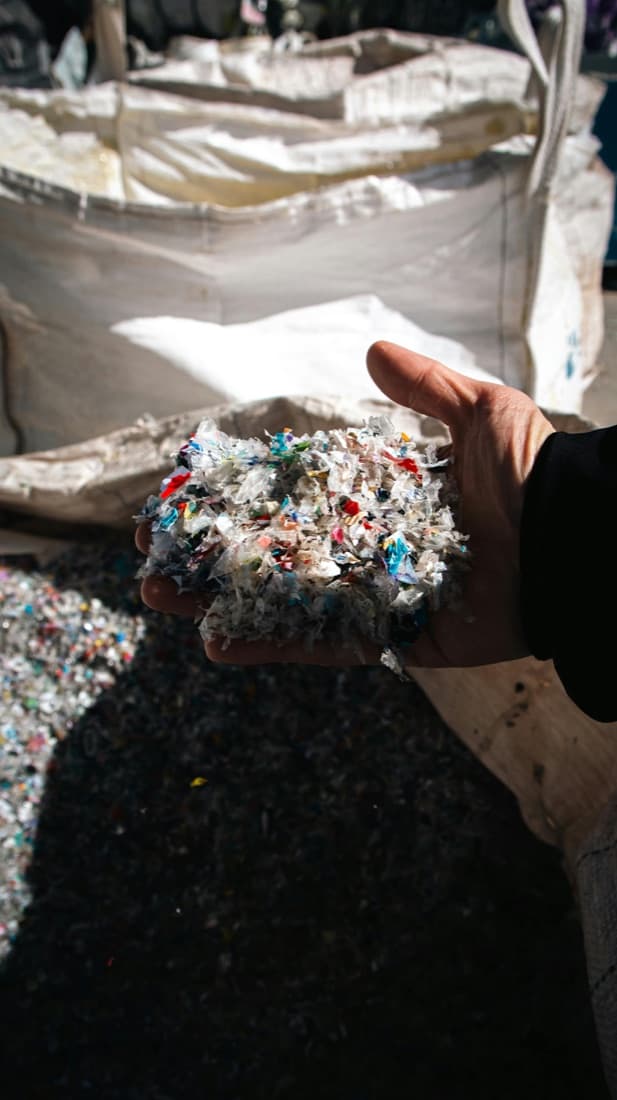
Because polyester is plastic, it doesn't simply sit there. Every wash sheds microscopic plastic fibers. Researchers at the University of Plymouth found a single household load can release hundreds of thousands of these microfibers, which slip through water treatment and settle in rivers, oceans, and eventually the food chain. The shedding isn't only in the wash, either. The fabric releases fibers onto you and into the air through ordinary, dry wear, which is part of why scientists keep finding microplastics in places they never expected to look, including inside the human body.
Cotton sheds too. The difference is what the fiber is made of. A cotton thread is cellulose, the same material as a leaf, and it breaks down. A polyester thread is plastic, and plastic doesn't break down so much as break up, into smaller and smaller pieces that stay in the world for a very long time.
Cotton comes from a field and goes back to one. Polyester comes from an oil well and never really leaves.
The blend trap
The catch that undoes a lot of good intentions: most clothing isn't one fiber or the other. It's a blend. A shirt sold as "cotton" can be 60% cotton and 40% polyester. "Performance cotton" and "stretch" almost always mean plastic has been mixed in, and even a small amount changes how a garment behaves on your skin and in the wash. A piece that's 95% cotton and 5% elastane is still shedding plastic and still trapping a little more heat than pure cotton would.
This is why the headline fiber on the front of a listing tells you almost nothing. The truth is in the small print: the composition tag, the line nobody reads. A garment is only as breathable, as clean, and as biodegradable as its blend allows, and the blend is where brands quietly cut corners to lower the price.
Where cotton isn't innocent
This isn't a clean sweep. Conventional cotton is one of the thirstiest, most heavily sprayed crops on the planet. By some estimates a single shirt's worth can take more than 2,000 liters of water to grow, and the crop absorbs an outsized share of the world's insecticides. That is the case for organic cotton, which yields the same fiber without the synthetic pesticides and usually on far less water.
So the honest framing isn't "cotton good, polyester bad." Cotton's worst problems happen out in the field, before the shirt exists, and they land hardest on farmland, water tables, and the people who grow it. Polyester's problems are stitched into the shirt and follow it onto your skin and into the water for the length of its very long life. For what touches your body, that distinction matters; for the planet, both deserve a closer look, and organic cotton answers most of cotton's case.
Durability, care, and cost
Polyester earns some of its ubiquity honestly. It's cheap to make, resists wrinkles and shrinking, dries in a hurry, and holds a bright color wash after wash. Those are real conveniences, and they're a big reason fast fashion is built on it: the fabric is forgiving and costs next to nothing. Cotton asks for a little more. It can shrink in a hot dryer, wrinkles more, and a cheap cotton tee can thin out over time. But good cotton softens as it ages instead of pilling, and a well-made cotton or organic-cotton piece tends to feel better in year three than a polyester one does in month three.
Price is the quiet engine under all of it. Polyester is so inexpensive that it has crept into clothing that has no functional reason to contain plastic, from work blouses to bedsheets to "linen-look" trousers. The cost saving is the point. Your comfort is rarely the reason it's there.
What it means for your closet
For anything worn against the skin all day, a tee, underwear, a base layer, anything you sleep in, natural fibers win on comfort and on what they leave behind. Reach for cotton, and organic cotton when you can find it, over polyester and "poly blends." Polyester earns its place in a rain shell or a piece of gym kit you want to dry fast. The trouble is how quietly it has crept into everything else.
The quickest way to know which camp a piece falls into is to read the little composition tag, the one nobody reads, and to check the blend rather than the headline. Toxome reads it for you and scores what's actually in the fabric, so "soft white t-shirt" stops being a guess.


