Twenty years ago, almost nobody flipped a cereal box over to read the back. Then we did. We learned what high-fructose corn syrup was, and we started asking for less of it. A few years later we did the same thing to our skincare. We learned the names of what we'd been rubbing into our faces, and "clean beauty" went from a niche idea to a word on every shelf.
One thing is left that we've never thought to question. It covers most of your body. It touches your skin every hour you're awake and every hour you're asleep. It's the first thing you put on in the morning and the last thing you take off at night.
Your clothes.
We think that's about to change. We think your clothes are the next thing you'll learn to read, the same way you learned to read food and skincare. There's a name for that idea. We call it Fashion Wellness.
Fashion Wellness is a simple thought: what you wear is a health choice, the same as what you eat or what you put on your skin. For something so obvious, it's strange how long it's gone unsaid.
What you wear is a health choice, the same as what you eat.
Your skin is the largest organ you have, and it isn't a raincoat. Things soak in, especially when you're warm, especially when you sweat. We've known this for years with nicotine patches and medicine — a small square of plastic that delivers a drug straight through the skin for hours. We somehow never thought to apply the same logic to the leggings we practically live in.
For a long time, the only question we asked about our clothes was whether they were good for the planet. That question matters. But somewhere along the way, we forgot to ask the other one. Is this good for me? A shirt can be made from recycled bottles and still be plastic against your skin. "Sustainable" tells you how a thing was made. It tells you almost nothing about what it does to you while you wear it.
One fact surprised us more than any other. Somebody checks the food you eat. Somebody checks the water you drink. Nobody checks the fabric on your skin all day long. There's no agency watching it, no label that has to tell you the truth, no rule most brands have to follow. The silence isn't an accident. Staying quiet is easier, and cheaper.
Here's the part that made us want to write all of this down.
A lot of what gets woven, printed, or coated onto synthetic clothing belongs to a family of chemicals scientists call endocrine disruptors. That's a big phrase for a small, unsettling idea: they look enough like your hormones to confuse your body. Hormones are the tiny messengers that tell your body what to do and when — when to start your period, when to sleep, when to calm down, when to grow. Endocrine disruptors slip into that conversation and garble the message.
Two of the most common turn up in clothes. The first is the bisphenol family, the group that includes BPA — yes, the same chemical we pulled out of baby bottles a decade ago. A 2024 study in Environmental Science and Pollution Research tested everyday garments and found bisphenols in plenty of them, including ones spun from recycled plastic bottles. The second is phthalates, the thing that lets a plastic raincoat bend instead of crack and makes the glossy print on a cheap T-shirt feel a little rubbery. Both are known to nudge hormones in the wrong direction.
For women, that conversation is the whole game. Your hormones run your monthly cycle, your fertility, a pregnancy, your mood, your skin, your sleep. They're sensitive by design — tiny amounts do enormous things, which is exactly why tiny amounts of the wrong thing can matter. The Endocrine Society, the largest group of hormone doctors in the world, has spent years warning that these chemicals are something to take seriously, not wave away. And the timing isn't random. A woman's hormones shift through her whole life — puberty, every monthly cycle, pregnancy, the years around menopause — and those are the exact windows when scientists believe the body is most easily thrown off course.
Now picture where most women actually wear synthetics. Leggings we sweat through at the gym and then keep on for errands. Bras we leave on for fourteen hours. Underwear, the most intimate fabric we own, almost always some blend of polyester or nylon with a little stretch. Warm skin, damp skin, hours of contact — the exact conditions that help anything sitting on the surface find its way in.
We want to be honest about what we know and what we don't. Nobody has measured the precise dose you absorb from a single day in synthetic leggings, and the research is still young. But that is the unsettling part, not the reassuring one. The not-knowing is the problem. When a chemical is known to interfere with the hormones that run a woman's body, and nobody can tell you how much of it you're getting, the sensible response isn't to panic.
When nobody can tell you the dose, the smart move is to stop volunteering for the experiment.
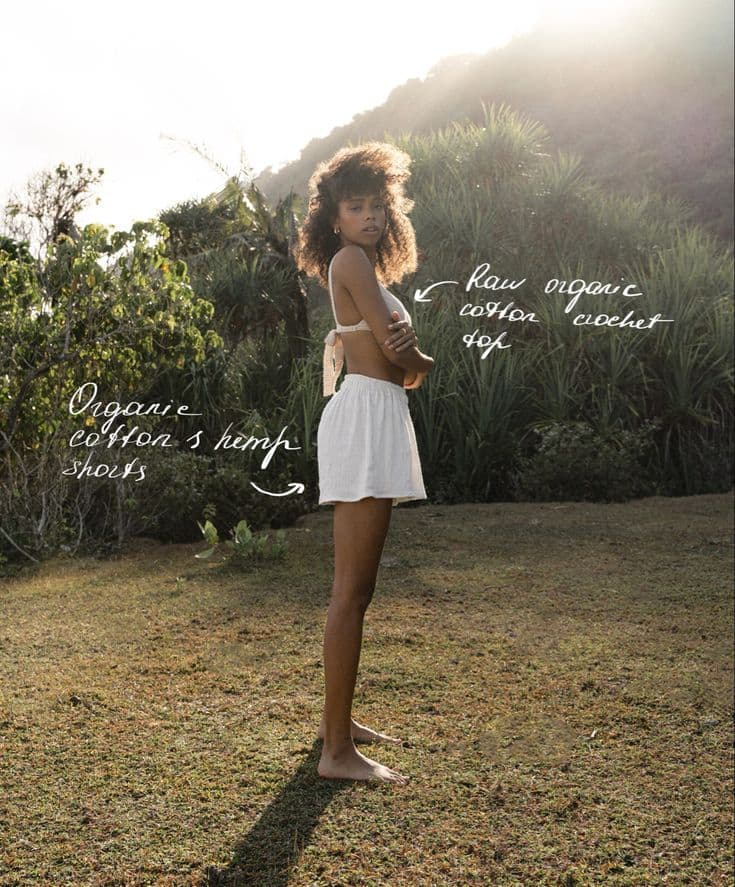
The good news is that you don't need a chemistry degree to opt out. The fibers that grew — cotton, linen, wool, silk — don't carry this particular baggage. They aren't perfect, and a bad dye or finish can still be added to anything. But they aren't plastic, and they aren't quietly built from the same chemistry we banned from baby bottles. Start with the pieces that sit closest to you for the longest — what you sleep in, what you work out in, what you wear underneath everything else. Those are the ones doing the most touching, so they're the ones worth changing first.
You can feel the change starting, even before anyone's named it. Linen is everywhere. People are paying more for real wool and silk, and learning to tell them from the fakes. Type "is polyester bad for you" into a search bar and you'll find millions of women asking the same quiet question. They're reaching for the same answer without a word for it. We wanted to give them the word.
Fashion Wellness is less a thing to buy than a habit: getting dressed with your eyes open. It's noticing that the softest, most expensive-feeling pieces in your closet are often the simplest ones, fibers that grew instead of fibers that were poured. It's choosing, a little more often, the shirt that's kind to your body — and saving the plastic for the raincoat, where it belongs.
You already do this with your food. You already do this with your face. Your closet is the next room you walk into. We'll be here, reading the labels with you.