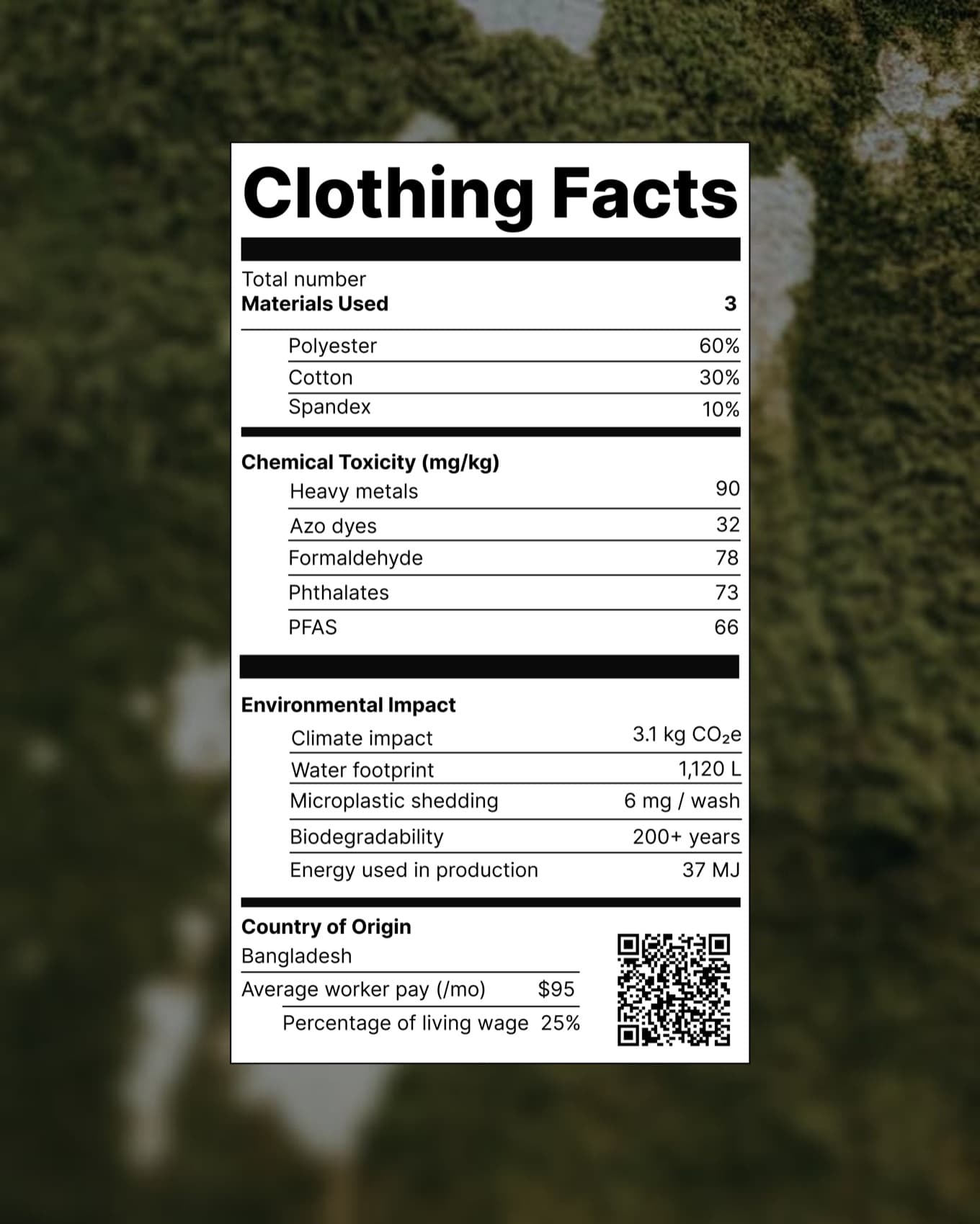
Think about the shirt you have on right now. You probably know where it was made, and maybe what it's made of. But not what's actually in the fabric, the way you'd read the back of a cereal box. Almost nobody does. A group of scientists in Europe decided to look anyway.
In 2025, they bought 111 ordinary things to wear, T-shirts and shoes, the stuff of a normal week. Then they tested what was hiding in the threads and published it in a medical journal called Contact Dermatitis. Most of the clothes, 63 out of every 100, held the chemicals the scientists were looking for. About one in four had more of a chemical called bisphenol than European rules say clothing should.
Bisphenol is worth knowing by name. Your body can mistake it for a hormone, one of the tiny messengers that tell you when to grow, when to sleep, when to start your period. Hormones work in very small amounts. So even a little of something that copies them can nudge the system. In 2023, European food scientists took another look and decided the old "safe" amount had never been safe at all. They lowered it by about twenty thousand times. The science changed. The clothes did not.
Someone checks your food. Someone checks your water. Nobody checks the fabric that sits on your skin all day and all night.
Europe at least has rules for this. A quarter of the clothes broke them anyway. The United States has no rule at all for the chemicals in what you wear.
What sweat changes
The first study tells you what's in the cloth. A second one, from 2024, shows what happens when that cloth meets a warm body.
Researchers tested 57 everyday pieces, T-shirts and socks, some made new and some made from recycled material. The recycled ones surprised them. They held more bisphenol, not less. Recycling saves the old plastic, and it saves the chemistry stuck to it.
Then came the part worth remembering. When the fabric was dry, most of it looked fine. So the team added sweat. Every single piece crossed the safe line once it was damp. One recycled T-shirt went over by more than a hundred times. Heat and dampness, the exact feeling of a workout or a hot afternoon or a night's sleep, pull the chemistry out of the cloth and onto you.
One more finding, and this one is good news. Washing the clothes just once rinsed away most of it, somewhere between a third and nearly all. The chemistry sits loosely on new fabric, and water carries a lot of it down the drain.
A few easy things to do
You don't need to empty your closet tonight. A handful of small habits do most of the work.
Wash new clothes before you wear them. Every time. That one step rinses away a big share of what the scientists measured, and it costs you nothing but a cycle.
Care most about the clothes that get warm and damp on you. Leggings, sports bras, the shirt you sleep in. Those touch you the longest, in exactly the conditions that pull the chemistry loose. The blazer you wear twice a month matters far less.
Read "recycled" as a kindness to the planet, not a promise about your health. It can be a lovely thing to do for the earth. It is not the same as clean, and in this case it held more of the chemical, not less.
When you can, reach for fabrics that start simple. Cotton, linen, wool, hemp. They grow instead of being mixed in a factory, so there's less for these chemicals to ride in on.
None of this is about one shirt. It's about the whole closet, adding up quietly over years, the same way the food you eat does. That's the plain idea behind everything we make here: the clothes you wear are a health choice, just like what goes on your plate.
The research is still young. It already points one way. And the good thing about getting dressed is that you get to choose again every single morning.